
The Aramco Cybersecurity Compliance Certificate (CCC) is a mandatory requirement for contractors and third-party vendors seeking to engage with Saudi Aramco’s digital and operational environments. Understanding which tier of assessment CCC or CCC+ applies to your organisation is the critical first decision that determines both the scope of preparation required and the timeline to compliance.
Saudi Aramco operates one of the world’s most complex and strategically significant energy infrastructures. As the organisation has expanded its digital footprint across operational technology, enterprise systems, and cloud environments, the cybersecurity risk exposure associated with third-party vendors has grown commensurately. The Aramco CCC framework was introduced as a structured, standards-aligned mechanism to ensure that contractors do not become vectors for cyber threats targeting critical national infrastructure. For CISOs, compliance officers, and vendor management teams operating in the GCC region, adherence to this framework is not discretionary it is a precondition for contract eligibility.
The distinction between CCC and CCC+ is not merely administrative. It reflects a meaningful difference in the level of digital access, system integration, and operational risk that a contractor represents to Aramco’s environment. Misidentifying the applicable tier can result in an incomplete assessment, a rejected submission, and significant delays to commercial engagements. This blog provides a structured guide to both pathways, clarifying which applies to which type of contractor and what organisations must prepare before initiating the process.
Understanding SACS-210: The Standard Behind Every CCC Assessment
Before any contractor can determine which assessment tier applies, a foundational understanding of SACS-210 is essential. The standard is structured around control domains that mirror internationally recognised frameworks such as the NIST Cybersecurity Framework and ISO/IEC 27001, but it is specifically calibrated to the risk profile of Saudi Aramco’s operational environment. Control domains covered under SACS-210 include access control and identity management, network security architecture, vulnerability and patch management, incident detection and response, data protection, and third-party risk management. Each domain carries specific requirements, and the depth of compliance evidence required varies depending on the nature and extent of a contractor’s digital interaction with Aramco systems.
A common misconception among contractors entering the CCC process for the first time is that SACS-210 compliance is equivalent to holding an ISO 27001 certification. While ISO 27001 provides a useful foundation, it does not map directly or completely to SACS-210 requirements. Aramco’s standard is more prescriptive in certain areas particularly those related to operational technology (OT) security and remote access controls reflecting the critical infrastructure context in which it operates. Contractors who assume that existing certifications will satisfy the CCC assessment without gap analysis risk submitting incomplete evidence packages and facing remediation cycles that delay contract award.
Key Control Domains Under SACS-210
The following domains consistently require detailed evidence during the CCC and CCC+ assessment process:
- Access Control: Multi-factor authentication, privileged access management, and role-based access controls for all systems connecting to Aramco environments.
- Network Security: Segregation of contractor networks from Aramco systems, firewall configuration standards, and encrypted transmission protocols.
- Vulnerability Management: Documented patching cycles, vulnerability scanning cadence, and evidence of remediation tracking.
- Incident Response: A tested incident response plan with defined escalation paths and notification timelines aligned with Aramco’s expectations.
- Endpoint Security: Endpoint detection and response capabilities on all devices used to access Aramco systems.
Understanding where your organisation currently stands against these domains through an internal gap assessment is the prerequisite step before formal registration, regardless of which tier applies.
Aramco CCC: Scope, Applicability, and What Contractors Must Prepare
The CCC pathway is designed for the broader population of Aramco’s third-party vendor ecosystem. This includes IT service providers, engineering consultancies, logistics and operations support contractors, and any organisation that accesses Aramco’s digital environment through managed connections, approved portals, or specific project platforms. The assessment scope for standard CCC contractors is calibrated to the controls most relevant to corporate IT security: identity and access management, secure remote connectivity, data handling practices, and basic incident response capability.
Contractors initiating the CCC process must register through the Aramco Supplier Portal and complete a cybersecurity self-assessment questionnaire that maps to the applicable SACS-210 control domains. The self-assessment requires accurate, evidenced responses it is not a checkbox exercise. Aramco and its authorised assessment bodies review submissions for completeness and plausibility, and organisations that submit undocumented or unsubstantiated claims face rejection or requests for additional evidence. The process is designed to surface genuine cybersecurity maturity, not theoretical intent.
Aramco CCC Requirements: What Documentation Is Expected
Contractors should prepare the following categories of documentation before initiating a CCC submission:
- Policies and Procedures: Current versions of information security policy, access control policy, acceptable use policy, and incident response plan.
- Technical Evidence: Firewall rule sets (or summaries), patch management logs, vulnerability scan reports, and MFA configuration records.
- Organisational Evidence: Security awareness training records, vendor management procedures, and business continuity documentation where relevant.
- Scope Definition: A clear articulation of which systems, networks, and personnel will interact with Aramco’s environment, as this directly determines the assessment scope.
Preparation time for standard CCC submissions varies, but organisations with immature security programmes or limited documentation should allocate adequate time for gap remediation before formal submission. Engaging a qualified assessor or compliance partner early in the process materially improves the probability of first-submission success.
Aramco CCC+: When the Elevated Tier Applies
Not every contractor will be directed toward the CCC+ pathway. Aramco determines the applicable assessment through its third-party classification process. Under the current programme, CCC+ applies to Network Connectivity and Critical Data Processor classifications; CCC applies to other classifications. In practice, the determination of whether CCC or CCC+ applies is often made by Aramco’s procurement or cybersecurity team during the vendor qualification stage, based on a review of the contractor’s proposed scope of work.
The CCC+ assessment is more extensive in both breadth and depth. Where the standard CCC focuses primarily on corporate IT security controls, CCC+ introduces requirements specific to operational technology security, including OT-specific network segmentation, industrial protocol security, and the security of engineering workstations and SCADA interfaces. The assessment process may involve independent third-party verification rather than self-assessment alone, and the evidence requirements are correspondingly more rigorous.
Practical Implications for Contractors Facing CCC+
Organisations directed toward CCC+ should approach the process with a materially different level of preparation compared to standard CCC. Key considerations include:
- OT Security Expertise: If your organisation operates in OT environments but lacks dedicated OT security capabilities, this gap must be addressed before assessment — not during it.
- Third-Party Assessment Readiness: CCC+ often involves independent assessor engagement. Ensure your documentation, evidence repositories, and subject matter experts are accessible and briefed.
- Extended Timeline: CCC+ assessments take longer to complete. Build this into contract negotiation timelines with Aramco to avoid commercial delays.
- Remediation Budget: The more comprehensive scope of CCC+ frequently surfaces controls gaps that require investment to remediate. Early gap assessment enables accurate budgeting.
The distinction between CCC and CCC+ is not a bureaucratic nuance — it reflects a substantive difference in the risk profile of the engagement. Treating CCC+ as merely a more detailed version of the same exercise is a strategic error that compliance teams should actively guard against.
SABIC CCC: Understanding the Alignment with Aramco’s Framework
SABIC’s integration into the Saudi Aramco group has had significant implications for third-party cybersecurity compliance. Contractors that have historically engaged with SABIC CCC under its own supplier qualification processes now face the prospect of CCC assessment requirements being applied to SABIC engagements. The pace and scope of this alignment have evolved as the two organisations’ operational and IT environments have been integrated, and contractors should not assume that a legacy SABIC supplier relationship exempts them from CCC obligations.
For organisations that supply to both Aramco and SABIC CCC, a unified compliance posture aligned to SACS-210 and the CCC framework is both the most efficient and most defensible approach. Maintaining separate, divergent security programmes for each entity introduces unnecessary complexity and audit risk. In our analysis of the compliance landscape across the GCC region, organisations that treat Aramco CCC as a single, enterprise-wide standard rather than a project-specific obligation. A shared control framework can reduce duplication, provided that each applicable SACS-210 requirement and any additional customer-specific requirement is separately mapped.
Aramco CCC Certification: The Assessment Process End-to-End
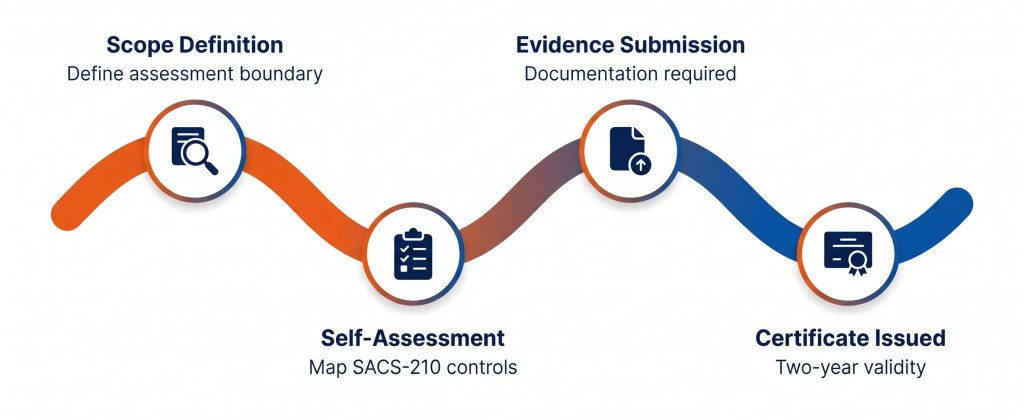
The end-to-end Aramco CCC certification process begins with scope definition. Before any documentation is prepared or submitted, the contractor must clearly define which of its systems, personnel, and processes fall within the assessment boundary. This scoping exercise is consequential: an overly broad scope increases the assessment burden without improving compliance outcomes, while an artificially narrow scope risks rejection if Aramco’s review identifies undisclosed digital touchpoints.
Following scope definition, contractors complete the self-assessment questionnaire, mapping their current security controls against the applicable SACS- 210 requirements. Supporting evidence must accompany each response assertions without documentation are not accepted. Once submitted, the assessment undergoes review by Aramco’s CCC certification authorised assessment body. For CCC+ submissions, this review phase typically involves direct engagement between the assessor and the contractor’s technical and security teams. Upon successful completion, the Cybersecurity Compliance Certificate is issued, with a defined validity period after which renewal assessment is required.
Managing the Renewal Cycle
CCC certificates are not indefinite. The CCC is valid for two years from its issuance date. Renew it before expiry, and confirm whether a new assessment is required if the third-party classification or contract scope changes
Conclusion
The choice between Aramco CCC and CCC+ is not a minor procedural decision it is a foundational determination that shapes the entire compliance programme a contractor must build. Organisations that invest in understanding the distinction early, conduct a rigorous internal gap assessment against SACS-210, and engage qualified compliance partners are consistently better positioned to achieve certification without costly delays or rework. The framework’s rigour reflects the criticality of the infrastructure it protects, and contractors should approach it with a corresponding level of organisational commitment. As Saudi Aramco continues to expand its digital ecosystem and deepen the integration of SABIC’s supply chain into its compliance framework, the scope of organisations subject to CCC requirements will broaden. Proactive engagement with the framework rather than reactive preparation triggered by contract award is the defining characteristic of compliance programmes that achieve resilience rather than mere certification. Winning together with Aramco as a trusted, certified partner begins with getting this foundational decision right. Visit ValueMentor to learn how our cybersecurity compliance team supports contractors through every stage of the Aramco CCC process, from initial scope definition and gap assessment through to successful certificate issuance and renewal management.
FAQs
Aramco CCC (Cybersecurity Compliance Certificate) is a Saudi Aramco programme that assesses third-party contractors’ cybersecurity posture against applicable SACS-210 requirements. It helps ensure suppliers meet the required security standards before engaging with Aramco.
How do contractors register for Aramco CCC?
Contractors initiate the process through the relevant Saudi Aramco supplier channels, complete the required cybersecurity self-assessment, and submit supporting evidence for review by authorised assessors.
What are the requirements to qualify for Aramco CCC?
Contractors must demonstrate compliance with applicable cybersecurity controls covering areas such as access control, network security, vulnerability management, incident response, and data protection. CCC+ may involve additional requirements for operational technology environments.
Why is Aramco CCC important for contractors?
A valid CCC may be a prerequisite for qualifying for or maintaining certain Saudi Aramco contracts. It helps reduce third-party cybersecurity risks and demonstrates a contractor’s commitment to protecting Aramco’s systems and data.