
In the ever-evolving landscape of technology, Oracle stands as a bastion of innovation and excellence. Within its vast ecosystem, the Oracle Hall of Fame serves as a prestigious enclave, honoring those whose contributions have profoundly shaped and elevated the realm of Oracle technologies.
In this blog post, I delve into the significance of the Oracle Hall of Fame, exploring its role as a symbol of achievement and a catalyst for continuous growth and innovation within the Oracle community. Join us as we unlock the doors to this esteemed enclave and embark on a journey of exploration, discovery, and excellence.
Initial Consideration and Research
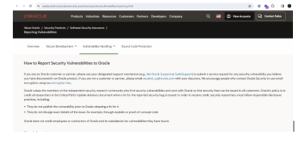
Initially, I deeply contemplated how and where to begin my security research journey. After conducting thorough research on Google, I finally confirmed that I could target Oracle. This decision was based on Oracle’s security research program, which allows anyone to participate.
Determining the Starting Point
I pondered where to begin, ultimately deciding to explore the subdomains of Oracle’s vast network. With numerous subdomains and products, Oracle provided a rich landscape for exploration.
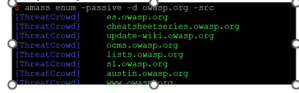
- subdomain enumeration (tool usage):
amass enum -passive -d Domain.com
Sample output:
- Selection and Testing of Subdomain:
I chose a specific subdomain and commenced testing, adhering to my usual testing practices. Initially, on my first day, I anticipated minimal vulnerabilities, considering Oracle’s stature as a large and presumably secure company.

Methods Used
- Discovery of Vulnerabilities:
I went through the entire application, and if necessary, registered and viewed the content inside. Attempted to access all contents without authorization. Conducted various test cases including business logic and OWASP top test cases. - Understanding the System:
Gained a comprehensive understanding of the system architecture, components, and functionalities. Identified potential entry points and attack surfaces. - Reviewed Documentation and Specifications:
Studied system documentation, including architectural diagrams, design specifications, and user manuals. This helped in understanding intended functionalities and potential areas of weakness. - Static Analysis:
Used automated static analysis tools to examine the source code, configuration files, and other static artifacts. Also, looked for common vulnerabilities such as insecure coding practices, hardcoded credentials, and improper input validation. - Dynamic Analysis:
Performed dynamic analysis by executing the application in different environments and observed its behavior. Used tools like web application scanners, network scanners, and fizzers to identify vulnerabilities such as SQL injection, cross-site scripting (XSS), and insecure session management. - Manual Testing:
Conducted manual testing to explore the application’s functionalities in-depth. Tried to bypass authentication mechanisms, manipulate input parameters, and access unauthorized resources. I looked for logical flaws, business logic vulnerabilities, and insecure direct object references.
How was the vulnerable endpoint identified?
Manual testing enabled me to identify the vulnerable endpoint. I concentrated on the following points.
- OWASP Top 10:
Refer to the OWASP Top 10 list of the most critical web application security risks. Ensure that your testing covers vulnerabilities such as injection attacks, broken authentication, sensitive data exposure, and security misconfigurations. - Input Validation and Boundary Testing:
Focus on input validation and boundary testing to identify vulnerabilities related to improper handling of user input. Test for buffer overflows, format string vulnerabilities, and other input-related issues that could lead to security breaches. - Error Handling and Logging:
Examine how the application handles errors and logs sensitive information. Look for vulnerabilities such as information disclosure, stack traces in error messages, and inadequate logging practices that could aid attackers in reconnaissance and exploitation. - Access Control Testing:
Test the application’s access control mechanisms to ensure that only authorized users can access sensitive functionalities and data. Look for vulnerabilities such as insecure direct object references, privilege escalation, and insufficient authorization checks.
- Final result:
After numerous checks, I finally gained access to an unauthorized page that leaks certain information regarding the application.
What kind of data was accessed?

Without authorization, anyone can access internal usernames, IDs, etc., therefore, to avoid that these steps should be taken into consideration.
- Remediation:
- Disable access to the restricted content for unauthorized users.
- Enhance security measures to better protect restricted content, including encryption, role-based access controls, and regular security assessments.
- Submitting the Vulnerability Report:
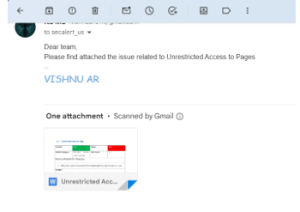
Once I identified the vulnerability, I began preparing the report and submitted it to Oracle. However, I was still uncertain whether the reported vulnerability has been accepted or not
- Acceptance of Vulnerability:
After 1 week, I received a notification from Oracle indicating the acceptance of the vulnerability. They also informed me that the issue would soon be resolved.

In summary, my journey into Oracle’s security realm was filled with challenges, discoveries, and ultimately, a sense of accomplishment.
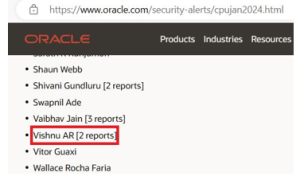
Ref: https://www.oracle.com/security-alerts/cpujan2024.html
About ValueMentor
ValueMentor stands as a trusted leader, renowned for its comprehensive suite of services that protect organizations against digital threats. Specializing in vulnerability assessments, penetration testing, risk management, compliance services, and security consulting,
ValueMentor offers tailored solutions to meet the unique needs of each client. Our team of seasoned professionals combines deep expertise with practical experience, delivering cutting-edge solutions and strategic advice. Over the past 10 years in the industry, we have emerged as a prominent cybersecurity consulting firm.
We understand the critical importance of safeguarding your business against evolving cyber threats. With our expertise and innovative solutions, we ensure your digital assets remain protected, allowing you to focus on driving business growth.
FAQs
Oracle’s Security Research Program allows security researchers to responsibly identify and report vulnerabilities in Oracle products and services for investigation and remediation.
2. How can security researchers identify vulnerabilities in Oracle applications?
Researchers can use techniques such as subdomain enumeration, manual testing, access-control testing, input validation, business logic testing, and OWASP-based security assessments.
3. Why is manual testing important when testing Oracle applications?
Manual testing can uncover logical flaws, authorization issues, and application-specific vulnerabilities that automated scanners may fail to detect.
4. What types of vulnerabilities can be discovered through access-control testing?
Access-control testing can reveal unauthorized data access, privilege escalation, insecure direct object references (IDOR), and improperly protected application functionality.
5. How can unauthorized access vulnerabilities expose sensitive information?
Improper authorization controls may allow unauthenticated or low-privileged users to access restricted pages, internal usernames, IDs, application details, or other sensitive information.
6. What role does subdomain enumeration play in security research?
Subdomain enumeration helps researchers identify publicly accessible application endpoints and understand an organization’s external attack surface for authorized security testing.
7. What should researchers do after discovering a vulnerability in an Oracle application?
The vulnerability should be documented with sufficient technical evidence, impact, reproduction steps, and remediation recommendations, and then responsibly reported through Oracle’s designated security reporting process.
8. How does responsible vulnerability disclosure benefit organizations?
Responsible disclosure gives organizations an opportunity to validate, remediate, and reduce the impact of security weaknesses before they can be exploited maliciously.
9. What are the key remediation measures for unauthorized access vulnerabilities?
Organizations should enforce server-side authorization checks, restrict sensitive resources by role, validate access permissions on every request, protect internal information, and conduct regular security assessments.
10. What can organizations learn from security research on enterprise applications?
Security research demonstrates that even mature enterprise platforms require continuous testing, particularly around authentication, authorization, business logic, exposed endpoints, and sensitive-data access.