
CASE STUDY: Comprehensive Root Cause Analysis of a Security Breach on a Largest Restaurant Group’s Website: Unveiling Vulnerabilities and Protecting Customer Data
Introduction
This case study examines a security incident on our client’s website http://www.example.com (using “example.com” instead of the actual domain name for privacy). The issue originated from vulnerabilities found in two other applications on the same server: menu.example.com and admin.example.com. Our primary objective was to investigate the cause of this incident and propose practical solutions to prevent its recurrence. During our investigation, we discovered serious vulnerabilities in the client’s web applications that required urgent fixing. These vulnerabilities were the main cause of the data breach. We identified that the application hosted on menu.example.com for managing the website was vulnerable to SQL injection. This allowed hackers to exploit the vulnerability and obtain credentials that could be used to access the backend application management portal admin.example.com, enabling them to manipulate the website’s content. The hackers exploited these weaknesses to inject code into the website’s database, granting them direct access to manipulate stored data. This unauthorized access allowed the hackers to obtain user credentials. Subsequently, the hackers managed to upload a backdoor into the main website, gaining continuous access and control over the server. The hackers then modified the contact form to deceive legitimate users into compromising their personal details and payment instructions.
About the Company
A well-known Dubai-based restaurant company, part of the largest restaurant group specializing in authentic Turkish cuisine, offering an unparalleled dining experience with diverse menu options and upscale ambiance. Led by a seasoned chef, the establishment caters to discerning clientele seeking refined flavors and impeccable service. Situated strategically with panoramic skyline vistas, it aims to provide extraordinary experiences, treating guests like celebrities and transporting them to joy and discovery through its food and beverage outlets.
Incident Overview
The security issue originated from vulnerabilities in the menu.example.com section of the website, particularly due to SQL injection weaknesses. This resulted in malicious actors acquiring user credentials, gaining unauthorized access to the backend application, inserting a malicious backdoor, and injecting code to deceive users.
Activities Performed
- Understanding the Incident:
- Took a close look at the security issue on the Client’s website (www.example.com).
- Clearly outlined what parts of the website were affected and identified the associated applications or domains resulting in the identification of the applications menu.example.com and admin.example.com associated with the main website.
- Finding the Main Cause:
- Investigated why the security problem occurred, with a primary focus on issues within the mentioned applications.
- Utilized advanced methods to precisely determine the cause of the compromise and unauthorized access.
- Making Suggestions to Fix the Issue:
- Formulated practical suggestions to address the primary issues identified during the investigation.
- Ranked the suggestions based on their effectiveness in preventing similar issues in the future.
- Assessing Risks and Acting Quickly:
- Assessed risks by identifying and examining serious vulnerabilities in the client’s web applications.
- Developed an urgent plan to address and mitigate these vulnerabilities, ensuring a reduction in potential risks.
- Examining Vulnerabilities in Detail:
- Conducted a detailed examination of the website for weaknesses, particularly focusing on vulnerabilities related to specific types of attacks.
- Utilized standard tools and methods to conduct comprehensive checks and gain a thorough understanding of vulnerabilities.
- Checking the Impact of Data Breach:
- Explored the potential impact of weaknesses on the data stored on the website.
- Analyzed how the attacker obtained user credentials through a specific type of attack, resulting in unauthorized access.
- Understanding Uploading and Control:
- Investigated how the attacker uploaded a malicious tool into the application to maintain control of the server.
- Assessed the implications of this upload on the overall security of the website and server.
- Creating a Detailed Report:
- Compiled all findings, analyses, and suggestions into a detailed report.
- Ensured that the report provides a clear understanding of the incident, identifies the root causes, and offers actionable solutions for remediation.
- Keeping in Touch with the Client:
- Maintained regular communication with the client throughout the investigation.
- Collaborated closely with the client, sharing information, discussing findings, and incorporating their input into the suggestions.
How Was The Website Compromised?
During the assessment, the following sequence of events was identified, leading to the compromise of the Client’s website (www.example.com): 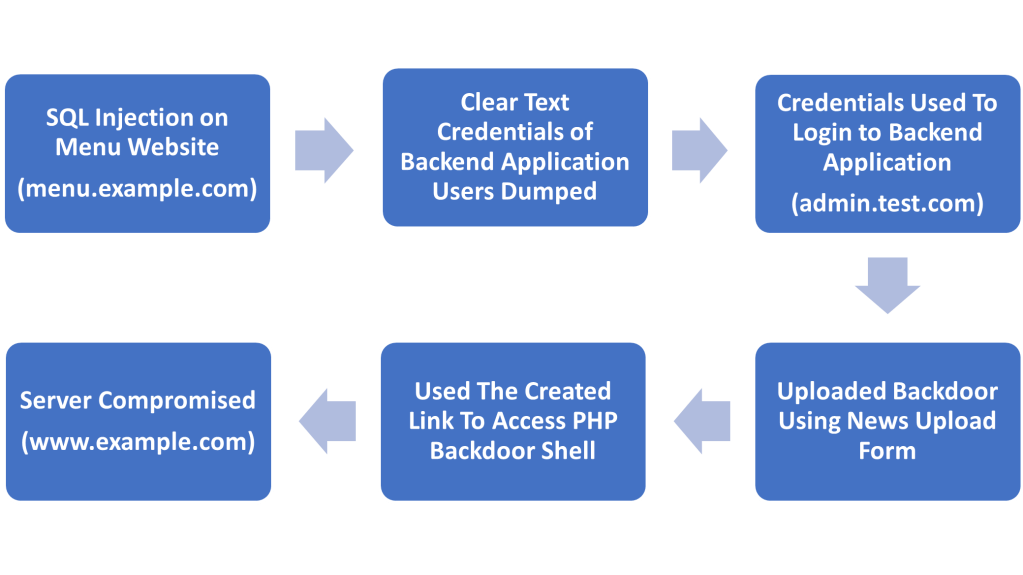 Steps:
- SQL Injection: The assessment revealed that the menu.example.com subdomain was vulnerable to SQL injection.
- User Credentials Dumped: Using the SQL injection vulnerability, the attackers were able to dump user credentials from the website’s database.
- Backend Application Login Panel Identified: Identified the backend application login panel at https://admin.example.com/login.
- Logged in using Dumped User Credentials: The attacker used the dumped user credentials to log in to the backend application.
- Vulnerable News Upload Form: The news upload form in the admin application is vulnerable to a malicious file upload vulnerability.
- Uploaded Backdoor: The attacker exploited this vulnerability to upload a backdoor in the news upload form.
- PHP Shell Accessed: Using the created link from the backdoor, the attackers were able to access a PHP backdoor shell uploaded on the server.
- Compromised Server: With access to the PHP shell, the attackers were able to compromise the server and gain control of the Client’s main website and other website hosted on the same server.
Proof of Concept
We conducted a detailed demonstration, referred to as a Proof of Concept (PoC), to illustrate how the attack could be replicated. The PoC showcased the exploitation of the weakness, demonstrating that an individual could access critical information and gain control over the server. The organization’s security team utilized this demonstration to validate the vulnerability we identified and assess the effectiveness of the suggested remediation methods. The following steps outline how we executed the attack and provide evidence of the issues within the client’s application:
1. Identification of SQL Injection Vulnerability: During the assessment, we identified an endpoint in the application menu.example.com that was susceptible to SQL Injection. SQL Query Error2. Confirmation of SQL Injection Impact: The provided screenshot visually illustrates the impact of SQL Injection on the application endpoint, showcasing critical information disclosure, as discovered by us. 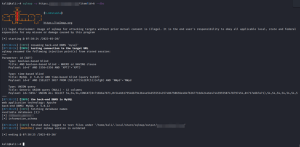 Successfully Fetched Database Information Successfully Fetched Database Information 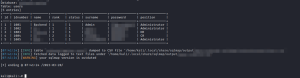 Extracted Users Credentials from DB 3. Uncovering Admin Login Panel: Further investigation led us to discover another subdomain hosting a publicly accessible admin login panel at https://admin.example.com/login. 4. Application of Database-Fetched Credentials: Referring to step 2, we utilized user credentials previously fetched from the database to gain access to the identified admin login panel. 5. Exploitation of File Upload Vulnerability: The following screenshots exhibit our successful exploitation of a file upload vulnerability, allowing the unhindered upload of a malicious file. Extracted Users Credentials from DB 3. Uncovering Admin Login Panel: Further investigation led us to discover another subdomain hosting a publicly accessible admin login panel at https://admin.example.com/login. 4. Application of Database-Fetched Credentials: Referring to step 2, we utilized user credentials previously fetched from the database to gain access to the identified admin login panel. 5. Exploitation of File Upload Vulnerability: The following screenshots exhibit our successful exploitation of a file upload vulnerability, allowing the unhindered upload of a malicious file.  Additionally, the screenshots demonstrate our ability to determine the upload path by brute-forcing the file name. Additionally, the screenshots demonstrate our ability to determine the upload path by brute-forcing the file name. 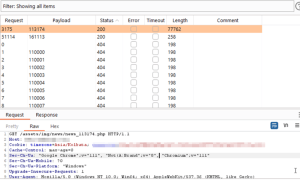 Successfully Identified File Path Successfully Identified File Path  PHP File Executed Successfully 6. Upload and Control with PHP Shell File: We orchestrated the upload of a PHP Shell file and navigated to the file’s location. As depicted in the provided screenshot, we effectively gained control over system files, underscoring the severity of the compromise. PHP File Executed Successfully 6. Upload and Control with PHP Shell File: We orchestrated the upload of a PHP Shell file and navigated to the file’s location. As depicted in the provided screenshot, we effectively gained control over system files, underscoring the severity of the compromise. 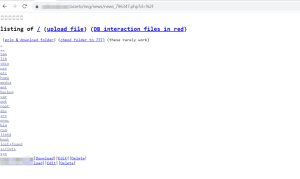 PHP Shell Executed successfully PHP Shell Executed successfully |
Recommendations
- Enhanced User Request Validation:
We advocated for the implementation of thorough user request validation within the application, ensuring the integrity and security of data input.
- Adoption of Prepared Statements:
Our recommendation included the adoption of prepared statements to fortify the application against SQL injection attacks, enhancing overall database security.
- Secure Password Storage:
It was advised to store user passwords in a hashed format, a secure practice that added an additional layer of protection against unauthorized access and data breaches.
- File Upload Validation Implementation:
We proposed the implementation of robust validation protocols for file uploads, minimizing the risk of malicious uploads and maintaining the integrity of the application’s file system.
- Restricted Access to Admin Panel:
To enhance security, we suggested restricting access to the admin panel exclusively to authorized users, preventing potential unauthorized access by public users.
- Implementation of Non-Guessable File Upload Path:
Our recommendation emphasized the implementation of non-guessable file upload paths, reducing the risk of unauthorized users predicting or accessing sensitive file locations.
Conclusion
This case study underscores ValueMentor’s steadfast commitment to identifying and mitigating critical vulnerabilities within our client’s web applications, aligning with the stringent requirements outlined by NESA regulations. Through a thorough assessment, we unveiled the tangible risks posed by SQL injection, compromised admin panels, and file upload vulnerabilities, showcasing the real-world implications of these security gaps. Our proactive approach to remediation, characterized by reinforced validation processes, secure password storage mechanisms, and stringent access controls, serves to bolster the overall security posture in NESA Compliance. This case study serves as a testament to our unwavering dedication to proactive security practices and our ongoing collaboration with clients to effectively safeguard digital assets in accordance with NESA regulations.