HITRUST certification is one of the major goals for most companies striving to ensure that they have top notch data security, privacy, and compliance management practices. Yet, certification itself marks the beginning of the journey rather than the end. To sustain trust among clients, partners, and authorities, organizations need to concentrate on HITRUST certification renewal and make sure that their controls remain efficient over time.
Since risks and requirements are constantly changing, organizations need to prove their compliance again and again in order to receive HITRUST certification. Knowing the renewal timeline, expectations from the assessment, and maintenance requirements can allow you to keep the certification process going without any interruptions. In this blog post, we will discuss the major points about HITRUST certification renewal and its maintenance.
How does the HITRUST Certification lifecycle work?
Another critical element in ensuring compliance is having knowledge about the HITRUST certification life cycle. Certifications through the framework of HITRUST are not perpetual; on the contrary, they need periodic verification so that there remains no doubt about the continuous efficacy of security controls. When the organization performs a validated assessment, then certification for a specific period of time becomes its entitlement. The organization must maintain compliance within that period to retain the certification status.
It should be noted that rather than considering HITRUST certification a one-off affair, organizations should perceive it as a constant process related to information security and risk management.
HITRUST certification life cycle comprises several stages including assessments, rectifications, approval, and recertification among others.
Why does HITRUST Certification renewal matter?
Renewal of the certification process is necessary for any organization that uses HITRUST to verify its security stance. Failure to renew will pose difficulties in addressing questions about an organization’s security posture, securing new opportunities, or fulfilling contractual obligations.
Some benefits of certification renewal include:
- Demonstrate continuous commitment to security and compliance
- Maintain customer and stakeholder confidence
- Address emerging threats and vulnerabilities
- Meet regulatory and contractual obligations
- Reduce risks associated with outdated controls
Organizations that prioritize renewal efforts often find it easier to manage audits and security reviews because compliance becomes part of their daily operations rather than a last-minute initiative.
Key requirements for HITRUST Recertification
Recertification to HITRUST standards means that organizations must demonstrate that their controls still function and are working as intended. Although the requirements will vary based on the assessment process and certification, certain aspects are consistent throughout.
Review Existing Controls
Organizations need to examine all of the existing controls in their organization to make sure that they are still functioning as expected. This would include any infrastructure, applications, or cloud services used by the company.
Address Control Gaps
Over time, organizations may discover weaknesses or deficiencies through internal audits, risk assessments, or security monitoring activities. These issues should be remediated before beginning the recertification process.
Update Documentation
Policies, procedures, risk assessments, and evidence documentation must remain current. Outdated documentation is one of the most common challenges identified during assessments.
Validate Security Performance
Organizations should maintain records demonstrating ongoing compliance, including access reviews, vulnerability scans, incident response testing, employee training, and other security activities.
Steps in the HITRUST Renewal process
The HITRUST renewal process involves several structured activities that help organizations demonstrate continued compliance.
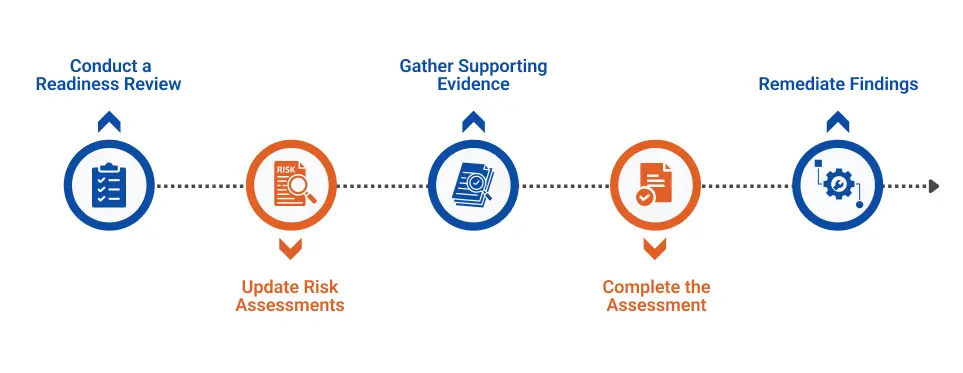
1. Conduct a Readiness Review
Before beginning a formal assessment, organizations should evaluate their current compliance status. A readiness review helps identify gaps that may affect certification renewal.
This step allows security teams to address deficiencies early and reduce the likelihood of unexpected findings during the assessment.
2. Update Risk Assessments
Risk assessments should reflect current business operations, technology environments, and threat landscapes. Changes in vendors, cloud services, data handling practices, or regulatory requirements may impact compliance obligations.
Maintaining an updated risk management program is essential for demonstrating ongoing security maturity.
3. Gather Supporting Evidence
Assessors require evidence showing that controls are consistently operating throughout the certification period. Examples may include:
- Security policies and procedures
- Audit logs
- Access control reviews
- Vulnerability management reports
- Security awareness training records
- Incident response documentation
Collecting evidence continuously throughout the year can significantly reduce assessment preparation time.
4. Complete the Assessment
Organizations must complete the applicable assessment and submit required documentation for review. Depending on certification requirements, this may involve a HITRUST validated assessment conducted by an authorized external assessor.
The assessment evaluates whether controls meet HITRUST standards and whether security practices remain effective.
5. Remediate Findings
If assessors identify gaps or deficiencies, organizations may need to implement corrective actions before certification approval.
Prompt remediation demonstrates a commitment to continuous improvement and helps avoid delays in the renewal process.
Best practices for HITRUST Compliance maintenance
Effective HITRUST compliance maintenance requires a proactive approach rather than periodic compliance efforts.
Establish Continuous Monitoring
Monitoring will help companies detect any security weaknesses before they turn into compliance violations. The review process will include checking on system activity, any weaknesses, and authorization to gain more security.
Perform Internal Audits
Internal audits can assist in ensuring that the controls are still working in between the certification processes.
Maintain Employee Awareness
Employees play an important role in compliance. Ongoing security awareness training helps ensure personnel understand current policies, procedures, and security responsibilities.
Track Regulatory Changes
Compliance requirements evolve over time. Organizations should monitor relevant regulations and industry standards to ensure their compliance programs remain aligned with current expectations.
Document Everything
Consistent documentation is one of the most valuable assets during renewal. Maintaining organized records throughout the year simplifies evidence collection and reduces assessment stress.
Common challenges during renewal
Even organizations with mature compliance programs can encounter obstacles during renewal efforts.
Changes in Business Operations
Mergers, acquisitions, new products, cloud migrations, or major technology upgrades may affect certified environments and require additional compliance reviews.
Incomplete Documentation
Missing or outdated documentation can delay assessments and increase remediation efforts.
Resource Constraints
Many organizations struggle to balance daily operational responsibilities with compliance activities. Without dedicated ownership, important renewal tasks may be overlooked.
Control Drift
Controls that were effective during the initial certification may gradually become inconsistent due to process changes, staff turnover, or technology updates.
Recognizing these challenges early allows organizations to develop strategies that support smoother recertification outcomes.
How early preparation simplifies renewal?
One of the most effective ways to streamline renewal is to begin preparation well before certification expiration.
Early planning provides time to:
- Identify and remediate compliance gaps
- Update policies and procedures
- Collect evidence gradually
- Coordinate with assessors
- Review security controls thoroughly
Those organizations which stay compliant all year round will have quicker assessments and less compliance problems. Rather than approaching renewals as a different process, compliance actions should be integrated into the normal processes to develop a more sustainable model.
Closing Thoughts
HITRUST certification demands constant effort, preparation, and dedication. Knowing the HITRUST certification cycle, knowing the process of HITRUST recertification, and paying close attention to continuous compliance will help organizations to ensure that they don’t have any gaps when it comes to certifications and will improve their security status.
It should be noted that the recertification process is much more than just passing another audit. Recertification indicates the success in maintaining adequate security controls and risk management.
Need support with HITRUST recertification? At ValueMentor, we help organizations simplify the renewal process through expert guidance, continuous compliance strategies, and assessment readiness support. Reach out to our team to ensure your certification remains active and your security posture stays strong.
FAQs:
Organizations must follow HITRUST’s certification and assessment timelines to maintain active certification status.
2. What is HITRUST recertification?
HITRUST recertification is the process of reassessing security controls to maintain an organization’s certified status.
3. What is a HITRUST validated assessment?
It is a formal assessment performed by an authorized assessor to verify compliance with HITRUST requirements.
4. Why is continuous compliance important for HITRUST renewal?
Continuous compliance helps organizations maintain control effectiveness and reduce assessment-related risks.
5. What documents are typically required during renewal?
Policies, risk assessments, audit logs, training records, and security reports are commonly required.
6. Can system changes affect certification renewal?
Yes. Major technology, infrastructure, or business changes may impact compliance requirements.
7. What are common reasons for renewal delays?
Incomplete documentation, unresolved control gaps, and insufficient preparation are frequent causes.
8. How can organizations simplify the renewal process?
Continuous monitoring, regular audits, and year-round evidence collection can significantly streamline renewal.
9. What is HITRUST compliance maintenance?
It refers to ongoing activities that ensure security controls remain effective and compliant between assessments.
10. When should organizations begin preparing for renewal?
Preparation should ideally begin several months before certification expiration to allow time for remediation and evidence collection.