
Imagine this-A customer swipes their card at your store. The transaction goes through. All is well until a week later, your company is in the news for a major data breach. Sound familiar? This is the very scenario that the PCI DSS risk assessment process is designed to prevent.
With digital payment fraud continuing to rise and the cost of a breach hitting an all-time high, PCI DSS (Payment Card Industry Data Security Standard) compliance isn’t just good practice – it is essential. Retailers across the U.S., whether mom-and-pop stores or national franchises, must take PCI DSS risk assessments seriously to protect customer data, maintain brand trust, and avoid steep penalties. Let us dive deep into how PCI DSS risk assessment works, how it applies to retailers in states like Texas, California, Florida, and NYC and why it is more critical than ever in 2025.
What is PCI DSS and Why is it Important?
The Payment Card Industry Data Security Standard (PCI DSS) is a globally recognized framework designed to protect cardholder data during storage, processing, and transmission. It applies to any organization that handles credit or debit card information. PCI DSS is important because it helps prevent data breaches, financial fraud, and identity theft by enforcing strict security controls. For retailers, staying compliant is not just about avoiding penalties-it’s about safeguarding customer trust and ensuring the integrity of payment systems in an increasingly digital and threat-prone environment.
Best Examples of PCI DSS Risk Assessment in Retail
Retailers that have successfully implemented PCI DSS risk assessments often treat them as more than just a regulatory checkbox they use them as strategic tools to uncover vulnerabilities, strengthen payment security, and enhance customer trust. Retailers who have effectively used PCI DSS risk assessments often combine compliance with proactive cybersecurity. Here are a few standout examples:
-
- Target Corporation (Post-2013 Breach): After the infamous breach that compromised 40M+ credit cards, Target revamped its PCI DSS compliance strategy. Regular risk assessments and tighter third-party controls became core practices.
-
- Walmart: As a major global retailer, Walmart uses continuous PCI DSS assessments to evaluate network segmentation, third-party access, and secure POS systems.
-
- Best Buy: Implements quarterly PCI DSS gap analyses and internal risk reviews, especially after introducing new payment technologies.
These examples show that even the largest retailers with the best IT teams aren’t immune-but risk assessments give them an edge.
PCI DSS Risk Assessment Guidelines
Under PCI DSS v4.0.1, risk assessments fall into two distinct categories that retailers must understand and implement appropriately. First, a full enterprise-wide risk assessment is required at least once annually and after any significant changes to the cardholder data environment, such as deploying new payment technologies, changing vendors, or modifying infrastructure. This comprehensive assessment evaluates threats, vulnerabilities, and business impact across the entire payment ecosystem.
Second, the standard introduces Targeted Risk Analyses (TRAs) under Requirements 12.3.1 and 12.3.2. These are control-specific evaluations required when implementing certain controls with flexible frequency or using a customized approach instead of a defined control. A TRA must identify the asset in scope, relevant threats, likelihood of occurrence, potential impact, and justification for the control’s configuration or frequency. Importantly, TRAs do not replace the broader annual risk assessment-they complement it by ensuring that specific implementations remain risk-aware and justified. Retailers must document both assessment types to maintain compliance and demonstrate proactive risk management. Here’s a breakdown of what retailers need to do, and more importantly, why it matters:
1. Perform Risk Assessments Annually – or After Any Major Change
Under PCI DSS v4.0.1, organizations are required to conduct a formal, enterprise-wide risk assessment at least once per year. In addition to this annual review, the standard mandates that retailers reassess risks whenever there are significant changes to their cardholder data environment. These changes might include deploying a new payment terminal, switching to a different payment gateway or acquiring bank, modifying POS infrastructure, or onboarding a new third-party service provider that handles cardholder data. Each of these events can introduce new threats or vulnerabilities. Performing timely risk assessments ensures that those risks are identified, evaluated, and mitigated before they can be exploited.
2. Document Risks, Prioritize Them, and Build a Plan
Risk assessment under PCI DSS v4.0.1 is not just about identifying potential threats it is about evaluating how likely those threats are to occur and what impact they could have on your business. Retailers are required to document each identified threat to cardholder data, assess both its likelihood and potential impact, and then determine the level of overall risk. Once risks are understood, they must be ranked or prioritized, ensuring that the most critical issues are addressed first. This prioritization helps retailers allocate resources effectively-whether that means patching a vulnerable application, segmenting networks to isolate the cardholder data environment (CDE), or tightening access controls for third-party vendors. Documentation is essential not only for internal remediation planning but also to demonstrate compliance during audits or reviews.
3. Bring Everyone to the Table – Not Just IT
One of the key shifts in PCI DSS v4.0.1 is the recognition that security is no longer just the IT department’s job. While your technical team may implement firewalls, encryption, and monitoring tools, true risk understanding comes from multiple departments. For example, store managers might know how terminals are physically accessed, finance teams understand payment flow processes, and operations teams deal with logistics and vendor interactions. Bringing these perspectives together results in a more comprehensive and realistic risk profile. Involving business units also encourages shared ownership of compliance a critical factor in building long-term resilience.
4. Conduct Targeted Risk Assessments for New Technologies or Threats
Not every situation requires a full-blown assessment of your entire system. Sometimes, you’ll need a targeted risk assessment a focused evaluation of a specific technology, process or change. For instance, if your stores are adopting tap-to-pay or mobile wallet transactions, PCI DSS v4.0.1 recommends assessing those features individually. You’d look at potential threats like near-field communication (NFC) signal interception, weak device configuration, or lack of encryption in transit. This flexible approach allows retailers to adapt quickly to innovation while maintaining security oversight.
5. Maintain Clear, Accessible Documentation
PCI DSS is very clear on this if it is not documented, it did not happen. Every step of your risk assessment from who conducted it, to what was discovered, to how it was handled needs to be recorded and maintained. This documentation must be accessible for audits, compliance reviews, or investigations in the event of a data breach. Auditors will want to see evidence of your due diligence, your action plans and how frequently you revisit and refine your assessment process.
PCI DSS Risk Assessment in Retailers – Texas
Texas boasts one of the fastest-growing retail markets in the U.S., with thriving commercial hubs in cities like Houston, Dallas, Austin, and San Antonio. These cities witness high volumes of card-present transactions, particularly in malls, lifestyle centers, and supermarkets. Retailers in Texas must tackle both legacy POS vulnerabilities and evolving omnichannel threats, which makes PCI DSS risk assessments critical to securing operations.
Key strategies Texas retailers adopt during PCI DSS risk assessments include:
-
- Tokenization of payment data to replace sensitive cardholder data with non-sensitive tokens, reducing the data footprint and exposure.
-
- Network segmentation, especially for multi-location stores, to isolate the cardholder data environment (CDE) from other operational networks like inventory systems or guest Wi-Fi.
-
- Endpoint security hardening across payment devices in physical stores, where tampering and skimming attempts are more common.
Given Texas’s strong base of small-to-medium enterprises (SMEs), many retailers fall under PCI DSS Level 4 and use Self-Assessment Questionnaires (SAQs) for compliance. However, increased scrutiny from acquiring banks is prompting more retailers to seek third-party validation, especially in industries like fuel/convenience retail and specialty retail chains.
PCI DSS Risk Assessment in Retailers – California
California is not only a tech hub but also a leader in privacy and cybersecurity compliance. With the California Consumer Privacy Act (CCPA) and its successor, CPRA, in full effect, retailers face dual regulatory pressures-PCI DSS for payment security and CCPA for personal data privacy.
Retailers in tech-forward cities like San Francisco, San Jose, and Los Angeles are leveraging more advanced, AI-driven tools for PCI DSS risk assessments. These tools are used to:
-
- Identify anomalous behavior patterns across payment networks (e.g., sudden surges in failed transactions or unusual access times).
-
- Automate vulnerability identification and scoring, allowing for real-time prioritization and response.
-
- Map compliance requirements across both PCI DSS and state privacy laws, streamlining internal audits and reducing duplication of effort.
Large California retailers are also aligning PCI DSS risk assessments with their Enterprise Risk Management (ERM) frameworks, integrating payment security into broader risk models that cover operational continuity, data governance, and supply chain integrity.
Moreover, due to the presence of high-tech consumers, many California-based retailers offer mobile-first checkout, digital wallets, and contactless payment options-each requiring targeted risk assessments to address device-level encryption, secure app development, and real-time threat detection.
PCI DSS Risk Assessment in Retailers – Florida
Florida’s retail sector thrives on seasonal tourism, hospitality, and entertainment-making cities like Miami, Orlando, and Tampa hotspots for both commerce and cybercrime. With high card transaction volumes during peak travel seasons and a heavy reliance on mobile POS systems, Florida retailers face unique risks that demand precise PCI DSS evaluations.
Retailers in Florida commonly focus on:
-
- Mobile device management (MDM) for tablets and portable POS systems used in theme parks, beachfront vendors, and airport outlets.
-
- Securing data in transit through end-to-end encryption (E2EE) across both wired and wireless payment systems.
-
- Detecting and mitigating skimming threats, especially in tourist-heavy areas where ATMs and payment terminals are common targets.
Additionally, because many Florida retailers rely on third-party vendors for payment processing, IT support, and POS systems, third-party risk assessments have become an essential part of PCI DSS compliance. These include vetting vendor security policies, ensuring secure API integrations, and requiring PCI compliance documentation from all service providers.
Given the weather-related disruptions in Florida, risk assessments also consider business continuity planning (BCP) and disaster recovery (DR) readiness, tying PCI DSS into broader resilience strategies.
PCI DSS Risk Assessment in Retailers – NYC (New York City)
New York City represents one of the most complex and high-stakes retail ecosystems in the world. With a massive volume of daily transactions across flagship fashion outlets, small pop-up shops, luxury brands, and food retailers, NYC-based merchants face intense regulatory oversight and constant cyber threats.
Key trends in PCI DSS risk assessments among NYC retailers include:
-
- Red teaming and ethical hacking to simulate real-world attack scenarios and identify potential entry points across both digital and physical channels.
-
- Evaluation of cloud-based POS systems, particularly in startups and digitally native brands. This includes identifying shared responsibility gaps between retailers and cloud service providers.
-
- Quarterly compliance reviews, often driven by internal audit teams or acquiring banks, to ensure that newly adopted technologies (e.g., AI chatbots, voice-assisted checkouts) don’t introduce security gaps.
-
- Detailed vendor risk analysis, particularly for fashion and e-commerce retailers who work with multiple third-party logistics and payment partners.
NYC regulators often expect higher levels of transparency and reporting. Non-compliance isn’t just a technical failure it can snowball into headline-worthy breaches, customer lawsuits, and regulatory fines, damaging both reputation and revenue.
Retailers here are investing heavily in real-time monitoring tools, behavioral analytics, and zero-trust security models as part of their PCI DSS risk assessment and remediation processes.
Is PCI DSS Level 4 Self-Assessment Still Applicable in 2025?
Yes-but with conditions.
Level 4 retailers are those processing fewer than 20,000 e-commerce or up to 1 million card-present transactions annually. As of 2025:
-
- Self-assessment (using SAQ) is still allowed
-
- However, more acquirers now require third-party validation
-
- Retailers must show evidence of ongoing risk assessments
So, while self-assessment remains an option, it’s becoming stricter, and more evidence driven.
Why Is PCI DSS Risk Assessment Required?
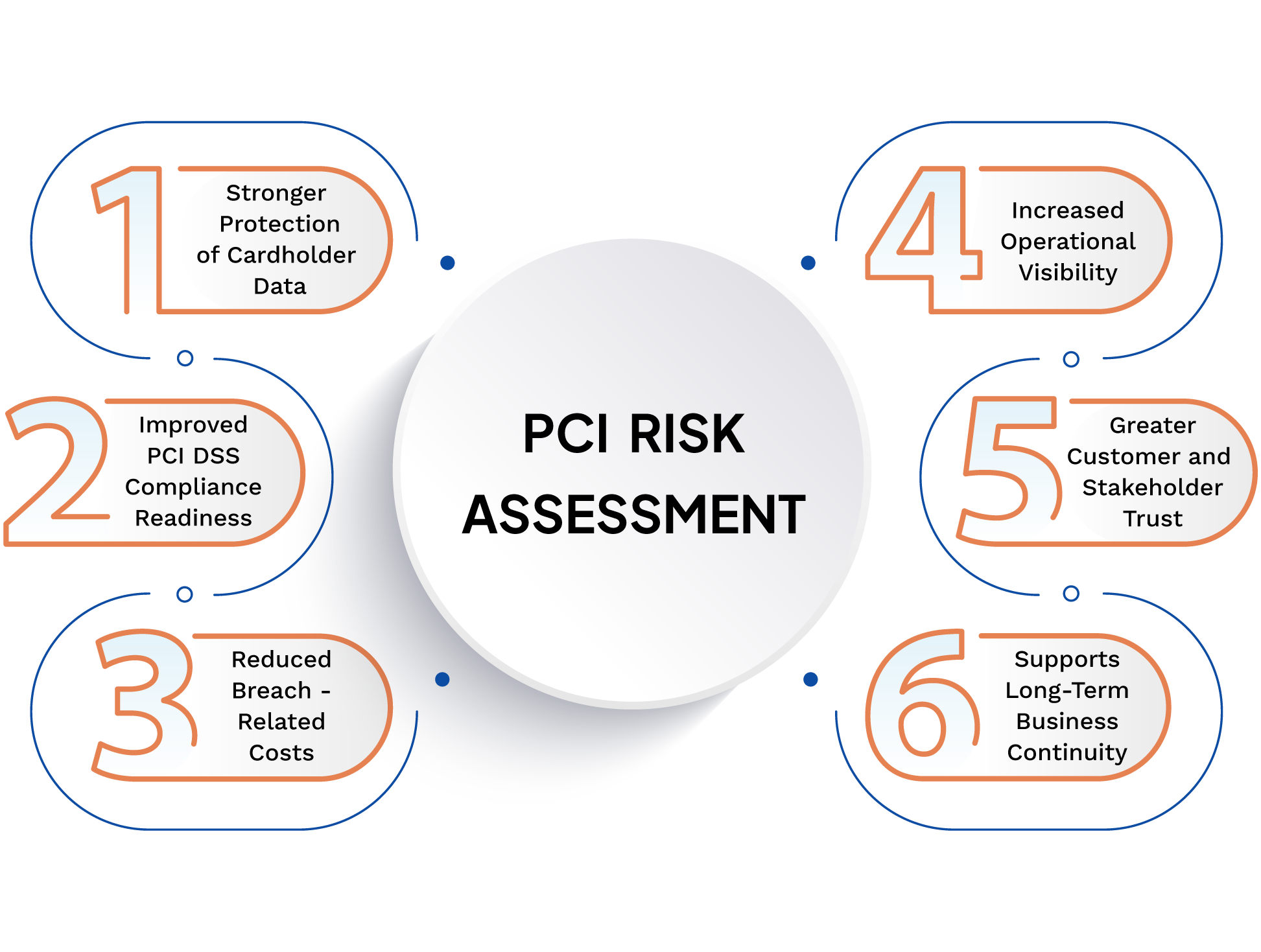
At its core, the purpose of a PCI DSS risk assessment is simple yet vital to safeguard cardholder data and prevent breaches. Conducting a PCI DSS risk assessment allows retailers to identify and address vulnerabilities across their payment ecosystems. Whether it’s outdated POS systems, misconfigured firewalls, or risky third-party integrations, these assessments shed light on weaknesses that attackers often exploit.
But more specifically, PCI DSS risk assessments help:
Stronger Protection of Cardholder Data
At the heart of every PCI risk assessment is the goal to secure sensitive cardholder information. By identifying and addressing weak points across your payment systems, networks, and applications, businesses can drastically reduce the risk of data theft and fraud.
Improved PCI DSS Compliance Readiness
Staying compliant with PCI DSS isn’t a one-time effort-it requires ongoing vigilance. Risk assessments help you stay aligned with evolving compliance standards, making audits smoother and preventing unexpected gaps that could lead to fines or sanctions.
Reduced Breach-Related Costs
Data breaches are not only damaging to your reputation but also come with significant financial consequences-from legal fees and customer notifications to penalties and lost business. Regular assessments can proactively prevent incidents, saving organizations from these heavy costs.
Increased Operational Visibility
PCI risk assessments give you a clearer picture of how data flows through your environment. This visibility helps uncover hidden vulnerabilities, improve internal controls, and streamline processes for greater overall efficiency.
Greater Customer and Stakeholder Trust
When customers know their data is protected, they’re more likely to engage with confidence. A strong commitment to PCI compliance reflects well on your brand, fostering long-term trust among customers, partners, and stakeholders alike.
Supports Long-Term Business Continuity
Cyberattacks and compliance failures can disrupt operations, causing downtime and revenue loss. PCI risk assessments play a key role in business continuity planning, helping ensure your systems remain secure, available, and resilient-even in the face of unexpected threats.
Conclusion: Retailers, It’s Time to Prioritize PCI DSS Risk Assessments
2025 is not the year to cut corners on compliance. Whether you’re a single-store retailer in Texas or a luxury chain in NYC, PCI DSS risk assessments are your frontline defense. They’re not just about ticking boxes – they’re about keeping your business safe, trusted, and future-ready.
Invest in regular, documented, and proactive assessments. Bring in external experts if needed. Most importantly, treat compliance as culture, not cost.
FAQs
1. How Does Risk Assessment Fit into PCI DSS Compliance?
Risk assessment is part of Requirement 12 and ensures threats are continuously identified and mitigated.
2. What Is the PCI DSS Risk Assessment Requirements for 2025?
Annual assessments, documentation, targeted reviews, and inclusion of new technologies.
3. How Can You Validate Your PCI DSS Compliance Status?
Through SAQ (for small retailers) or ROC (for large enterprises), supported by risk assessments and scans.
4. What Is a Targeted Risk Assessment Under PCI DSS?
A focused analysis of specific areas or technologies, such as mobile payments or third-party tools.
5. What’s Included in a PCI DSS Risk Assessment?
Threat identification, likelihood analysis, risk ranking, mitigation strategies, and documentation.
6. Is PCI DSS Level 4 Self-Assessment Still Applicable in 2025?
Yes, but more evidence and stricter validation may be required depending on your acquiring bank.
7. Who Must Comply with PCI DSS?
Any entity that stores, processes, or transmits cardholder data-including all retailers.
8. What Is PCI DSS Risk Assessment Process?
Identify risks → Analyze impact and likelihood → Prioritize → Develop controls → Document.
9. Do Risk Assessments Replace Penetration Testing?
No. Risk assessments identify threats; pen tests test your defenses.
10. Can PCI DSS Risk Assessment Be Outsourced?
Yes, many retailers use QSA firms or MSSPs to conduct or support assessments.
11. How Often Should Retailers Perform PCI DSS Risk Assessments?
At least annually or after any major change in systems, technology, or vendors.
12. Is There a Standard Template for PCI Risk Assessments?
PCI Council provides guidance, but the format can vary based on SAQ type or QSA input.
13. Are Online-Only Retailers Also Required to Do Risk Assessments?
Absolutely. E-commerce platforms are prime targets for card data breaches.
14. What’s the Penalty for Non-Compliance?
Fines, breach investigations, and even the revocation of your ability to process cards.
15. How Can Retailers Stay Updated on PCI DSS Requirements?
Follow the official PCI Security Standards Council site and subscribe to security advisories.