Have you ever wondered if a penetration test report alone is enough to protect your organization? While many companies stop at the technical findings, real security lies in understanding, prioritizing and acting on those insights. This is where penetration testing consulting services come in, offering much more than a report by guiding you with a clear and strategic approach to strengthen your defenses.
What Is Penetration Testing Consulting Services?
Penetration testing consulting services go beyond simply identifying vulnerabilities. While a standard test might end with a technical report, consulting services help organizations understand the results, fix the issues and improve their long-term security posture. These services include expert guidance, strategic advice, and hands-on support that connects technical findings with significant business risks. By involving both IT and leadership teams, consultants help ensure that security actions align with business goals. Instead of treating security as a one-time task, this approach turns penetration testing into a continuous improvement process.
Why a Report Alone Is Not Enough?
Getting a penetration testing report is useful, but it often leaves teams unsure about what to do next. The report lists technical issues, but without expert help, many businesses struggle to understand the risks or how to fix them. Teams may delay action, miss critical threats or apply the wrong fixes. A report does not explain what matters most to your business or how to reduce the impact quickly. That is why guidance after the test is so important. It helps turn findings into clear steps, saving time and improving security faster.
What the Penetration Testing Report Really Tells You?
A Penetration Testing Report reveals how your systems could be exploited, what data is at risk, and how those risks might affect your business. A well-prepared report links technical issues to their real-world impact. It explains the severity of each threat, the chance of it being exploited, and the actions needed to fix them. When clearly explained, the report becomes a guide for action rather than just a list of problems. It helps you focus on the most critical areas, supporting smarter decisions to strengthen your security.
How Security Advice Adds More Value
Security advice adds depth to penetration testing by turning raw findings into clear, actionable steps. Below are the given reasons which indicate why security advice adds more value:
- Helps Understand Real Risks – Security advice explains which vulnerabilities are most dangerous, so businesses can focus on what matters most.
- Prioritizes Fixes – Consultants guide organizations to fix the highest-risk issues first, making the best use of time and resources.
- Offers Practical Recommendations – Advice is customized to fit the company’s unique systems and environment, ensuring solutions work well in practice.
- Supports Effective Remediation – Experts help teams avoid common mistakes and apply fixes correctly, speeding up the process.
- Raises Security Awareness – Security advice educates employees and leaders, encouraging a culture that values and practices good security habits.
- Ensures Compliance – Consultants help align security efforts with industry regulations and standards, reducing legal and financial risks.
- Build Long-Term Plans – Advice includes creating ongoing security improvement roadmaps to prepare for future threats and maintain strong defenses.
Creating a Plan to Improve Security Over Time
Creating a plan to improve security over time involves understanding your current security weaknesses and aligning future improvements with your business goals:
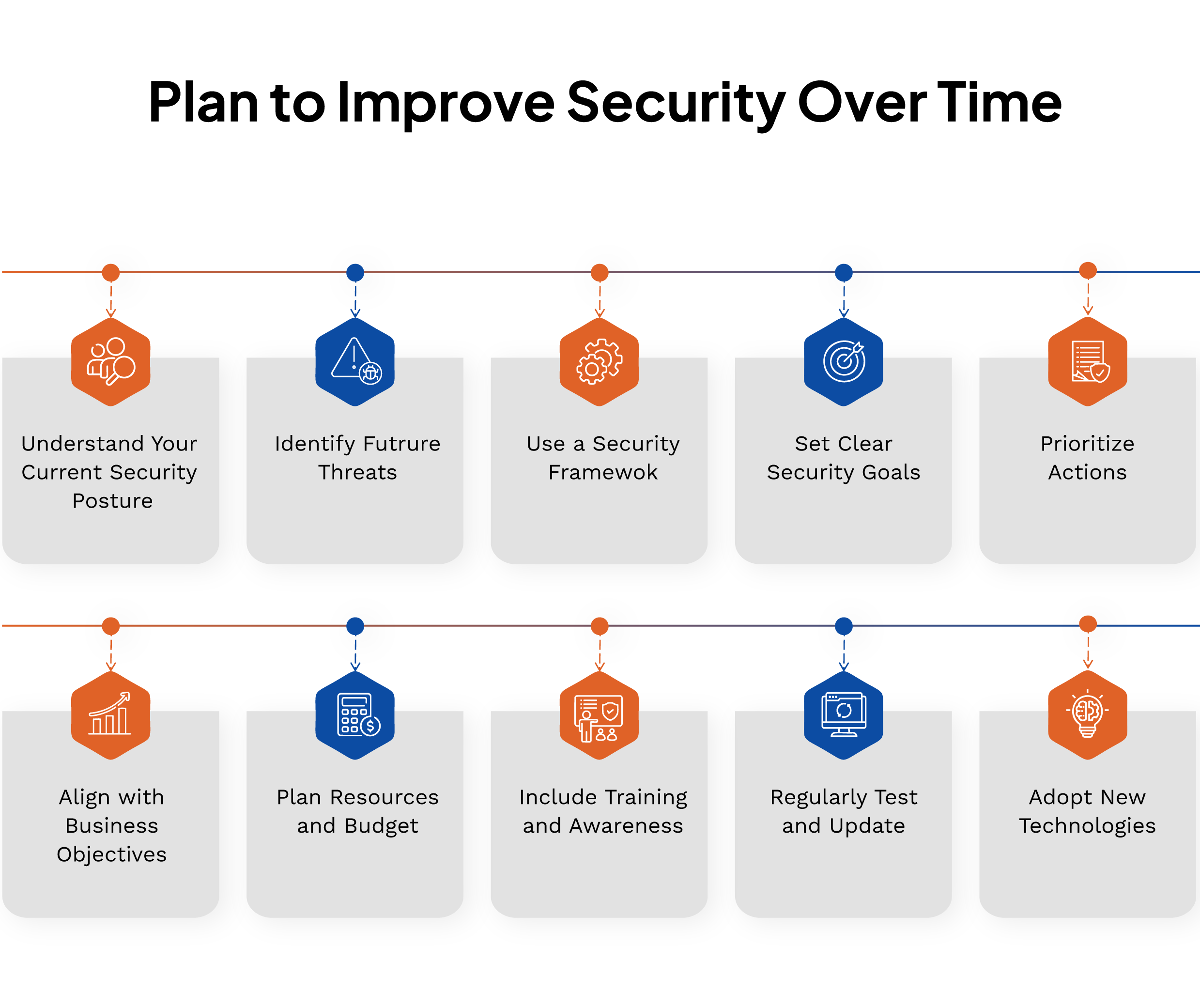
- Understand Your Current Security Posture – Assess existing vulnerabilities and how well your security measures are working.
- Identify Future Threats – Consider emerging risks like ransomware, supply chain attacks and new cyberattack methods.
- Use a Security Framework – Apply standards like the NIST Cybersecurity Framework to measure security maturity and set goals.
- Set Clear Security Goals – Define what you want to achieve, such as reducing risk levels or improving specific defenses.
- Prioritize Actions – Focus first on fixes that address the most critical risks or are easiest to implement.
- Align with Business Objectives – Ensure security plans support overall company goals and compliance requirements.
- Plan Resources and Budget – Allocate time, money and personnel realistically to support your security initiatives.
- Include Training and Awareness – Build skills within your team and promote a culture of security awareness.
- Regularly Test and Update – Continuously test incident response plans and update your security roadmap as threats evolve.
- Adopt New Technologies – Consider modern solutions like zero-trust models and AI-based threat detection to strengthen defenses.
Combining Testing Advice and Training for Better Results
Bringing together penetration testing, expert advice and hands-on training creates a strong, well-rounded approach to cybersecurity. Penetration testing alone uncovers where your defenses are weak, but without expert guidance, it can be hard to know which issues are most urgent or how to fix them. Security consultants’ step in to translate test results into clear, practical recommendations tailored to your business needs, helping you prioritize and plan your next steps.
Training workshops then give your team the skills to put these recommendations into action. By practicing real-world scenarios and remediation techniques, staff learn how to respond quickly and effectively to threats. This process not only builds confidence and expertise within your team but also reduces the need to rely on outside help for every issue.
When testing, advice and training work together, they create a continuous improvement cycle. Testing reveals new risks, advice guides your response, and training ensures your team can handle challenges as they arise. This integrated strategy strengthens your overall security posture and builds a culture of vigilance and readiness throughout your organization, making you better prepared for evolving cyber threats.
How to Choose the Right Penetration Testing Consulting Partner
Choosing the right penetration testing partner is essential to safeguard your systems. Here’s a clear checklist to help you make the right decision:
1. Check Industry Experience
Select a provider who has worked with businesses in your domain. This ensures they understand your infrastructure, compliance needs, and possible attack surfaces. ValueMentor has extensive experience across sectors such as banking, healthcare, and Fintech.
2. Look for Trusted Accreditations
Choose a firm that holds recognized accreditations such as CREST and DESC. These confirm their adherence to international testing standards. ValueMentor is both CREST, DESC accredited and also a Singapore licensed penetration testing service provide.
3. Evaluate Their Communication Approach
Your partner should explain vulnerabilities in simple language and provide clear, practical solutions. They should act as advisors who support your team at every step.
4. Review the Range of Services
Ensure they provide a complete range of penetration testing services. ValueMentor covers everything including network, application, cloud and red team testing to offer end-to-end security assurance.
5. Assess Post-Engagement Support
A good partner will not stop delivering the report. They will guide you through remediation, help you close gaps, and strengthen your defense.
Conclusion
Penetration testing consulting services offer much more than a technical checklist. They help organizations find weaknesses, understand risks, and take real action to protect what matters most. By combining expert advice, hands-on workshops and clear communication, these services turn security testing into a path for ongoing improvement. With the right consulting partner, businesses can build stronger defenses, meet compliance needs, and stay ready for new threats. Investing in this comprehensive approach means your security program grows with your business, keeping your people, data and reputation safe for the long term.
FAQs
1. How does penetration testing help improve cybersecurity?
Penetration testing simulates real-world attacks to uncover security flaws in your systems, networks, or applications. It helps you find and fix vulnerabilities before malicious hackers can exploit them, reducing the risk of data breaches and downtime.
2. Why do I need a consulting partner for penetration testing?
An expert partner brings experience, proven tools and industry knowledge that in-house teams may lack. They provide an unbiased, professional view of your security posture.
3. What certifications should I look for in a penetration testing firm?
Look for globally recognized accreditations like CREST and DESC. These show that the firm follows strict testing standards and best practices.
4. How often should penetration testing be done?
Penetration testing is commonly performed once a year. However, it is wise to test again after major updates to your systems, applications or network. Some industries may require more frequent testing to meet compliance needs.
5. What industries benefit most from penetration testing?
Sectors like banking, healthcare, government, retail and tech benefit greatly due to their sensitive data and regulatory requirements.
6. How do I know if a testing partner is the right fit for my business?
Check their experience in your industry, the services they offer, client feedback, and how well they understand your security goals.
7. What should be included in a penetration test report?
A good report includes a summary of findings, risk ratings, detailed vulnerabilities, proof of exploitation, and clear remediation steps.
8. Does the consulting partner help after the test is complete?
Yes, a reliable partner supports your team through the remediation process and helps you prioritize actions based on risk.
9. Is all penetration testing services the same?
No. Some firms only do automated scans, while others provide in-depth manual testing, red teaming, source code review, and tailored assessments.
10. Why choose ValueMentor as a consulting partner?
ValueMentor is CREST and DESC accredited, offers comprehensive services and has proven experience across industries. They focus on long-term security, not just one-time testing.