What if the biggest threat to your business is a small flaw you did not even know existed? Many cyberattacks succeed not because of complex techniques, but because of tiny gaps in security that go unnoticed. These are called security gaps. If they are not found and fixed on time, hackers can use them to steal data or harm businesses. Penetration testing services help find these gaps before anything bad happens. They work by safely testing your systems the way a hacker might, but without causing any real damage. This helps your team understand the risks and fix them early. For any business that uses the internet or stores important data, this is a smart and necessary step to stay safe.
What Are Penetration Testing Services?
Penetration Testing Services are controlled and ethical hacking activities carried out by cybersecurity professionals to detect and fix security weaknesses in an organization’s systems before real attackers can take advantage of them. These simulated attacks help identify potential entry points, misconfigurations or weak spots across networks, applications and infrastructure, allowing businesses to improve their overall security posture.
The services can be seen in below image:
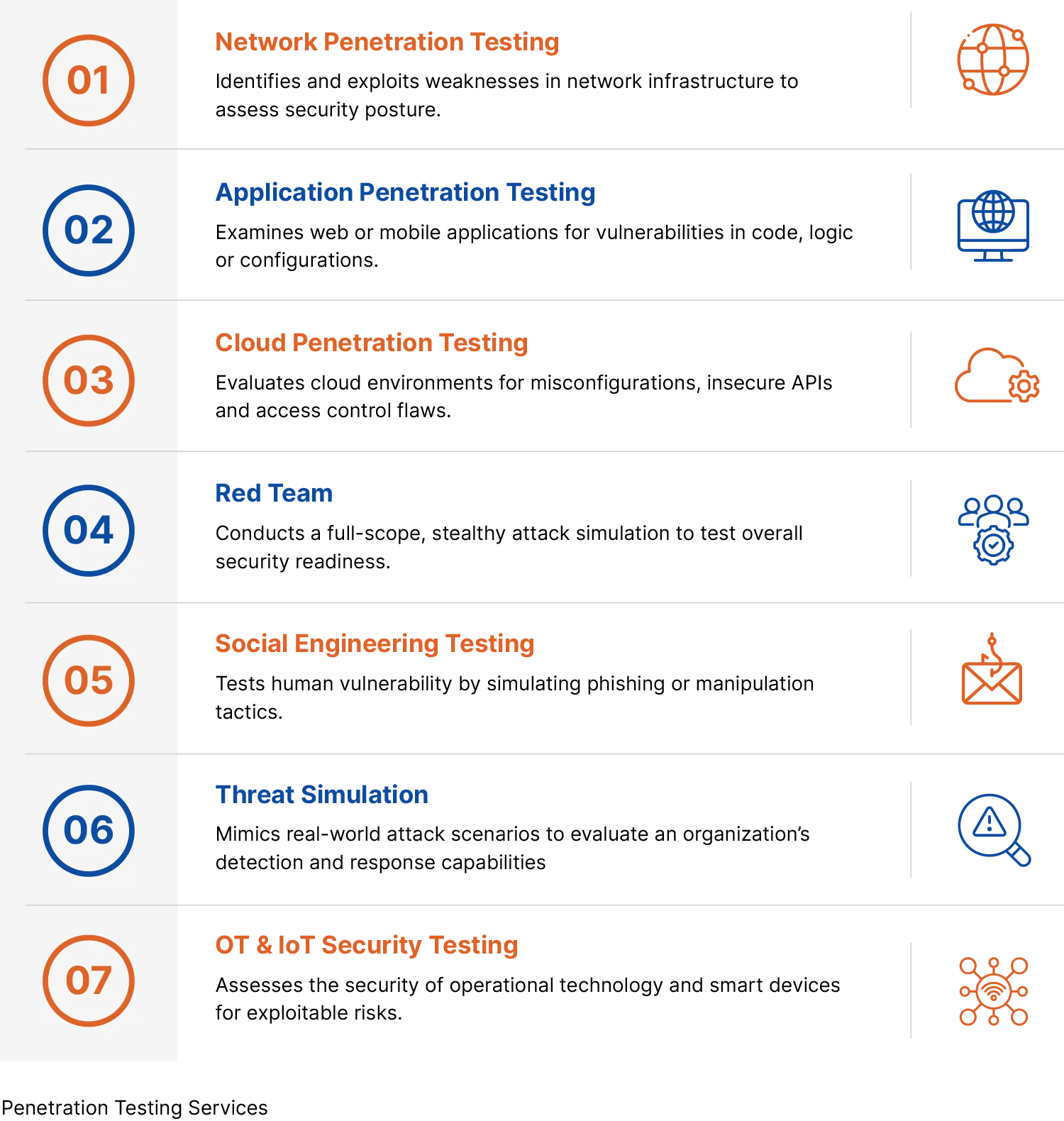
What Are Security Gaps and Why Are They Risky?
Security gaps are the unnoticed flaws in your cyber environment that hackers actively look for. These include:
- Unpatched Software and Operating Systems – When systems are not updated, they carry known vulnerabilities that attackers can easily exploit to gain access or control.
- Weak or Reused Passwords – Poor password practices make it simple for attackers to break in using brute force or stolen credentials.
- Misconfigured Firewalls or Servers – Incorrect settings can leave sensitive ports open or expose internal resources to the internet.
- Outdated Antivirus or Endpoint Protection – Without up-to-date protection, malware and ransomware can slip undetected.
- Lack of Network Segmentation – When your internal network is not properly segmented, attackers can move freely across systems once they get in.
- Insecure APIs and Web Applications – Flaws in apps or exposed APIs can give attackers a direct path to your data or backend systems.
- Unrestricted User Privileges – Giving users more access than needed increases the damage if an account is compromised.
Why Regular Penetration Testing is Important?
What is secure today may become vulnerable tomorrow. This is why penetration testing should not be a one-time activity. Here’s why regularly proactive security testing matters:
1. New Vulnerabilities Emerge Constantly – Software and hardware systems receive updates. Along with those changes come new bugs and security flaws. Regular testing helps identify and address these issues before attackers do.
2. Changes in IT Infrastructure – Businesses grow, migrate to the cloud and adopt new technologies. Each change introduces new potential entry points. Regular testing ensures that every part of your environment stays secure as your systems evolve.
3. Compliance and Regulatory Demands – Many industries require regular penetration testing under laws like GDPR, HIPAA, PCI DSS and ISO 27001. Failing to meet these standards can lead to penalties, legal issues and loss of certification.
4. Early Detection of Hidden Risks – Not all vulnerabilities are visible or detectable by automated tools. Skilled testers can uncover deep-seated flaws that might remain hidden for months. Early discovery helps prevent data breaches and system compromise.
5. Helps Prioritize Security Investments – Penetration tests provide detailed, risk-based reports. These insights help decision-makers understand where to focus their security budgets and which issues pose the greatest risk to operations.
6. Builds Customer and Stakeholder Trust – Clients want assurance that their data is safe. Showing a strong, ongoing security testing process demonstrates commitment to protecting sensitive information, which boosts your reputation.
7. Enhances Incident Response Readiness – Penetration testing reveals how your team and systems perform during a real attack. This will help refine your detection, response and recovery processes before a real incident occurs.
8. Reduces Long-Term Costs – Fixing a vulnerability before it is exploited is far cheaper than dealing with the aftermath of a breach. Regular testing helps you stay ahead of threats and avoid costly disruptions.
How Does Penetration Testing Work?
Penetration testing is a structured process. It follows a clear path from planning to reporting. Each step helps identify, analyze and address security weaknesses in a controlled and responsible way. Here’s how a typical penetration testing engagement flows:
- Planning – The engagement begins with a discussion to define objectives, set boundaries and agree on which systems or applications will be tested. Clear rules of engagement are established to avoid disrupting business operations.
- Reconnaissance – Testers gather information about the target environment using public sources and technical tools. This step helps identify possible entry points and understand the organization’s attack surface.
- Vulnerability Identification – Security professionals use a mix of automated tools and manual techniques to find weaknesses in systems, applications or network configurations.
- Exploitation – Testers attempt to exploit discovered vulnerabilities in a controlled manner. The goal is to demonstrate how an attacker could gain access or move through the environment without causing real harm.
- Post-Exploitation and Analysis – The team assesses the impact of successful attacks, determines what sensitive data or systems could be reached and documents the findings.
- Reporting – A detailed report is prepared, outlining each vulnerability, the method of exploitation and the potential business impact. The report includes clear recommendations for fixing identified issues.
- Remediation and Verification – The organization addresses the findings and testers may conduct follow-up checks to ensure vulnerabilities have been properly fixed and no new issues have been introduced.
This structured approach is key to getting real value from penetration testing services, whether for application security, network security or mobile apps.
How to Turn Test Results into Real Safety Improvements
Getting the results from a penetration test is only the first step. The real value comes from using those results to make your systems safer. Here’s how you can turn test findings into real security improvements:
- Review and Prioritize the Findings – Prioritizing vulnerabilities is essential. Focus on high-risk issues first and use a risk rating system to guide your actions.
- Create a Clear Action Plan – Assign responsibilities and set deadlines for remediation. Clear planning ensures accountability and timely fixes.
- Fix the Issues – Address critical vulnerabilities first, such as patching software or updating configurations. Work through your action plan systematically.
- Test Again – After remediation, retest to confirm that vulnerabilities have been resolved and no new issues have been introduced.
- Update Your Policies and Training – If findings relate to user behavior, update your security policies and provide additional training to staff.
- Track Progress and Document Everything – Keep detailed records of your remediation efforts and use tracking tools to monitor progress. Documentation is important for audits and ongoing improvements.
- Make Continuous Improvement a Habit – Regularly schedule penetration tests and stay updated on new threats to ensure your security posture remains strong.
How to Track Fixes and Keep Improving Security
Tracking fixes the right way helps close gaps faster and keeps your security moving forward. Here is how to do it effectively without losing control:
1. Maintain a live remediation log
Use a central file or platform to list all issues found during testing. Include details like severity level, assigned team member and target resolution date. Update it regularly as progress is made.
2. Use proper tracking tools
Ticketing systems or security platforms help assign tasks, send alerts and keep records. These tools also let you filter issues based on risk, urgency or progress.
3. Link each fix to its root cause
Record what caused the issue. This helps avoid repeating the same mistakes and gives insight into weak areas of your system or process.
4. Set response deadlines based on risk level
High risk issues should be resolved first. Assign timelines based on impact and track how long each fix takes. This helps spot delays and adjust your approach.
5. Retest before marking as resolved
After applying a fix, run a second test to confirm it worked. Do not close the issue until it passes validation.
6. Generate regular progress reports
Monthly or weekly reports can help you measure how many issues were fixed, how fast and which ones are still pending. These reports keep teams focused and management informed.
7. Use patterns to guide future improvements
Look at repeated issues or slow response areas. This data can help you train staff, update security policies or improve system settings.
Conclusion
Penetration testing services help identify security gaps that may otherwise go unnoticed. They allow organizations to test their defenses in a safe and controlled way, revealing weak points before attackers can exploit them. By acting on test results, tracking each fix and improving processes over time, businesses can build stronger and more reliable security. With the right approach and a trusted testing partner, penetration testing becomes more than a one-time exercise. It becomes a key part of staying secure and protecting what matters most.
FAQs
1. What systems can be tested during a penetration test?
Penetration tests can be done on websites, mobile apps, cloud environments, internal networks, servers and even APIs. The scope depends on what the organization wants to test.
2. What types of penetration testing services are available?
Common types of penetration testing services include:
– Network Penetration Testing
– Application Penetration Testing
– Cloud Penetration Testing
– OT & IoT Security Testing
– Red Team
– Social Engineering Testing
– Threat Simulation
3. How long does a penetration testing service take?
It depends on the size and complexity of the system. A simple test may take a few days, while a full network test may take a few weeks. The testing plan is usually discussed in advance.
4. Is penetration testing service safe for my systems?
Yes. These tests are done by professionals using safe methods. They are planned carefully to avoid causing harm or downtime while still showing how a real attacker might break in.
5. How are the results of a penetration test delivered?
After the test, the team prepares a detailed report. It includes the list of weaknesses found, how serious they are, how they were found and clear steps on how to fix them.
6. Why should a business invest in penetration testing services?
These services help protect sensitive data, avoid cyberattacks, stay compliant with regulations and reduce long term costs by fixing problems before they cause real damage.
7. Is penetration testing required by law or industry standards?
Yes. Many industries require regular testing under standards like PCI DSS, ISO 27001, HIPAA and GDPR. These tests help meet compliance and show that your systems are secure.
8. What happens after the penetration testing service is done?
Your team should start fixing the issues listed in the report. After that, are test is often done to make sure all problems were fixed correctly and no new issues were created.
9. How do I choose the right penetration testing service provider?
Choose a provider with strong experience, clear communication and a well-defined testing approach. Look for trusted accreditations such as CREST and DESC. ValueMentor meets these standards and is also a Singapore authorized penetration testing service provider, helping businesses secure their systems with confidence.
10. Can penetration testing disrupt normal business operations?
If not planned carefully, testing can affect systems or performance. That is why professional testers follow controlled procedures and usually conduct tests during low impact hours or in test environments.