
Modern organizations operate with complex integration of various systems and cloud computing, with remote access environments as well as integrations with external parties. While all these advancements make organizational processes more efficient, they simultaneously create additional possibilities for a cyber attack to spread across networks following the initial point of entry. In such a scenario, the necessity of performing segmentation penetration testing comes into the play. Such a kind of testing allows the company to check its segmentation capabilities to make sure that the hacker cannot move between different networks.
When it comes to companies working with regulated data, network segmentation becomes more than a security guideline. This process plays an important role in ensuring compliance. Performing network segmentation tests will help the organization detect any hidden vulnerabilities, reduce the attack surface, and improve the overall internal network security. Segmentation penetration testing is a topic for this blog. Here, we will cover its definition, functioning, benefits, and possible risks.
What is Segmentation Penetration Testing?
Segmentation Penetration Testing is an evaluation method that seeks to validate how effective network segmentation controls have been implemented within an organization. This involves performing attacks on a network to establish whether users, devices, and/or even malicious individuals can bypass network segmentation.
Network segmentation divides an organization’s infrastructure into smaller isolated zones. These segments may separate:
- Internal employee networks
- Payment card environments
- Guest Wi-Fi networks
- Development and production systems
- Sensitive databases
- Cloud workloads
The purpose of segmentation testing is to verify that firewalls, VLANs, access control lists, routing rules, and security policies are properly configured to prevent unauthorized communication between these segments.
Why network segmentation matters?
Without proper segmentation, a single compromised device can expose an entire organization. Cybercriminals often exploit weak internal controls to move laterally across networks after gaining initial access.
Effective segmentation offers several security advantages:
Reduces Lateral Movement
If attackers breach one system, segmentation limits their ability to access other critical assets. This containment significantly reduces the potential impact of a cyberattack.
Protects Sensitive Data
Critical systems containing financial information, customer records, or intellectual property can be isolated from general business networks.
Improves Compliance
Several compliance requirements such as PCI-DSS suggest that network segmentation be used to safeguard the sensitive environment.
Limits Insider Threats
The segregation process will help in preventing access to any other department or system which is not necessary to prevent internal threats.
Enhances Incident Response
Segregated smaller environments make it much easier to handle the incidents and analyze them as well.
How Segmentation Penetration Testing Works?
Segmentation testing involves a structured process where security professionals attempt to bypass internal network restrictions and access protected environments.
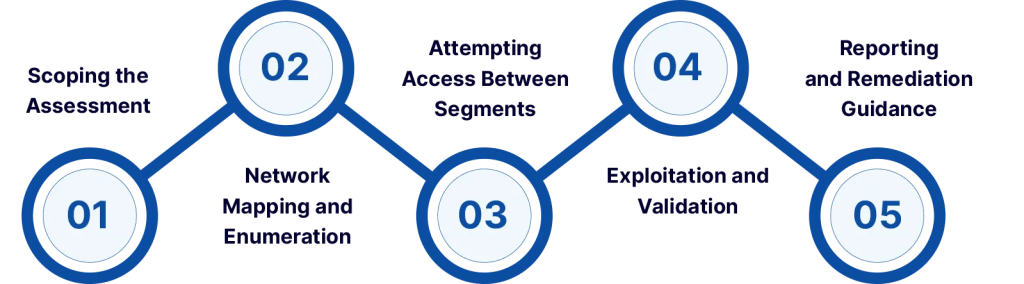
How Segmentation Penetration Testing Works?
1. Scoping the Assessment
The testing team identifies which network segments, applications, and systems will be included in the engagement. Critical environments such as payment systems or confidential databases are usually prioritized.
2. Network Mapping and Enumeration
Security testers analyze the internal network structure, identify accessible services, and map communication paths between segments.
3. Attempting Access Between Segments
The penetration testing team simulates attacks to determine whether segmentation controls can be bypassed. They may attempt to:
- Access restricted servers
- Exploit misconfigured firewall rules
- Abuse open ports or protocols
- Test VLAN hopping vulnerabilities
- Identify weak access control policies
4. Exploitation and Validation
If vulnerabilities are discovered, testers validate whether they could realistically allow lateral movement or unauthorized access.
5. Reporting and Remediation Guidance
The final report highlights vulnerabilities, affected systems, risk levels, and actionable recommendations for improving segmentation security.
Common Weaknesses Found During Segmentation Testing
Segmentation penetration tests frequently uncover hidden configuration issues that organizations may overlook during routine operations.
Misconfigured Firewalls
Improper firewall rules may unintentionally allow communication between sensitive and non-sensitive environments.
Excessive Access Permissions
Users or systems often have broader access than necessary, increasing the risk of unauthorized movement.
Open Management Ports
Administrative services such as RDP, SSH, or SMB may remain exposed internally without proper restrictions.
Weak VLAN Configurations
A poorly configured VLAN might, at times, provide an attacker the opportunity to circumvent the segmentation boundary.
Legacy Systems and Unpatched Devices
Systems that lack sufficient security configurations and have not been updated are likely to act as open doors for attackers when segmenting networks.
Industries that benefit From Segmentation Penetration Testing
Every industry that runs internal networks will benefit from penetration testing, although some are more crucial than others.
| Industry | How Segmentation Penetration Testing Helps |
|---|---|
| Financial Services | Banks and financial institutions use segmentation testing to secure transaction systems and customer data. |
| Healthcare | Hospitals and healthcare providers must protect patient records and connected medical devices from unauthorized access. |
| Retail and E-Commerce | Retailers handling payment card information rely on segmentation to isolate cardholder data environments. |
| Manufacturing | Industrial control systems and operational technology networks require segmentation to prevent disruptions and cyber sabotage. |
| Technology and SaaS Companies | Cloud-based businesses use segmentation to secure customer environments, development systems, and production infrastructure. |
Segmentation Testing and Compliance Requirements
Many regulatory frameworks emphasize the importance of segmentation validation as part of broader cybersecurity programs.
PCI DSS Compliance
Organizations handling payment card data often implement segmentation to limit their PCI DSS requirements. But this should be regularly tested to verify that segmentation successfully separates the cardholder data environment.
HIPAA Compliance
Health care organizations may rely on segmentation to protect electronic protected health information (ePHI).
ISO 27001
Network segmentation supports ISO 27001 security controls related to access management and network security.
SOC 2 Requirements
Segmentation testing helps demonstrate strong internal controls and security practices for service organizations.
Best Practices for Effective Network Segmentation
To maximize the effectiveness of segmentation security, organizations should follow several best practices.
Apply Least Privilege Access
Grant users and systems only the minimum level of access required for their roles.
Continuously Monitor Internal Traffic
Network monitoring tools can help detect unusual communication patterns between segments.
Regularly Review Firewall Rules
Periodic reviews reduce the risk of outdated or unnecessary access permissions.
Segment Critical Assets Separately
Sensitive systems should be isolated from standard user environments and public-facing applications.
Perform Routine Penetration Testing
Regular segmentation testing ensures controls remain effective as networks evolve.
Conclusion
Penetration testing of network segmentation is very crucial when it comes to making the internal security of an organization’s network stronger. The reason why this should be done is that it enables organizations to know if their network segments are really able to limit or prevent any form of malicious activities from hackers. In this age of advanced and intelligent cyberattacks, it is important for companies not to rely solely on their network security at the boundaries of their networks.
By proactively segmenting and hardening their security infrastructure, companies will be able to effectively guard themselves against any emerging security issues. Keep your internal network safe from lateral movement and vulnerabilities through segmentation penetration testing services by ValueMentor. Our team of cybersecurity experts assist companies in identifying vulnerabilities within their segmentation policies, compliance validation, and ensuring robust network security. Reach out to us now for a comprehensive segmentation penetration test and ensure security of your critical systems.
FAQs:
1. What is the main purpose of segmentation penetration testing?
Its primary purpose is to verify that network security controls effectively block unauthorized access between isolated environments.
2. How does segmentation reduce cyber risk?
Segmentation minimizes attack surfaces and prevents attackers from accessing multiple systems after an initial breach.
3. Is segmentation penetration testing different from regular penetration testing?
Yes, segmentation testing specifically focuses on validating internal network boundaries and access restrictions between segments.
4. What systems are usually included in segmentation testing?
Critical assets such as payment systems, databases, production servers, cloud environments, and internal applications are commonly tested.
5. Can poor segmentation lead to data breaches?
Yes, weak segmentation can allow attackers to move freely across networks and access sensitive information.
6. Who should perform segmentation penetration testing?
Certified cybersecurity professionals or experienced penetration testing teams should conduct the assessment.
7. What are the signs of weak network segmentation?
Unrestricted internal access, open management ports, outdated firewall rules, and flat network structures often indicate weak segmentation.
8. Does segmentation testing help with internal threat protection?
Yes, it helps restrict unnecessary internal access and reduces risks from insider threats or compromised employee accounts.
9. What happens after a segmentation penetration test?
Organizations receive a detailed report outlining vulnerabilities, risk levels, affected systems, and remediation recommendations.
10. Why should businesses conduct segmentation testing regularly?
Regular testing ensures security controls remain effective against evolving threats, infrastructure changes, and compliance requirements.