In a widely used application for software development and management, admins could effortlessly invite new users to join their organization. Secure access to applications is paramount. But what happens when a seemingly harmless feature introduces a critical security vulnerability? This blog dives into a real-world example from a popular software development and management application. We’ll explore how a flaw in the user invitation process exposed users to the risk of unauthorized password resets. et
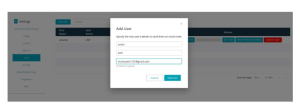
Initially, the process seemed straightforward new users receive email invitations and had to confirm their email addresses to gain access
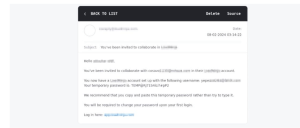
Alongside each invitation, recipients also received a default password in their email. While seemingly harmless. When users attempted to log in with this default password, they were immediately directed to a page prompting them to change their password.
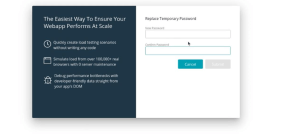
Here, the user must set a new password before gaining access to their account and the organization.
Here’s
How the attack unfolds?
When the admin invites a malicious user to the organization, an invitation email containing a default password is sent to the attacker’s email address.

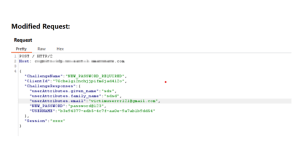
The malicious user, utilizing tools like Burp Suite, captures the password reset request. They subsequently alter the request by changing the recipient email address from their own to the victim’s email address.
By sending the modified request, the password for “victimuserrr121@gmail.com” can be changed.
This flaw was a result of weak access control and authentication methods. Due to the absence of strict verification steps, unauthorized password changes were possible. Consequently, several attacks became feasible:
- Malicious users could reset passwords for other users within the organization.
- Admins could reset any user’s password without confirming their identity.
- Admins could add users without obtaining their consent or verifying their email addresses.
This story underscores the imperative for enhanced security measures throughout software development. Remediation Steps: The scenario outlined in this blog exposes a critical security flaw: the ability for unauthorized password resets. Here are several remediation steps to prevent such vulnerabilities:
1. Implement Multi-Factor Authentication (MFA) :
MFA adds an extra layer of security by requiring users to provide a second verification factor beyond just a password. This could be a one-time passcode sent via SMS, an authentication app notification, or a fingerprint scan.
Even if an attacker intercepts the default password, they wouldn’t be able to access the account without the additional verification factor.
2. Secure Password Reset Process :
Eliminate the practice of sending default passwords in email invitations. Instead, upon confirming their email address, users should be directed to a secure page to set a strong password of their choosing.
Employ robust password complexity requirements, enforcing a minimum password length and a combination of uppercase and lowercase letters, numbers, and special characters.
3. Email Verification for Password Resets :
When a password reset request is initiated, send a verification email to the user’s registered email address. This email should contain a unique link that, upon clicking, allows the user to set a new password.
This extra verification step ensures that only the legitimate account holder can reset their password.
4. Admin Access Controls :
Implement stricter access controls for administrators. Admins should require MFA to perform sensitive actions such as inviting new users or resetting passwords.
Consider a two-step verification process for administrators, requiring confirmation from another authorized admin before resetting a user’s password.
5. Secure Coding Practices :
Developers should follow secure coding practices to prevent vulnerabilities in password reset functionalities. This includes proper input validation and sanitization to prevent malicious manipulation of reset requests.
6. Regular Penetration Testing :
Conduct regular penetration testing to identify and address security weaknesses in the application. Penetration testing simulates real-world attacks, helping to uncover potential vulnerabilities like the one described in this blog.
By implementing these remediation steps, developers and organizations can significantly improve the security of their password reset process and prevent unauthorized access to user accounts. Remember, robust security measures are crucial for building trust and protecting user data.
Conclusion
Authentication and account recovery workflows are among the most security-sensitive components of any application. As this case demonstrates, even a seemingly minor flaw in the user invitation process can lead to unauthorized password resets, account compromise, and privilege abuse when robust server-side validation and access controls are absent.
To mitigate these risks, organizations should adopt a security-by-design approach by implementing secure invitation mechanisms, enforcing Multi-Factor Authentication (MFA), validating all password reset requests on the server, and applying the principle of least privilege for administrative actions. Regular penetration testing and secure code reviews are equally essential for uncovering business logic flaws that automated security tools often fail to detect.
At ValueMentor, our penetration testing experts go beyond identifying technical vulnerabilities we evaluate real-world attack paths, authentication workflows, authorization controls, and business logic weaknesses that could expose critical assets. By combining deep security expertise with industry best practices, we help organizations proactively strengthen their applications, reduce cyber risk, and build resilient systems that users can trust.
FAQs
1. What is the user invitation flaw described in this blog?
The flaw allowed an attacker to manipulate the password reset request generated during the user invitation process and reset another user’s password without authorization.
2. How could an attacker exploit this vulnerability?
An attacker could intercept the password reset request, modify the email parameter to a victim’s email address, and submit the request to reset the victim’s password.
3. What was the root cause of this vulnerability?
The issue stemmed from weak access controls, inadequate server-side validation, and the absence of proper authorization checks during the password reset process.
4. Why is sending default passwords via email considered insecure?
Email is not a secure channel for transmitting credentials. Default passwords increase the risk of credential theft, interception, and unauthorized account access.
5. Could administrators exploit this flaw?
Yes. If proper authorization checks were missing, administrators could potentially reset users’ passwords or invite users without their consent or identity verification.
6. How can organizations secure the user invitation process?
Organizations should replace default passwords with one-time activation links, verify email ownership, and require users to create their own passwords after successful verification.
7. How does Multi-Factor Authentication (MFA) help mitigate this risk?
MFA adds an additional verification step, making it significantly harder for attackers to gain account access even if they obtain or manipulate password reset credentials.
8. What security controls should be implemented for password reset requests?
Password reset requests should use cryptographically secure, single-use, time-limited tokens that are bound to the intended user account and validated entirely on the server.
9. Can penetration testing identify vulnerabilities like this?
Yes. A comprehensive penetration test evaluates authentication, authorization, and business logic flaws, helping identify insecure password reset and invitation workflows before attackers do.
10. Which security standards address vulnerabilities in user invitation and password reset mechanisms?
Frameworks such as OWASP ASVS, OWASP Top 10 (Broken Access Control), PCI DSS, and NIST SP 800-63 Digital Identity Guidelines provide guidance for securing authentication and account recovery processes.