Cybersecurity has become a boardroom conversation, not just an IT concern. Yet for many organizations, the challenge isn’t recognizing the risks it is finding the right leadership to tackle them. Full-time CISOs are scarce and costly, leaving businesses exposed or relying on ad-hoc solutions. This is where virtual CISO services are changing the game. More than a cost-effective alternative, they bring seasoned security expertise, strategic direction, and compliance guidance tailored to your organization’s needs.
In this blog, we will break down how virtual CISO services work, why they matter, and how they can transform your security posture from reactive to resilient.
What are Virtual CISO services?
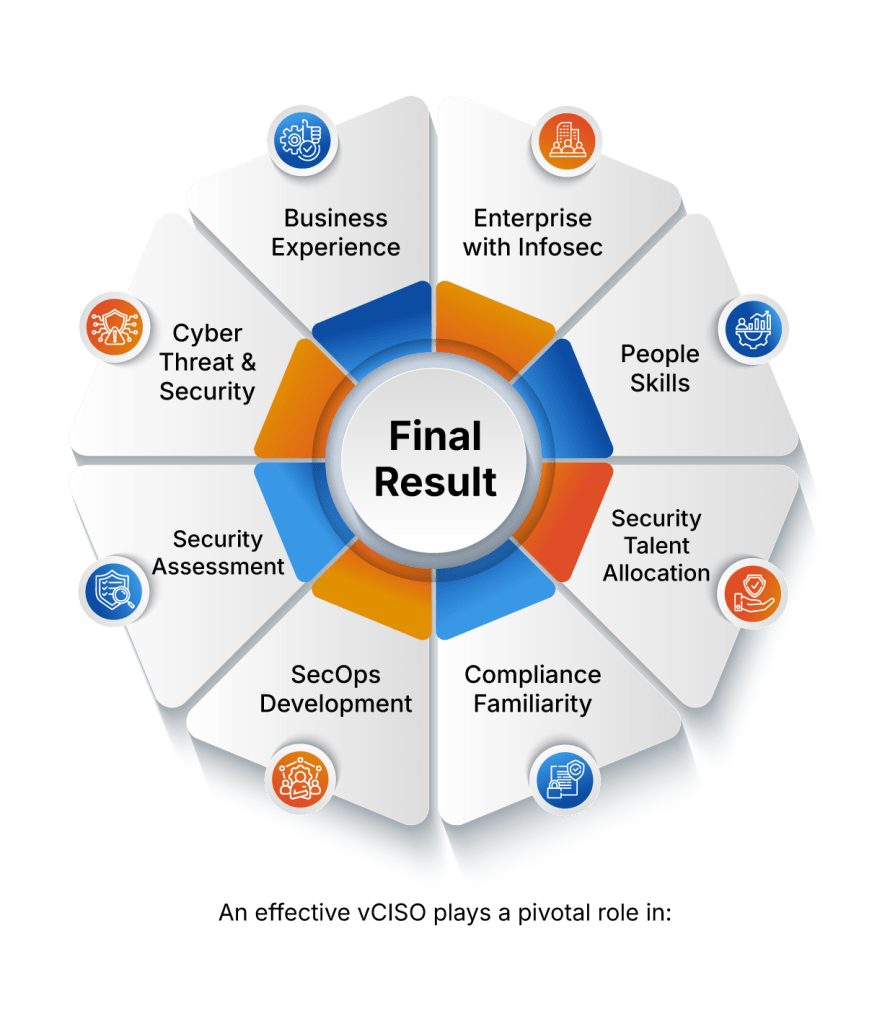
Virtual CISO services provide organizations with executive-level cybersecurity leadership on-demand, covering everything from annual security posture reviews and strategy development to ongoing program implementation, risk management, and governance committee participation. A vCISO helps design and update security roadmaps and policies, monitors risks through regular KPI/KRI reviews, and supports compliance with regulatory and third-party requirements. They also assist during internal and external audits, provide advisory on incident prevention and response, and run awareness campaigns to strengthen security culture. Delivered on an annual, quarterly, monthly, or case-by-case basis, these services give businesses a structured yet flexible way to manage cybersecurity effectively without the cost of a full-time CISO.
Think of it as renting world-class expertise rather than buying it outright. You still get a dedicated strategist to guide your team, manage risks, and ensure compliance with regulations, but at a fraction of the cost and with more flexibility. This model is especially valuable in today’s world, where cyber threats evolve faster than most organizations can keep up with internally.
Core responsibilities of a Virtual CISO
A vCISO doesn’t just advise from the sidelines they actively shape your security strategy, policies and response plans. Their services cover everything from compliance and risk management to vendor security and incident response. Their services usually include:
-
- Security Strategy & Roadmap – Aligning cybersecurity with business objectives and creating a step-by-step plan for stronger defenses.
-
- Risk Management & Monitoring – Establish/Refine the risk management framework, Managing InfoSec Projects/Initiatives for Risk Management.
-
- Compliance & Regulatory Guidance – Helping organizations meet industry requirements like GDPR, HIPAA, PCI DSS, and ISO 27001.
-
- Policy & Framework Development – Designing security policies, access controls, and incident response playbooks tailored to your business.
-
- Vendor & Third-Party Risk Management – Evaluating and monitoring risks introduced by suppliers, partners, or cloud providers.
-
- Incident Response & Crisis Management – Preparing the team to respond quickly and effectively if a breach occurs.
In short, virtual CISO services combine executive-level decision-making with operational oversight without the long hiring cycle or permanent cost.
Virtual CISO vs. In-House CISO: Why vCISO Works Better Today
Every organization needs cybersecurity leadership but how you get it makes all the difference. Traditionally, companies hired a full-time Chief Information Security Officer (CISO). Today, more businesses are turning to Virtual CISOs (vCISOs) because they deliver the same strategic direction with more agility, broader expertise, and lower cost.
An In-house CISO is a permanent hire who typically comes with long recruitment cycles, heavy costs, and a perspective shaped mostly by one organization. A vCISO, on the other hand, steps in quickly, adapts to your business model, and brings real-world lessons from multiple industries and threat landscapes. They scale up or down as your needs change, ensuring you’re never over-investing or under-protected. In short while a traditional CISO is one person embedded in your company, a vCISO is your on-demand team of strategists, risk managers, and compliance experts – giving you more value, more flexibility, and a future-ready approach to cybersecurity.
| Factor | In-House CISO | Virtual CISO (vCISO) |
|---|---|---|
| Cost | High fixed salary + benefits, often six figures annually | Flexible engagement at a fraction of the cost |
| Time to Hire | Lengthy recruitment cycle, talent shortage | Immediate access to top experts |
| Expertise | Deep knowledge of one organization | Cross-industry exposure, broader threat intelligence |
| Flexibility | Fixed role with limited scalability | Services can scale up or down as business evolves |
| Perspective | Internal focus, may lack external insights | Brings best practices and lessons from multiple clients |
| Resilience | Dependent on one person | Backed by a team and knowledge network |
| Business Fit | Best for very large enterprises with static needs | Ideal for SMBs, mid-sized companies, and growing enterprises |
Why virtual CISO Services are a cost-effective security solution?
Hiring a vCISO gives businesses access to enterprise-grade expertise at a fraction of the cost of a full-time executive. It’s not just about saving money it is about getting smarter, scalable security leadership.
One of the biggest reasons organizations choose virtual CISO services is cost. Cybersecurity leadership is essential, but not every company can afford a senior executive’s salary package, which often exceeds $200,000 annually. With a vCISO, businesses pay only for the level of service they need whether that’s a few hours a week, a quarterly strategic review, or ongoing project-based engagement.
This model brings three major cost benefits:
-
- Lower Overheads – No recruitment expenses, relocation costs, or executive perks.
-
- Scalable Engagement – Pay for services when you need them and scale back when you don’t.
-
- Reduced Breach Costs – By proactively managing risks, vCISOs help prevent breaches that could cost millions in damages, fines, and lost trust.
Instead of viewing it as an expense, businesses are realizing that virtual CISO services are a smart investment – one that delivers enterprise-grade security leadership at a fraction of the price.
Industries that benefit the most from vCISO services
Some sectors face unique regulatory and data security challenges, making them prime candidates for vCISO services. These industries rely on vCISOs to balance compliance, trust, and growth. While every business today faces cyber risks, some industries see the greatest value from vCISO support:
-
- Financial Services & Fintech – Banks, credit unions, and startups handling payments need airtight security to maintain trust and meet regulations like PCI DSS.
-
- Healthcare – Hospitals and clinics must secure patient data and comply with the regional regulations.
-
- Retail & E-commerce – Customer payment data and supply chain dependencies make retailers prime cybercrime targets.
-
- Technology & SaaS – Fast-growing startups often need security leadership but can’t afford a full-time CISO.
-
- Manufacturing & Supply Chain – As operations go digital, vulnerabilities in OT/IoT systems require strategic oversight.
Final thoughts
Every organization, regardless of size, faces the same reality – cyber threats are constant, but security leadership is often out of reach. Virtual CISO services bridge that gap, giving businesses access to seasoned expertise without the overhead of a full-time hire. At ValueMentor, we have seen how the right security leadership transforms not just defenses, but confidence across the organization. Our virtual CISO services are designed to meet you where you are whether you are a growing startup, a regulated enterprise or somewhere in between – and guide you toward stronger, smarter cybersecurity practices. If you are looking for a practical way to strengthen your security posture, consider exploring ValueMentor’s Virtual CISO services. Sometimes, the right guidance at the right time makes all the difference.
FAQs
1. What does a virtual CISO do?
A vCISO provides strategic cybersecurity leadership, including risk management, compliance, security policy development, and incident response guidance.
2. How do virtual CISO services differ from traditional consulting?
Unlike one-off consultants, vCISOs work long-term with your team, acting as an extension of your leadership rather than just offering point-in-time advice.
3. Is a virtual CISO suitable for small businesses?
Yes. In fact, small and mid-sized businesses benefit the most since they gain executive-level expertise without the expense of a full-time CISO.
4. How much do virtual CISO services cost?
Costs vary depending on engagement level, but most are significantly lower than the six-figure salaries of full-time CISOs. Pricing is usually flexible – hourly, monthly retainers, or project-based.
5. Can a vCISO help with compliance audits?
Absolutely. vCISOs guide organizations through frameworks like PCI DSS, HIPAA, GDPR, and ISO 27001, ensuring policies and controls are audit ready.
6. How quickly can a virtual CISO be onboarded?
Most vCISOs can start within days or weeks much faster than the months it often takes to recruit a permanent executive.
7. Do vCISOs handle incident response?
Yes. They help design incident response plans and can lead crisis management efforts during real-time breaches.
8. What industries need virtual CISO services the most?
Highly regulated and data-sensitive industries like healthcare, finance, retail, SaaS, and manufacturing – are the biggest adopters.
9. Can virtual CISO services scale with my business?
Yes. Engagements can grow from part-time advisory support to more intensive, ongoing involvement as your company expands.
10. Do virtual CISOs work remotely only?
Most engagements are remote, but many providers offer hybrid options, visiting onsite for strategy sessions, audits, or crisis handling.