In today’s world, where cyber threats are evolving rapidly, ISO 27001 remains one of the most widely recognized and trusted standards for information security management. Organizations across industries have been using it in assuring the security of their sensitive data, gaining customer trust and support regulatory compliance. But what is ISO 27001 exactly? Moreover, what makes it highly relevant in 2026?
Today’s businesses now operate in a digital environment where cloud computing, remote work, artificial intelligence, etc., have been on the rise. At the same time, the risk of data breaches and cyberattacks continues to increase. ISO 27001provides a structured approach to manage with information security risk, making it more relevant today than ever. This blog is all about ISO 27001, how it works, and its relevance in today’s world.
What is ISO 27001/IEC 27001?
ISO/IEC 27001 is an internationally recognized standard for establishing, implementing, maintaining, and continually improving an Information Security Management System (ISMS). It enables organizations to manage sensitive information systematically through a combination of people, processes, and technology.
At the heart of ISO 27001 are three principles:
- Confidentiality – ensures that only the authorized individuals access information.
- Integrity – ensures that data is accurate and complete.
- Availability – ensures that information can be accessed when required without disruption.
ISO 27001 follows a risk-based approach. Instead of applying generic controls, organizations assess their unique risks and implement tailored measures to mitigate them effectively.
The Evolution of ISO 27001 in a Digital-First World
Over the years ISO 27001 has evolved to address changes in technology and the increasing complexity of cyber threats. In 2026, businesses operate in a highly interconnected digital environment. Where data flows across cloud platforms, mobile devices, and third-party vendors. ISO 27001 remains relevant as it supports organizations in protecting information in this environment.
Modern updates to ISO 27001 reflect the need to secure:
- Cloud infrastructures and SaaS platforms
- Remote and hybrid work environments
- Supply chains and third-party vendors
- Personal and sensitive customer data
This evolution ensures that ISO 27001 is not a static framework but a living standard that adapts to emerging risks and technologies.
Why ISO 27001 Still Matters in 2026?
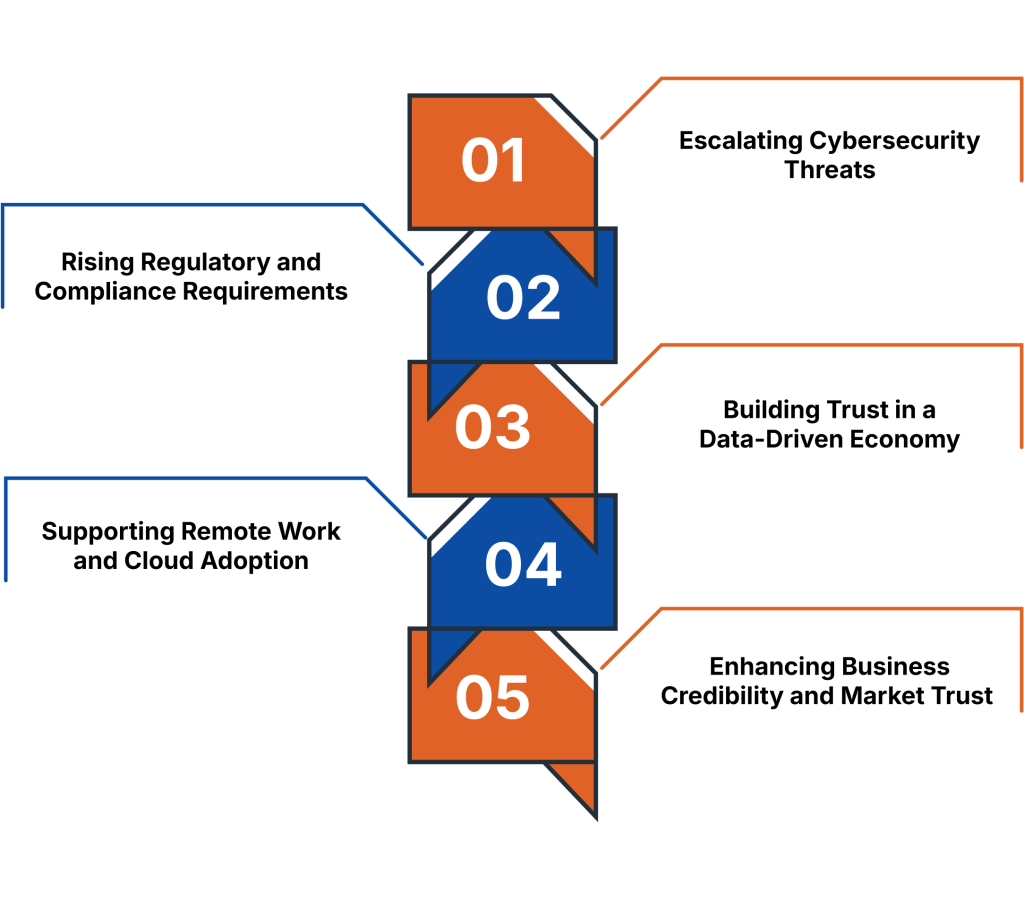
1. Escalating Cybersecurity Threats
Cyber threats in 2026 are increasingly sophisticated. Attackers are leveraging automation, artificial intelligence, and social engineering to exploit vulnerabilities. Ransomware attacks, phishing campaigns, insider threats, and cybercriminal groups increasingly targeting specific industries are on the rise. ISO 27001 helps organizations move from reactive to proactive security by identifying vulnerabilities early and implementing preventive controls. This reduces the likelihood of costly breaches and downtime.
2. Rising Regulatory and Compliance Requirements
Data protection laws are becoming increasingly stringent worldwide, with requirements varying based on location and industry. Organizations must comply with a wide range of regulatory frameworks, which can be complex and evolving. ISO/IEC 27001 supports alignment with many of these regulations by providing a structured approach to information security management. Rather than serving as a complete compliance solution on its own, it acts as a helpful framework that enables organizations to demonstrate accountability, manage data protection risks, and support their broader compliance efforts. By implementing ISO/IEC 27001, companies can strengthen their ability to meet legal obligations and maintain trust with regulators and the public.
3. Building Trust in a Data-Driven Economy
Trust is a critical business asset in a Data-Driven Economy. Customers are increasingly aware of how their information is being handled and expect transparency and strong security practices. ISO 27001 certification is a recognized indicator of trust. It helps organizations build confidence with clients, partners, and investors by demonstrating adherence to internationally accepted information security practices.
4. Supporting Remote Work and Cloud Adoption
Organizations operate has evolved significantly with increased adoptions of remote work and cloud-based services and this shift expands the attack surface, as employees access organizational systems from multiple locations and devices.
ISO/IEC 27001 provides a structured set of controls that help companies manage risk associated with remote access, endpoint usage, and cloud environments. It shows them how to manage all the devices that people use to work and how to keep the cloud safe. This enables organizations to support flexible working arrangements while maintaining a strong security posture. By leveraging ISO/IEC 27001, companies can better manage risks associated with remote work and cloud environments, helping ensure that security remains a key consideration alongside business flexibility.
5. Enhancing Business Credibility and Market Trust
In many industries, ISO/IEC 27001 certification is increasingly expected rather than optional. It is not something that is nice to have it is something that people need to have. Organizations often prefer to engage with partners that demonstrate strong information security practices through recognized certifications. Achieving ISO/IEC 27001 certification can support an organization in accessing new business opportunities, enhancing its professional reputation, and differentiating itself from competitors by demonstrating a recognized commitment to effective information security management practices.
Key Benefits of Implementing ISO 27001
- Improved Risk Management: ISO 27001 has provides a structured approach to identify, evaluate, and reduce potential risks. This reduces the risk to a great extent.
- Enhanced Data Security: By implementing strong access controls, encryption, and monitoring systems, organizations can protect sensitive data from unauthorized access and breaches.
- Business Continuity and Resilience: ISO/IEC 2700 emphasizes incident response and recovery planning enabling. Organizations to maintain operations during disruptions, reducing downtime and financial losses.
- Increased Employee Awareness: Human error is one of the leading causes of data incidents. ISO 27001 promotes training and awareness programs, empowering employees to recognize and respond to security threats effectively.
- International Recognition: ISO 27001 is globally recognized, making it valuable for organizations operating across borders. Its international recognition helps convey a consistent and credible commitment to information security, which is widely understood and respected by clients, partners, and regulators worldwide.
Common Misconceptions About ISO 27001
1. It’s Only for Large Organizations
ISO 27001 is scalable and can be tailored to organizations of all sizes. Small and medium-sized enterprises can benefit as much as large enterprises.
2. It’s Too Complicated to Implement
While implementation requires careful planning and effort, the framework provides clear guidelines. With the right approach and expertise, organizations can achieve certification efficiently.
3. It Guarantees Complete Security
No framework can eliminate all risks. ISO 27001 focuses on continuous improvement, helping organizations adapt and strengthen their defenses over time.
ISO 27001 and Emerging Technologies in 2026
As technology evolves, so do security challenges. Organizations are increasingly adopting:
- Artificial Intelligence (AI)
- Internet of Things (IoT)
- Blockchain and decentralized systems
These technologies introduce new risks, such as data leakage, algorithm manipulation, and device vulnerabilities. ISO 27001’s flexible, risk-based approach allows organizations to address these challenges effectively. It ensures that security is integrated into innovation rather than treated as an afterthought.
Conclusion
ISO/IEC 27001 remains central to effective information security management in 2026. As organizations operate in an increasingly complex digital environment, there is no better time to adopt a structured and reliable approach to security. ISO/IEC 27001 supports organizations in managing data security, compliance, trust, and resilience. Its flexibility and global recognition make it a valuable framework for organizations aiming to succeed in today’s digital landscape
Looking to secure your business and stay ahead of cyber threats in 2026? Start your ISO/IEC 27001 journey today and build a strong foundation for information security. Partner with ValueMentor to streamline the certification process, support compliance, and achieve long-term success.
FAQS
1. How do I know if my company is ready for ISO 27001 certification?
You’re ready if you already have basic security practices in place (like access control, policies, and backups). A gap assessment usually helps identify what’s missing before starting certification.
2. What documents are required for an ISO 27001 audit?
Key documents include your ISMS scope, risk assessment, Statement of Applicability (SoA), security policies, and audit records.
3. What happens if we fail the ISO 27001 audit?
You don’t lose everything you’ll be given time (usually 30-90 days) to fix gaps and undergo a follow-up review.
4. Who actually issues ISO 27001 certification?
Certification is granted by an independent accredited certification body, not ISO itself.
5. How is ISO 27001 different from ISO 27002?
ISO 27001 is the certifiable standard, while ISO 27002 provides guidelines for implementing security controls.
6. Do we need to implement all ISO 27001 controls?
No. You only implement controls relevant to your risks; this is defined in your Statement of Applicability.
7. Can ISO 27001 help with GDPR or data privacy compliance?
Yes, it aligns well with privacy laws and helps manage personal data securely, though additional frameworks may be needed.
8. What is the biggest challenge in ISO 27001 implementation?
Maintaining proper documentation and ensuring continuous compliance not just passing the audit once.
9. Does ISO 27001 include vendor or third-party risk management?
Yes, it requires organizations to assess and manage risks related to suppliers and external partners.
10. How often do we need to update our ISO 27001 system?
Continuously. Regular audits, risk reviews, and updates are required to maintain certification.