
HR departments across the UAE are increasingly adopting sophisticated analytics tools. From performance algorithms and productivity monitoring to predictive attrition models and biometric attendance systems, workforce data processing has grown exponentially more complex. This evolution brings significant opportunities for operational efficiency. It also triggers some of the most stringent obligations under the UAE Personal Data Protection Law.
The PDPL does not treat employment data as a special category requiring blanket consent. However, it imposes specific controls when processing involves new technologies, large-scale sensitive data, or systematic monitoring that creates high risk to employee privacy. Understanding when HR analytics crosses into high-risk territory and when a Data Protection Impact Assessment becomes mandatory, is now essential knowledge for every UAE employer.
Why HR analytics specifically demands attention?
Employment relationships create inherent power asymmetries. Employees cannot freely refuse monitoring or data collection without jeopardizing their positions. This dynamic shapes how regulators view workforce data processing and elevate scrutiny beyond typical commercial contexts.
The UAE PDPL recognizes this through several mechanisms:
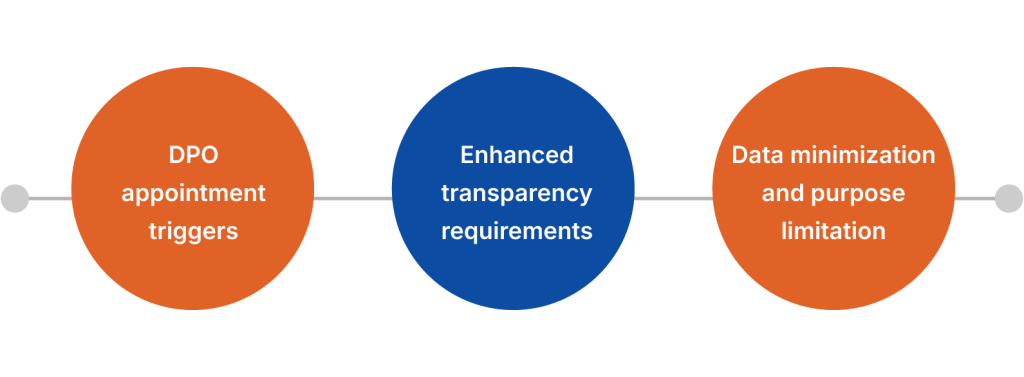
- DPO appointment triggers: Organizations conducting systematic monitoring of individuals, processing large-scale sensitive personal data, or using new technologies for high-risk processing must appoint a Data Protection Officer. Many HR analytics programs meet one or more of these thresholds.
- Enhanced transparency requirements: Controllers must provide specific information before processing begins, including purposes, data sharing arrangements, and cross-border protection measures. Employees have comprehensive access rights, including disclosure of automated decision-making logic.
- Data minimization and purpose limitation: Personal data must be sufficient and limited to stated purposes, with erasure required once purpose is fulfilled. HR analytics often strains these principles through expansive data collection.
HR processing activities that trigger DPIA obligations
Article 21 of the PDPL mandates DPIAs before processing that uses modern technologies posing high risk to privacy and confidentiality, particularly when involving large amounts of sensitive personal data. Several HR analytics applications meet this threshold:
- Biometric systems: Fingerprint, facial recognition, and iris scanning for attendance or access control process explicit biometric data. The PDPL defines sensitive personal data broadly, and systematic biometric processing on any scale typically requires DPIA and DPO appointment.
- Algorithmic performance management: Automated evaluation of employee performance, productivity scoring, or predictive analytics for promotion or termination decisions involves systematic evaluation of personal aspects. When these decisions produce legal or significant effects, DPIA is mandatory.
- Comprehensive workplace monitoring: Keystroke logging, screen capture, email scanning, and location tracking, particularly for remote workers, constitute systematic monitoring. The PDPL requires consent for monitoring, and excessive or disproportionate surveillance violates proportionality principles even with consent.
- Cross-border HR data transfers: Payroll processing, global HR platforms, and shared service centres routinely transfer employee data outside the UAE. The PDPL permits such transfers only with adequate protection, contractual safeguards, or explicit consent. Large-scale or sensitive transfers require enhanced documentation and potentially DPIA.
- AI-driven recruitment and screening: Automated candidate screening, video interview analysis, and predictive hiring models process substantial personal data through novel technologies. These applications inherently carry high risk of discrimination and privacy infringement.
The DPIA process for HR analytics
When high-risk HR processing is identified, organizations should follow a structured assessment methodology:
Step 1: Describe the processing
Document the nature, scope, context, and purposes of the HR analytics system. Specify data categories, employee populations affected, technology used and intended outcomes. The ROPA provides foundational information for this description.
Step 2: Assess necessity and proportionality
Evaluate whether the processing is necessary for the stated HR purpose and proportionate to the benefits sought. Consider whether less intrusive methods could achieve equivalent outcomes. This step often reveals that visible productivity metrics or trust-based management approaches could replace surveillance tools.
Step 3: Identify and evaluate risks
Examine risks to employee rights and interests:
- Privacy invasion through excessive monitoring
- Discrimination via biased algorithms
- Reputational harm from data breaches
- Chilling effects on employee autonomy and creativity
- Power imbalance exploitation
Step 4: Identify mitigation measures
Specify technical and organizational controls:
- Pseudonymization or anonymization where possible
- Strict access controls and role-based permissions
- Regular algorithmic auditing for bias
- Human review of automated decisions
- Encryption of sensitive information
- Secure logging and audit trails
Step 5: Document and obtain approval
Maintain comprehensive records of the assessment process, conclusions, and approved mitigation measures. Senior management sign-off demonstrates organizational accountability and satisfies regulatory expectations.
Step 6: Integrate and review
Embed DPIA outcomes into system implementation. Schedule regular reviews, particularly when processing conditions change or new risks emerge.
Consent in employment contexts: A critical nuance
The UAE PDPL requires consent for employee monitoring, including device monitoring and data collection. However, the power imbalance between employer and employee complicates genuine consent. Practical approaches that withstand regulatory scrutiny include:
- Clear, specific notification of monitoring scope and purposes
- Separate consent requests for distinct processing activities
- Genuine choice where feasible, with alternatives for refusal
- Easy withdrawal mechanisms without retaliation
- Documentation demonstrating informed, unambiguous agreement
Consent obtained through employment contract boilerplate or implied through continued employment likely fails the PDPL’s validity standards. Employers should treat consent as one component of a broader lawful basis strategy rather than a catch-all justification.
Cross-border workforce data: Additional complexity
Multinational employers face layered obligations when HR data crosses UAE borders:
- Adequacy determinations: The UAE Data Office has not yet published comprehensive adequacy lists. Transfers to common destinations, India, Philippines, United Kingdom, United States, lack clarity.
- Standard contractual clauses: Contractual safeguards are theoretically available but require careful drafting to address UAE-specific requirements.
- Employee notification: Controllers must inform employees of cross-border transfers and protection measures. This transparency obligation is frequently overlooked in global HR system implementations.
- Sensitive data restrictions: Transfers involving biometric, health, or other sensitive categories attract heightened scrutiny and may require explicit consent regardless of other transfer mechanisms.
Common implementation failures
- Deploying systems without assessment: Organizations implement HR analytics platforms based on vendor promises without independent risk evaluation. The PDPL’s privacy-by-design requirements mandate assessment before processing begins, not after deployment.
- Inadequate employee communication: Privacy notices buried in employee handbooks or presented at onboarding fail the PDPL’s transparency requirements. Employees must receive specific information before processing commences, including purposes, recipients, and rights.
- Ignoring free zone variations: DIFC and ADGM maintain distinct data protection frameworks with specific requirements for employee data. Organizations operating across mainland and free zone entities must maintain compliant frameworks for each jurisdiction.
- Over-retention of workforce data: The PDPL requires erasure once processing purpose is fulfilled, with limited exceptions. Employment law mandates two-year record retention post-termination, but analytics datasets often persist indefinitely. Organizations must reconcile these obligations and document retention rationale.
- Weak processor oversight: HR platforms, payroll providers, and analytics vendors process substantial employee data as processors. The PDPL requires processor compliance, contractual safeguards, and controller oversight-elements frequently absent in vendor management.
Building sustainable HR data governance
Effective compliance requires embedding privacy into HR operations rather than treating it as an external constraint:
- Governance structure: Designate clear ownership for HR data protection, whether through DPO appointment or assigned privacy lead. Ensure this role has authority to influence system selection and implementation.
- Policy framework: Develop written policies covering monitoring scope, consent procedures, data subject rights response, retention schedules, and breach notification. These policies should reflect actual practices, not aspirational standards.
- Training and awareness: Educate HR teams, managers, and employees on data protection obligations. Managers particularly require guidance on lawful monitoring boundaries and proportionality assessment.
- Regular auditing: Periodically review HR systems against ROPA entries and DPIA documentation. Identify drift between approved processing and actual implementation.
- Vendor diligence: Assess HR technology providers for data protection capabilities before procurement. Include data protection clauses in contracts and verify ongoing compliance.
The regulatory trajectory
The UAE Data Office, once fully operational, will issue guidelines specific to employment data processing. Current enforcement patterns suggest increasing attention to:
- Algorithmic transparency in automated decisions
- Proportionality of workplace surveillance
- Cross-border transfer documentation
- Employee rights fulfillment timelines
Organizations that establish robust HR analytics governance now will adapt more efficiently as regulatory expectations crystallize.
Conclusion
HR analytics offers genuine business value, but the power imbalance inherent in employment relationships elevates regulatory scrutiny. The PDPL’s DPIA requirements for high-risk processing are not optional hurdles, they are mechanisms for ensuring that workforce data processing respects employee dignity while achieving legitimate organizational objectives.
The transition from ROPA to DPIA in HR contexts requires understanding when analytics crosses into high-risk territory, conducting rigorous proportionality assessments, and implementing genuine mitigation measures. Organizations that treat this as a compliance exercise miss the strategic opportunity. Those that embed privacy into HR analytics design build sustainable workforce data practices that withstand regulatory examination and maintain employee trust.
FAQS
1. Is employee monitoring legal under UAE PDPL?
Yes, with conditions. Monitoring must be lawful, necessary for legitimate business purpose, proportionate, and transparent. Consent is required, though the power imbalance means employers must ensure it is genuinely informed and freely given.
2. Do I need a DPIA for my biometric attendance system?
Almost certainly yes. Biometric data constitutes sensitive personal data, and systematic processing through recognition technology triggers Article 21 DPIA requirements and likely DPO appointment.
3. Can I use GDPR DPIA templates for UAE compliance?
As a starting point, but with significant adaptation. UAE PDPL differs in consent requirements, sensitive data definitions, legal basis framework, and cross-border transfer mechanisms. Direct transplantation creates compliance gaps.
4. What employee data can I transfer outside the UAE?
Employee data may transfer to jurisdictions with adequate protection, via approved contractual clauses, or with explicit consent. However, large-scale or sensitive transfers require enhanced documentation and potentially DPIA regardless of mechanism.
5. How long must I retain employee monitoring records?
Employment law requires two-year retention post-termination. PDPL requires erasure once purpose is fulfilled. Reconcile these by anonymizing data when retention is legally required but identification is not.
6. Do DIFC and ADGM have different HR data rules?
Yes. Both free zones maintain distinct data protection frameworks with specific requirements for employee data processing, DPO appointment, and transfer mechanisms. Multi-jurisdiction employers need compliant frameworks for each.
7. What if my HR analytics vendor processes data overseas?
You remain accountable. The PDPL requires controller oversight of processor activities, appropriate contractual safeguards, and documentation of cross-border arrangements in your ROPA.
8. Can employees refuse monitoring?
Employees have rights to object to processing, particularly for direct marketing and profiling. However, refusal of necessary workplace monitoring may have employment consequences. The proportionality and necessity of monitoring determine its enforceability.
9. What are penalties for non-compliant HR analytics?
The PDPL’s penalty framework continues evolving through executive regulations. Beyond monetary fines, organizations face reputational damage, operational disruption during regulatory examination, and potential criminal liability for serious privacy violations.
10. How often should HR DPIAs be reviewed?
When processing conditions change significantly, new technology, expanded scope, data breaches, and at least annually for ongoing high-risk processing. Regular review ensures mitigation measures remain effective and documentation stay current.