
Meeting GDPR compliance requirements is a must for any organization that collects or handles personal data of individuals in the European Union. The General Data Protection Regulation, which is enforced on May 25, 2018, sets strict rules to protect the privacy and rights of individuals. It outlines what businesses must do to manage personal data in a lawful, fair and transparent way. Non-compliance with these conditions can lead to penalties of up to 20 million euros or 4 percent of the company’s annual global turnover, whichever is greater. This blog explains the main GDPR requirements that every organization needs to adhere to stay compliant and build trust with customers.
What are GDPR Requirements?
GDPR requirements are regulations that regulate how personal data of individuals in the European Union needs to be managed. These regulations apply to all organizations that process personal data of individuals residing in the European Union (EU) and also non-EU organizations who offer goods or services to individuals in the EU/EEA region or monitor the behavior of individuals in the EU/EEA. This regulation makes sure that data is gathered, applied and stored in a lawful and transparent way. Organizations should ensure to safeguard the personal data that is processed and thereby upholding the individual rights. The primary aim of these regulations is to provide individuals with control over their personal data and to avoid misuse of it.
Key Requirements for GDPR Compliance
GDPR compliance can be complex, but focusing on the main requirements helps organizations protect personal data and meet regulatory expectations. Here’s a summary of the ten important GDPR compliance requirements in below image:
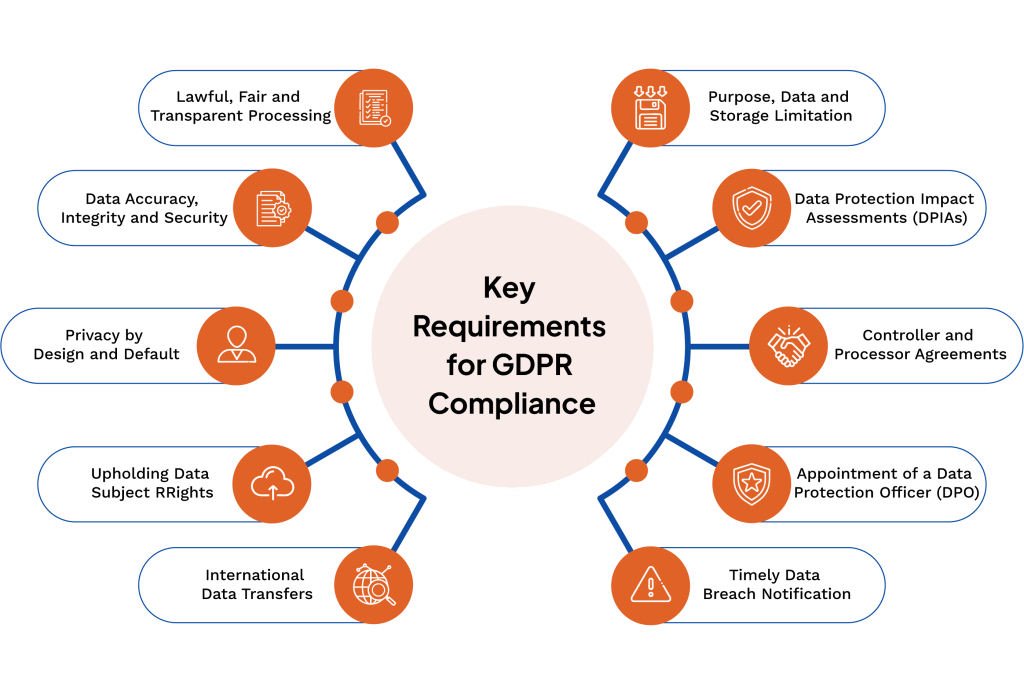
1. Lawful, Fair and Transparent Processing
Organizations must always have a clear legal basis for collecting and processing personal data. Individuals must be told what personal data is being gathered and why, generally through a privacy notice. All handling must be fair, without any fraudulent activities or harming data subjects.
2. Purpose, Data and Storage Limitation
Personal data should only be collected for specific, declared purposes. Businesses need to limit collecting more data than necessary and must delete information when it is no longer required for processing.
3. Data Accuracy, Integrity and Security
It’s crucial to keep personal data accurate and up to date. Organizations should ensure that the personal data that is collected should not be altered or manipulated in any case and thereby maintaining the Integrity of the personal data.
4. Data Protection Impact Assessments (DPIAs)
For high-risk activities to individual’s rights and freedoms, firms will need to carry out DPIAs. These assessments help identify and minimize potential privacy risks before new processing activities begin.
5. Privacy by Design and Default
Article 25 of the GDPR mandates that data protection must be integrated into all processing activities from the start. Privacy by design means considering data privacy from the earliest stage of any project and maintaining it throughout. This involves implementing appropriate technical and organizational measures, as outlined in Article 32, to ensure data protection becomes part of everyday business operations.
6. Controller and Processor Agreements
When dealing with third parties, organizations need to have explicit contracts that outline each party’s responsibilities pertaining to data protection. Controller means the natural or legal person, public authority, agency who determines the purposes and means of the processing of personal data. Processors must only follow instructions from controllers and maintain appropriate security standards.
7. Upholding Data Subject Rights
The GDPR gives individuals a set of rights that allow them to govern their personal information. Organizations must be prepared to honor these rights promptly and transparently. The main rights under the GDPR include:
- The right to be informed – Individuals have the right to know how and why their data is being collected and used.
- The right to access – Individual may apply for and get a copy of the personal data that an organization has about them.
- The right to rectification – Individuals can request that their inaccurate or incomplete data be corrected.
- The right to erasure (right to be forgotten) – Individual can request deletion of their personal data when it’s no longer needed or used unlawfully.
- The right to restrict processing – Individual can request that an organization limit how their data is used in certain situations.
- The right to data portability – Individual have the option of receiving their personal data in a readable format or transferring it from one controller to another.
- The right to object – Individuals can object to their personal data being used for processes like direct marketing.
- Rights related to automated decision-making and profilin – People can request human involvement in decisions made only by automated systems that affect them.
8. Appointment of a Data Protection Officer (DPO)
Some organizations, like public authorities or handling large amounts of sensitive data, must have a DPO appointed. This individual oversees data protection plans and acts as a regulator’s point of contact.
9. International Data Transfers
Additional safeguards need to be applied when moving personal data out of the EU/EEA. Organizations should use approved mechanisms such as adequacy decisions, standard contractual clauses or binding corporate rules to ensure data remains protected.
10. Timely Data Breach Notification
If a data breach occurs that risks individuals’ rights or freedoms, organizations must report it to the relevant supervisory authority within 72 hours. In some cases, affected individuals must also be notified without undue delay.
Conclusion
Following GDPR compliance requirements helps protect personal data and shows respect for user privacy. It builds trust, strengthens business reputation, and keeps you on the right side of the law. As data risks continue to grow, staying compliant is not only a legal duty but also a smart business practice. Organizations that take data protection seriously are more likely to earn customer confidence and avoid costly penalties in the long run.
FAQs
1. What happens if a company does not follow GDPR requirements?
Non-compliance can lead to heavy penalties, including fines up to 20 million euros or 4 percent of the company’s global annual revenue, whichever is higher.
2. What kind of data is protected under GDPR?
GDPR protects personal data such as names, email addresses, phone numbers, IP addresses, and sensitive information like health or biometric data.
3. Is appointing a Data Protection Officer (DPO) mandatory for every company?
No, it is only mandatory for public authorities or organizations who process large-scale sensitive data or monitor individuals regularly and systematically on a large-scale.
4. How soon must a company report a data breach under GDPR?
A data breach must be reported to the supervisory authority within 72 hours of becoming aware of it, unless it is unlikely to risk individual rights.