A cyber threat is not something unique anymore. It is no longer an occasional occurrence that happens to only big companies. Currently, all sizes of organizations are vulnerable to cyber attacks in the form of malware, phishing attacks, insider threats, data breaches, and other attacks that can cause their operations to be brought to a standstill within a matter of minutes. Such a cyber-attack can cause irreparable damage to your customers’ trust, disrupt your services, cause you legal trouble, and even result in heavy financial losses. It is at such times that ISO 27001 is extremely useful.
The ISO 27001 is a globally accepted standard for ISMS (Information Security Management Systems). With the help of this, companies can understand various security risks, implement controls, improve their ability to respond to incidents and sustain their business operations in times of cyber crisis and disasters. Instead of focusing on addressing issues once they arise, the ISO 27001 gives organizations the ability to be resilient and ready to tackle uncertainties during disruptions . In this blog post, we discuss how ISO 27001 contributes to business resilience.
Understanding Business Resilience in a Cyber Crisis
Business resilience refers to an organization’s ability to continue operations during and after a disruptive event. In the context of cybersecurity, resilience means being able to:
- Prevent cyber threats where possible
- Detect incidents quickly
- Respond effectively to attacks
- Recover systems and data as per the established and acceptable system downtime and amount of data loss
- Maintain customer trust and operational stability
Cyber resilience is not only related to information security but also incorporates such elements as governance, employees’ awareness, risk management, communication strategy, and business continuity planning. In the absence of any security framework, it becomes quite difficult for an organization to manage cyber risks effectively. Ineffective response planning and implementation may turn an incident into a crisis for an enterprise.
ISO 27001 creates a strong risk management framework
One of the major ways that ISO 27001 promotes resiliency lies in the concept of risk management.
As part of ISO 27001, firms must assess all possible risks associated with their information systems, data, software, people and overall operations. Rather than simply making assumptions, businesses must perform formal risk assessments.
This process helps organizations:
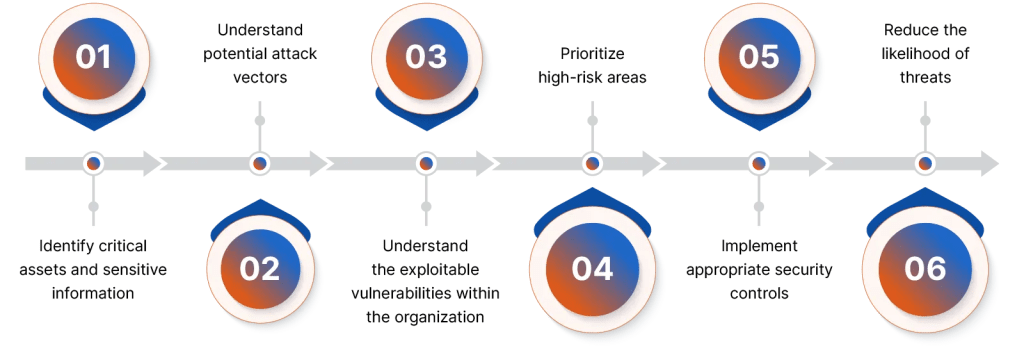
- Identify critical assets and sensitive information
- Understand potential attack vectors
- Understand the exploitable vulnerabilities within the organization
- Prioritize high-risk areas
- Implement appropriate security controls
- Reduce the likelihood of threats
Through continuous risk assessment and review, businesses are better able to respond to changing threats in cyberspace. It helps to prioritize the high-risk areas and improves response time of business critical processes.
Improves incident response and crisis management
When there is no established plan for responding to a crisis and incidents, organizations may face confusion and delay. ISO 27001 aids businesses in developing an incident response plan. This includes:
- Incident identification procedures
- Escalation processes
- Roles and responsibilities
- Communication protocols
- Containment and recovery measures
- Post-incident reviews
With the help of such a strategy, organizations can respond effectively and with confidence during any incident. As such, when there happens to be a ransomware attack on any company, for instance, a company that adheres to the principles of ISO 27001 will most definitely have the ability to isolate its affected systems from the network and activate the Incident response plan without delays. This way, minimum damage is caused, and operations can resume swiftly.
Strengthens business continuity and disaster recovery
Business continuity is a core element of cyber resilience. Even strong security measures cannot guarantee complete protection from cyber incidents. What matters most is how effectively a business can continue operating and how fast the IT systems and infrastructure can recover during disruptions.
ISO 27001 supports business continuity by encouraging organizations to develop:
- Backup and recovery procedures
- Business Impact Analysis process
- Business Continuity Plan
- Disaster Recovery Plan
- System redundancy measures
- Data restoration processes
Such mechanisms assist companies in keeping their processes working even during a crisis or failure of the system. For example, if the primary site of an organization crashes, the secondary or the alternate site will allow its processes to continue working without any disruption. Such an ability becomes necessary for industries dependent on the uptime factor, including finance, healthcare, e-commerce, and cloud services.
Enhances employee awareness and security culture
Human errors continue to be amongst the top contributors to cybersecurity breaches. Human beings can make mistakes such as clicking dangerous hyperlinks without realizing their risks.
This problem is solved by ISO 27001 through the concept of security awareness.
The framework encourages businesses to provide regular training to both new joiners and existing employees on:
- Phishing awareness
- Password security
- Data handling practices
- Acceptable Usage policy
- Remote work security
- Incident reporting procedures
- Access control policies
When employees understand their role in cybersecurity, they become an active part of the organization’s defense strategy.
A strong security culture improves resilience because threats can often be detected and reported before they escalate into major incidents.
Builds customer trust during security challenges
The crisis in cyberspace may affect client trust in several ways. The clients require the guarantee that their information is safe and that there is proper handling of any cyber-related threats.
Having ISO 27001 ensures that a firm is adhering to international standards concerning information security, which provides an added advantage to its clients in terms of trust in the management of such crises.
Organizations that implement strict security governance measures find themselves easily restoring trust after any form of cybercrisis.
Trust will play a key part in resilience in the long run, especially when dealing with sensitive information that needs protection from disclosure.
Supports regulatory compliance and reduces legal risks
Cybersecurity events may cause regulatory fines, legal responsibilities, and non-compliance issues. Several data protection laws today demand that companies have good security controls and incident management systems in place.
ISO 27001 assists companies in meeting many compliance needs by developing appropriate security policies and governance.
This can support compliance efforts related to:
- Data protection laws
- Privacy regulations
- Industry security requirements
- Third-party security expectations
By maintaining proper documentation, risk assessments, and security controls, organizations can reduce legal exposure during cyber incidents and demonstrate accountability to regulators.
Encourages continuous improvement against emerging threats
Cyber threats evolve constantly. Attack techniques that were effective a few years ago may look completely different today.
ISO 27001 promotes continuous improvement through regular monitoring, internal audits, management reviews, and policy updates. This ensures organizations do not treat cybersecurity as a one-time project.
Instead, businesses continuously:
- Evaluate new risks
- Improve controls
- Test response plans
- Update security policies
- Strengthen operational resilience
This adaptability is essential for surviving modern cyber threats and maintaining long-term business stability.
Conclusion
Businesses now have no choice but to implement cyber resilience strategies, both for defense and recovery. They need to be equipped with the ability to defend themselves against possible cyber threats as well as the ability to recover and continue their operations amid the disasters. ISO 27001 offers a systematic approach that can be used by companies in enhancing risk management, response capability, continuity, and cybersecurity culture.
Using ISO 27001, companies minimize their losses and negative consequences caused by a cyber incident, as well as maintain customers’ trust and comply with legal requirements.
As cyber threats continue to grow in complexity, businesses that invest in resilience today will be better positioned to protect their operations, reputation, and future growth.
Are you planning to make your organization more cyber-resilient with ISO 27001? Well, ValueMentor will provide you with all the help required to develop an effective information security management system that can increase your organizational resilience. Reach out to them to get started on your journey to becoming ISO 27001 compliant.
FAQs:
Can ISO 27001 help businesses survive a cyber crisis without shutting down operations?
Yes, ISO 27001 highlights the conduction of Business Impact Analysis (BIA) which comprises the business-critical processes to be prioritized during a crisis scenario. It helps strengthen the business continuity and recovery planning of those business-critical processes (identified during BIA) and prevents the operations from shutting down
How does ISO 27001 prepare companies before a cyberattack happens?
It helps organizations identify risks early and implement preventive security controls.
Does ISO 27001 only focus on technology security?
No, it also covers people, processes, policies, and organizational risk management.
Can ISO 27001 improve decision-making during security incidents?
Yes, it establishes clear response procedures and defines responsibilities and escalation matrix during crises.
Why do resilient businesses prefer ISO 27001 certification?
Because it creates a proactive security culture instead of a reactive cybersecurity approach.
How does ISO 27001 reduce financial damage after cyber incidents?
It minimizes disruption, speeds up recovery, and reduces the likelihood of breaches that could lead to severe financial impact.
Can ISO 27001 strengthen remote work security?
Yes, it includes controls for secure access, data protection, and employee awareness (for remotely working employees too).
What role does leadership play in ISO 27001 resilience planning?
Management involvement ensures security becomes part of long-term business strategy.
How does ISO 27001 help maintain customer confidence during cyber disruptions?
It demonstrates that the organization follows globally trusted security practices and crisis management processes.
Is ISO 27001 useful for future cyber threats as well?
Yes, its continuous improvement and end to end Risk management approach helps businesses identify emerging threats and adapt to evolving attack methods.