
Penetration testing PCI DSS plays a vital role in protecting cardholder data from actual cyber threats. The increasing complexity of online payment systems allows attackers to discover new ways to exploit vulnerabilities within them. To combat these problems, PCI DSS 4.0.1 has introduced stricter requirements for how organizations should test, validate, and demonstrate their security controls that are effective against real-world threats.
This blog explains the key changes introduced in PCI DSS 4.0.1 related to penetration testing, with a specific focus on Requirement 11.4. It covers updated testing frequency, internal and external testing requirements, segmentation validation, proper scoping, and evidence expectations. And highlights common compliance pitfalls and provides clarity on how organizations can align their penetration testing programs with PCI DSS 4.0.1 to achieve both audit readiness and improved security posture.
What Changed in PCI DSS 4.0.1 and Requirement 11.4?
PCI DSS 4.0.1 introduces a more outcome-based approach to compliance. While earlier versions focused heavily on following defined steps, the new standard emphasizes proving that controls actually work. This shift is clearly visible in PCI DSS requirement 11.4, which governs penetration testing.
Requirement 11.4 now expects organizations to conduct meaningful tests that simulate real attack scenarios across networks and applications. The requirement clearly states that testing must cover systems that store, process, or can impact cardholder data. Organizations must also ensure testers are qualified and independent from the systems being tested.
Another key change is clarity. PCI DSS 4.0.1 explains what needs to be tested, when it must be tested, and how results should be documented. This reduces confusion while increasing responsibility for proper execution.
How Often Is Penetration Testing Required Under PCI DSS 4.0?
Testing frequency is one of the most debated updates in PCI DSS 4.0.1. The penetration test PCI DSS should be done at least annually. But the standard also makes it a condition that testing has to be redone each time there is a material change in the environment. Examples of this are system replacements, new applications, network overhauls, cloud transitions, or changes to firewall and segmentation policies. These changes may add new risks not addressed in the past test results. PCI DSS 4.0.1 recommends that the frequency of testing should be based on a number of factors, including business activity. If it often changes in the environment of your app, then testing should take place more frequently. The goal is to ensure that security controls remain effective throughout the year, not just during audit season.
Internal and External Network Penetration Testing: Why Both Matter?
PCI DSS 4.0.1 clearly states that organizations must perform both internal and external network penetration testing. Each type addresses different threat scenarios, and together they provide a complete view of an organization’s security posture.
External Network Penetration Testing
External network penetration testing simulates attacks launched from outside the organization’s network. These tests focus on:
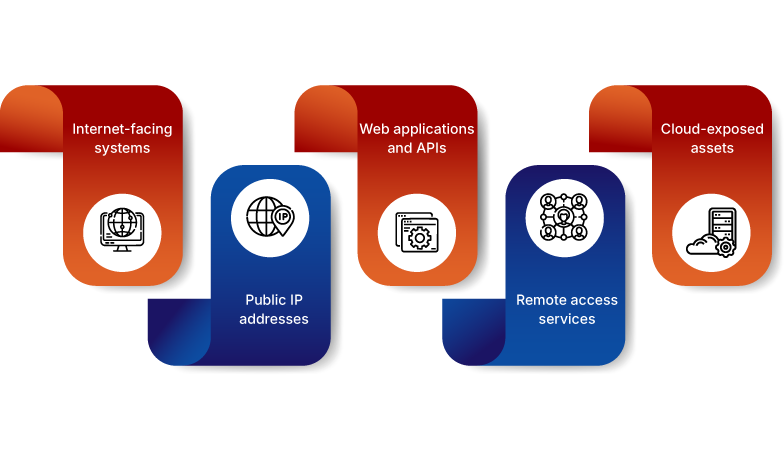
- Internet-facing systems
- Public IP addresses
- Web applications and APIs
- Remote access services
- Cloud-exposed assets
The objective is to determine whether an external attacker could exploit vulnerabilities to gain unauthorized access to systems within the cardholder data environment. External tests often uncover issues such as misconfigured firewalls, exposed services, outdated software, and application-level vulnerabilities.
Internal Network Penetration Testing
Internal network penetration testing assumes that the attacker has already gained some level of access inside the organization. This could occur through phishing, stolen credentials, malware infection, or insider threats. Internal tests focus on:

- Privilege escalation
- Lateral movement between systems
- Weak access controls
- Improper trust relationships
- Ability to reach or compromise the CDE
Many real-world breaches occur after attackers gain initial access and then move internally. By performing internal penetration testing, organizations can evaluate how well their internal controls limit damage and prevent attackers from reaching sensitive payment data. Ignoring either internal or external testing leaves critical gaps. PCI DSS 4.0.1 requires both approaches to ensure protection against the full range of attack paths.
Segmentation Testing and Its Role in Reducing PCI DSS Scope
Network segmentation is commonly used to reduce the scope of PCI DSS compliance. By isolating the cardholder data environment from the rest of the network, organizations can limit the number of systems subject to PCI DSS requirements.
However, PCI DSS 4.0.1 places strong emphasis on proving that segmentation actually works. Simply claiming segmentation is no longer sufficient.
Segmentation testing under PCI DSS involves attempting to access the cardholder data environment from non-PCI DSS systems. The purpose is to validate that controls such as firewalls, VLANs, routing rules, and access controls effectively prevent unauthorized access.
Key requirements include:
- Segmentation testing must be conducted at half-yearly
- Testing must also occur after any changes to network architecture
- Evidence must clearly demonstrate that segmentation controls are effective
If segmentation testing fails, the impact can be significant. Systems previously considered out of scope may need to be included in the PCI DSS environment, increasing compliance complexity, cost, and risk exposure. PCI DSS 4.0.1 treats segmentation testing as a critical control-not an optional exercise-making it an essential component of penetration testing strategy.
Defining Scope and Preparing Proper Test Evidence
Proper scoping is the foundation of effective PCI DSS 4.0.1 penetration testing. Testing does need to cover all systems that touch, process, transmit, or may traverse the trust boundary of cardholder data. This comprises payment systems as well as auxiliary infrastructure, such as authentication servers and monitoring mechanisms. The use of the PCI DSS penetration testing checklist allows the tester to ensure that they have covered all necessary areas, such as network vulnerabilities, application flaws, and access control. Equally important is documentation. PCI DSS 4.0 anticipates substantial documentation of the scope, test methodology, findings, fixes applied, and results of recertification testing. Proof should be to the effect that vulnerabilities were discovered, addressed, and confirmed for remediation. It is difficult for an outside assessment without strong documentation to easily understand compliance while also showing maturity in the security program.
Conclusion
PCI DSS 4.0.1 has transformed penetration testing from a routine compliance task into a meaningful security practice. By clearly defining testing frequency, scope, internal and external requirements, segmentation validation, and evidence expectations, the standard helps organizations better defend cardholder data.
Businesses that take a proactive, well-documented approach to penetration testing not only meet compliance requirements but also reduce real-world risk. When done correctly, penetration testing becomes a valuable tool for long-term security improvement. Not sure whether your penetration testing meets PCI DSS 4.0.1 requirements? Get expert support to define scope, validate segmentation, and deliver audit-ready reports. Start your PCI DSS 4.0.1 penetration testing today from ValueMentor and protect your payment environment with confidence.
FAQS
1. Who is required to perform PCI DSS penetration testing?
Any organization that stores, processes, or transmits cardholder data must perform penetration testing, regardless of its size or transaction volume.
2. Can internal IT teams perform PCI DSS penetration testing?
Internal teams may perform testing if they are independent from system administration and have proven expertise, but many organizations prefer third-party testers for unbiased results.
3. Is penetration testing the same as vulnerability scanning?
No. Vulnerability scanning identifies possible weaknesses, while penetration testing actively attempts to exploit them to measure real risk.
4. Do cloud-based environments need PCI DSS penetration testing?
Yes. Even if systems are hosted in the cloud, the organization remains responsible for penetration testing based on its PCI DSS scope and shared responsibility model.
5. What happens if segmentation testing fails?
If segmentation fails, systems outside the Cardholder Data Environment may be included in PCI DSS scope, increasing compliance effort and audit requirements.
6. Are web applications always included in PCI DSS penetration testing?
Web applications must be tested if they handle payment data or provide access to systems connected to the Cardholder Data Environment.
7. How long should PCI DSS penetration testing reports be retained?
Reports should be retained according to audit and organizational policies, typically for at least one full PCI DSS assessment cycle.
8. Is retesting mandatory after fixing vulnerabilities?
Yes. PCI DSS expects organizations to retest after remediation to confirm that identified issues have been properly resolved.
9. Can automated tools alone meet PCI DSS penetration testing requirements?
No. Automated tools can support testing, but manual testing is required to meet PCI DSS expectations and identify complex attack paths.
10. What are common mistakes organizations make during PCI DSS penetration testing?
Common mistakes include incomplete scope definition, lack of segmentation validation, poor documentation, and treating testing as a one-time activity.