Cloud storage has become a critical part of modern business operations. Organizations rely on services such as AWS S3, Azure Blob Storage, and Google Cloud Storage to store more customer information, backups, application data, and business-critical assets. While cloud storage offers scalability and convenience, it has also become one of the most common sources of data breaches. Many cloud storage incidents are not caused by sophisticated hacking techniques. Instead, they result from simple misconfigurations, excessive permissions, and weak visibility into cloud environments. Publicly exposed storage buckets, forgotten backups, and weak access controls can leave sensitive data accessible to unauthorized users without organizations even realizing it. This blog explores the most common cloud storage security risks, why they often go unnoticed, and how organizations can strengthen their cloud security posture through regular audits and configuration reviews.
Why Cloud Storage has become a prime target for attackers?
Cloud storage environments often contain valuable information, making them attractive targets for cybercriminals.
Common data stored in cloud environments includes:
- Customer records
- Financial information
- Application source code
- Backup files
- Authentication secrets and API keys
Attackers commonly target cloud storage through:
- Public bucket enumeration
- Excessive IAM permissions
- Exposed backups and snapshots
- Misconfigured access policies
- Credential compromise
Since many cloud storage services are designed for easy accessibility and collaboration, a small configuration mistake can unintentionally expose large volumes of sensitive information.
Why Security Teams often miss Cloud Storage Risks?
Many organizations have limited visibility into their cloud storage environments. As cloud adoption grows, development teams frequently create storage resources independently, resulting in storage sprawl and unmanaged assets that security teams may not know exist. This creates several security challenges:
Unknown Storage Resources
Security teams cannot protect storage assets they are unaware of. Forgotten buckets, containers, and archives often become easy targets for attackers.
Excessive Access Permissions
Overly permissive IAM roles and access policies can grant users or applications unnecessary access to sensitive data.
Lack of Continuous Monitoring
Many organizations monitor infrastructure but fail to track storage-specific activities such as data downloads, permission changes, or public exposure events.
Shadow Storage Assets
Temporary storage locations created for testing or development purposes are often left unsecured and forgotten after projects are completed.
How Misconfigurations create dangerous security gaps?
Cloud storage breaches are frequently caused by configuration errors rather than software vulnerabilities. Cloud storage services provide scalability, accessibility, and operational efficiency, but even a minor configuration mistake can introduce significant security risks. Unlike traditional software vulnerabilities that require technical exploitation, cloud misconfigurations often expose sensitive resources directly to unauthorized users, making them one of the leading causes of cloud-related data breaches. Common findings during cloud security assessments include:
Publicly Accessible Buckets
Storage resources configured for public access can expose sensitive files to anyone on the internet.
Weak Access Controls
Overly permissive access controls increase the risk of unauthorized access, allowing attackers or unintended users to access, alter, or remove critical information.
Unencrypted Data
Sensitive information stored without encryption increases the impact of a potential breach.
Exposed Backups and Snapshots
Organizations often secure production environments while overlooking backups that contain equally sensitive information.
Why Traditional Security Controls often miss Cloud Storage Threats?
Many traditional security tools were designed for on-premises environments and may not provide adequate visibility into cloud storage activity. As organizations move data and workloads to the cloud, many security teams still depend on tools and controls built for traditional on‑prem environments. While those tools can still be useful, they often lack the visibility and contextual awareness needed to spot cloud‑native risks.
Authentication Alone Is Not Enough
Authenticated users with excessive permissions may accidentally or intentionally access sensitive information beyond their intended scope.
Storage Activity Often Lacks Context
Security tools may detect data access events but struggle to determine whether the activity is legitimate or suspicious.
Configuration Drift Creates New Risks
Cloud environments change rapidly, and secure configurations can become insecure over time without continuous review.
Common Signs of Cloud Storage Exposure
Several indicators may suggest cloud storage security weaknesses:
- Publicly accessible storage buckets
- Unusual data download activity
- Excessive IAM permissions
- Unknown storage resources
- Unencrypted sensitive data
- Unexpected cross-account access
- Unused storage assets containing business data
- Suspicious access from unfamiliar locations
Monitoring these indicators can help organizations identify security issues before they lead to a data breach.
How organizations can reduce Cloud Storage Risks?
As organizations increasingly rely on cloud platforms to store business-critical and sensitive information, securing cloud storage environments has become a fundamental security requirement. Misconfigurations, excessive permissions, exposed storage buckets, and inadequate monitoring continue to be among the leading causes of cloud-related data breaches. To minimize these risks, organizations should adopt a proactive security approach that combines regular security assessments, continuous monitoring, strong access controls, and secure configuration management practices. Key measures include:
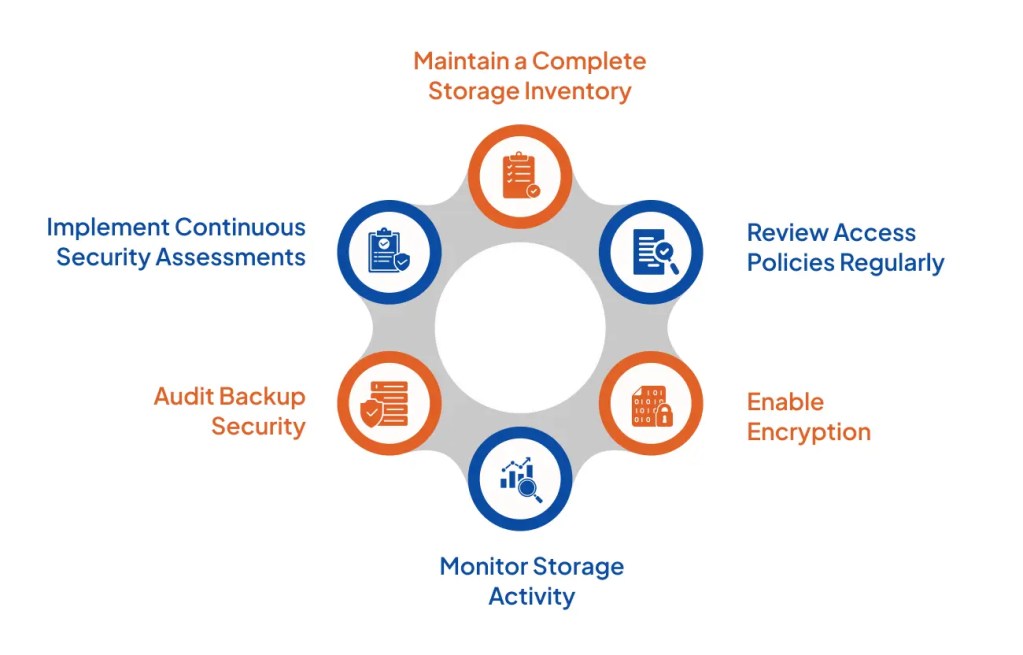
Maintain a Complete Storage Inventory
Identify and track all storage resources across AWS, Azure, and GCP environments.
Review Access Policies Regularly
Ensure permissions follow the principle of least privilege.
Enable Encryption
Protect sensitive data both at rest and in transit.
Monitor Storage Activity
Track access attempts, permission changes, and large-scale data transfers.
Audit Backup Security
Apply the same security controls to backups and snapshots as production data.
Implement Continuous Security Assessments
Regular cloud configuration reviews help identify misconfigurations before attackers do.
The Future of Cloud Storage Security
As organizations continue moving critical workloads to the cloud, storage security will become increasingly important. Security teams must move beyond periodic reviews and adopt continuous monitoring, automated configuration assessments, and risk-based visibility across cloud environments.
Emerging technologies such as AI-driven cloud security monitoring and cloud security posture management (CSPM) solutions are helping organizations identify storage risks faster and reduce exposure before incidents occur.
Conclusion
Public buckets, exposed backups, excessive permissions, and other cloud storage misconfigurations continue to be major contributors to cloud data breaches. Many of these risks remain undetected due to lack of visibility, inadequate monitoring, and rapidly evolving cloud environments.
By maintaining visibility into cloud storage assets, regularly reviewing configurations, enforcing strong access controls, and continuously monitoring storage activity, organizations can significantly reduce their risk of data exposure and strengthen their overall cloud security posture.
Don’t wait for a cloud storage misconfiguration to become a breach. A single exposed bucket or excessive permission can put critical business data at risk. ValueMentor helps organizations identify cloud storage vulnerabilities, prioritize remediation, and implement security best practices across multi-cloud environments.
Schedule a cloud security assessment today and secure your cloud storage with confidence.
FAQs:
Public access, weak permissions, unencrypted data, and misconfigured storage settings are the most common risks.
How do attackers find exposed cloud storage?
Attackers use automated tools to scan the internet for publicly accessible buckets and misconfigured storage resources.
What causes cloud storage misconfigurations?
Human error, overly permissive access policies, lack of monitoring, and configuration changes are common causes.
How can businesses prevent cloud storage breaches?
By enforcing least-privilege access, enabling encryption, conducting regular audits, and continuously monitoring cloud environments.
What is cloud storage auditing?
Cloud storage auditing is the process of reviewing storage resources, permissions, configurations, and activity to identify security risks.
Why is continuous cloud monitoring important?
It helps detect unauthorized access, configuration changes, and suspicious activity before they result in a data breach.
Are cloud backups vulnerable to cyberattacks?
Yes. If backups are exposed or poorly secured, they can become a target for attackers and lead to data loss.
What role does IAM play in cloud storage security?
Identity and Access Management (IAM) controls who can access cloud storage and what actions they can perform.
Can cloud storage security support regulatory compliance?
Yes. Properly securing cloud storage helps organizations meet requirements for standards such as PCI DSS, ISO 27001, HIPAA, and GDPR.
Why should organizations perform regular cloud security assessments?
Regular assessments help identify misconfigurations, reduce security risks, and improve overall cloud security posture before attackers can exploit vulnerabilities.