The financial establishments in Saudi Arabia find themselves navigating a highly dynamic digital environment characterized by an increasing need for payment security as far as operational sustainability and customer confidence go. In light of the rise in online banking services, mobile payments, and electronic transactions, it becomes necessary for PCI DSS Saudi Arabia banks to safeguard credit card information from cyber-attacks while abiding by relevant laws.
On the other hand, companies also need to comply with the guidelines laid down by the Saudi Arabian Monetary Authority (SAMA), which leads to having to fulfill two compliance mandates simultaneously. This is no easy task since the consequences of non-compliance could be dire. However, in this blog, we address both the compliance issues faced as well as the strategies that could help achieve dual compliance in Saudi Arabia.
What is PCI DSS and why it matters for Saudi banks?
The Payment Card Industry Data Security Standard is an internationally recognized standard that was created to protect sensitive credit card data and prevent fraudulent transactions. It covers all businesses that process credit card data, from banks to payment gateways and fintechs. Regarding PCI DSS for Saudi Arabia, following it means that each and every transaction, whether done online or manually, will be secure.
The 12 requirements outlined in this framework fall under six objectives:
- Build and maintain secure networks and systems
- Protect cardholder data through encryption and secure storage
- Maintain vulnerability management programs
- Implement strong access control measures
- Regularly monitor and test networks
- Establish and maintain a comprehensive security policy
For Saudi banks, PCI DSS serves as the backbone of payment security, ensuring alignment with international standards while supporting customer trust.
Overview of SAMA regulations for financial institutions
The Saudi Central Bank (SAMA) regulates financial institutions in the Kingdom and plays a crucial role in maintaining financial stability and cybersecurity resilience. Its Cybersecurity Framework provides a detailed set of controls that organizations must follow to protect their systems and data. SAMA regulations go beyond payment security and focus on the overall governance and risk management of financial institutions.
Key areas include:
- Cybersecurity governance and leadership accountability
- Enterprise risk management and continuous assessment
- Data protection and privacy frameworks
- Third-party and vendor risk management
- Incident response, recovery, and business continuity planning
Unlike PCI DSS, which focuses specifically on payment card data, SAMA takes a holistic approach to securing the entire financial ecosystem.
How SAMA regulations and PCI DSS work together?
The PCI DSS Compliance of SAMA refers to the harmonization of international standards for securing payments with those of the regulatory authority. Both sets have distinct coverage but are similar in purpose regarding data security and cyber safety.
It is expected by the SAMA that organizations processing card payments comply with the PCI DSS. This creates a natural overlap between the two frameworks.
Key areas of alignment
1. Data Protection: Both frameworks emphasize encryption, tokenization, and strict data handling practices to secure sensitive information.
2. Access Control: Access based on role, least privileges, and multi-factor authentication are critical in both frameworks.
3. Risk Management: Constant risk assessment and management procedures should be adopted for vulnerability identification and threat reduction.
4. Monitoring and Logging: A monitoring system is critical in detecting any suspicious behavior.
5. Incident Response: PCI DSS and SAMA have strict rules regarding incident response plan.
The alignment of these overlapping control measures helps companies achieve better compliance with fewer resources.
Dual compliance challenges for financial institutions
Managing SAMA regulations PCI DSS requirements simultaneously can present several challenges, especially as organizations scale their operations.
1. Regulatory complexity
SAMA frameworks require extensive documentation, governance models, and audit readiness, which can be difficult to align with PCI DSS requirements.
2. Resource constraints
Fintech companies and small firms might encounter challenges in terms of financial resources and expertise to meet compliance requirements.
3. Regular regulatory changes
The PCI DSS framework and SAMA framework undergo changes periodically, necessitating regular updates for compliance.
4. Compatibility of old and new technologies
Integrating the old banking technologies with new fintech technologies might pose compliance challenges.
5. Collaboration with third-parties
Incorporating third-party vendors and partners for complying with both frameworks becomes necessary.
Compliance of Saudi Arabian fintech companies
The fintech industry in Saudi Arabia is flourishing due to technological innovations and favorable regulations.
For fintech compliance KSA, companies must:
- Obtain SAMA licenses or operate within the sandbox framework
- Achieve PCI DSS compliance for payments-related services
- Protect APIs in open banking platforms
- Employ fraud detection and anti-money laundering techniques
- Be transparent in dealing with customer data
Incorporating compliance in the development process can help fintech firms scale successfully without facing any regulatory issues in the future.
Best practices for achieving dual compliance
To effectively meet both PCI DSS and SAMA requirements, organizations should adopt a unified and strategic approach.
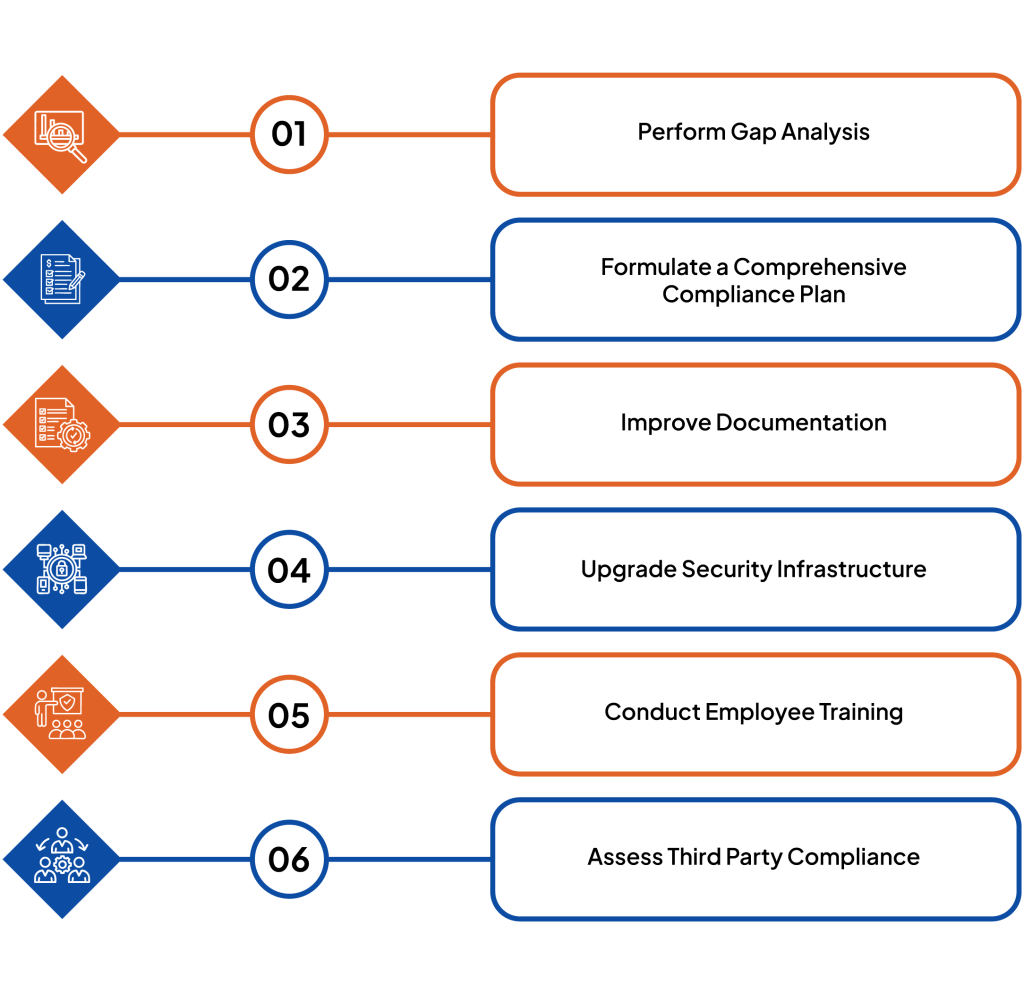
1. Perform Gap Analysis: Determine areas of overlap as well as any gaps between the two compliance systems.
2. Formulate a Comprehensive Compliance Plan: Formulate one plan that covers the provisions of both PCI DSS and SAMA compliance.
3. Improve Documentation: Produce thorough documentation of security policies and audit processes to meet regulatory obligations.
4. Upgrade Security Infrastructure: Use automated systems to monitor, detect, and manage vulnerabilities.
5. Conduct Employee Training: Ensure that employees receive proper training regarding security policies and regulations to prevent errors.
6. Assess Third Party Compliance: Conduct evaluations on a regular basis to assess the compliance of third parties with both the frameworks.
What benefits do banks and fintechs get from compliance?
Achieving compliance offers more than just regulatory approval; it provides strategic advantages that support long-term growth.
- Enhanced Customer Trust: Secure systems build confidence among users
- Reduced Risk of Data Breaches: Strong controls minimize vulnerabilities
- Improved Operational Efficiency: Streamlined processes enhance performance
- Regulatory Readiness: Avoid penalties and disruptions
- Competitive Advantage: Compliance strengthens market positioning
Conclusion
As Saudi Arabia continues to lead the way in digitalization within the financial industry, ensuring compliance with PCI DSS standards, as well as with SAMA, becomes critical. Not only will it guarantee regulatory compliance, but also ensure enhanced security, increased trust, and sustainable development. Companies that opt for an integrative compliance approach will be able to handle all potential difficulties, minimize any risks, and fully benefit from the dynamic environment that prevails within the country’s financial industry.
Having difficulty integrating PCI DSS into SAMA requirements? Look no further than ValueMentor to make things easy for you by providing effective strategies suited for Saudi banks and fintech organizations. They have solutions for all your gap assessment needs and compliance requirements. Get in touch with ValueMentor for PCI DSS consultancy in Saudi Arabia to enhance your security posture.
FAQS
1. Is PCI DSS mandatory for banks in Saudi Arabia?
Yes, any bank handling card payments must comply with PCI DSS to protect customer data.
2. Does SAMA require PCI DSS compliance?
SAMA expects financial institutions dealing with card data to align with PCI DSS as part of their security framework.
3. What is the difference between SAMA and PCI DSS?
PCI DSS focuses on card data security, while SAMA covers overall cybersecurity and governance.
4. Do fintech companies in KSA need PCI DSS?
Yes, if they process or store card data, PCI DSS compliance is required.
5. What are the key PCI DSS requirements?
They include data encryption, access control, network security, monitoring, and regular testing.
6. How can banks manage both SAMA and PCI DSS compliance?
By creating a unified compliance strategy that aligns overlapping controls.
7. What happens if a bank fails PCI DSS compliance?
It can face penalties, reputational damage, and even restrictions on card processing.
8. How often should PCI DSS compliance be reviewed?
At least annually, along with continuous monitoring and updates.
9. Is SAMA compliance difficult for fintech startups?
It can be challenging, but starting early with the right strategy makes it manageable.
10. What is the easiest way to achieve compliance in Saudi Arabia?
Working with experts and using a structured approach simplifies both PCI DSS and SAMA compliance.