
Saudi Arabia’s e-commerce sector is experiencing rapid growth, driven by digital transformation initiatives, increasing consumer adoption, and the ambitious goals of Saudi Vision 2030. As online transactions continue to rise, protecting payment card data and securing digital payment ecosystems have become critical priorities for e-commerce businesses operating in the Kingdom.
In this evolving digital landscape, Payment Card Industry Security Standards Council standards, specifically the PCI DSS, play a vital role in safeguarding cardholder data, reducing the risk of payment fraud, and strengthening the security of online payment processing systems. For Saudi e-commerce businesses, PCI DSS compliance is not just a regulatory or contractual requirement imposed by payment brands and acquiring banks it is a strategic enabler for building customer trust, protecting brand reputation, and supporting sustainable business growth.
With Saudi Arabia’s continued focus on digitization under Saudi Vision 2030, businesses are expected to align with global security standards to remain competitive in an increasingly interconnected marketplace. Whether operating as an online retailer, marketplace, payment gateway, or service provider supporting card transactions, understanding PCI DSS requirements is essential. This blog provides an overview of PCI DSS requirements for Saudi e-commerce businesses, including compliance scope, key security controls, common challenges, and the steps organizations can take to achieve and maintain compliance. It also explores how PCI DSS supports secure digital commerce while aligning with the broader cybersecurity and digital transformation objectives of Saudi Vision 2030.
What is PCI DSS and why it matters in Saudi Arabia?
PCI DSS is a globally recognized security standard designed to protect cardholder data and secure payment environments for organizations that store, process, or transmit payment card information. It establishes a comprehensive set of security requirements aimed at reducing payment fraud, preventing data breaches, and strengthening the security of payment ecosystems.
For businesses operating in Saudi Arabia, particularly in the growing e-commerce and digital payments sector, PCI DSS compliance is increasingly important. As online transactions continue to grow in line with Saudi Vision 2030, organizations must ensure robust protection of customer payment data and maintain secure transaction environments.
PCI DSS matters for Saudi businesses because it helps:
- Protect customers from payment card fraud, data breaches, and unauthorized access
- Strengthen customer trust and build credibility in a competitive digital marketplace
- Support KSA online payment security initiatives and broader cybersecurity objectives
- Facilitate smoother collaboration with acquiring banks, payment processors, and card brands
- Reduce financial, operational, and reputational risks associated with security incidents
- Demonstrate alignment with globally recognized security standards and industry expectations
With the rapid increase in online transactions across Saudi Arabia, consumers are becoming more security conscious and expect businesses to protect their payment information. A single card data compromise can result in financial losses, regulatory scrutiny, reputational damage, and loss of customer confidence. For this reason, PCI DSS is not only a compliance requirement but also a critical component of sustainable growth and secure digital commerce in Saudi Arabia.
Understanding PCI DSS within the Vision 2030 framework
Saudi Vision 2030 Saudi Vision 2030 aims to diversify Saudi Arabia’s economy, reduce reliance on oil, and accelerate growth across key sectors, including digital commerce, fintech, and technology-driven services. As e-commerce continues to expand as part of this transformation, securing digital payment environments has become a critical priority for businesses operating within the Kingdom.
In this context, PCI DSS plays an important role in supporting the broader objectives of Vision 2030 by helping organizations strengthen security, align with international standards, and build trust in the digital economy.
PCI DSS supports Vision 2030 objectives by:
- Ensuring the security and resilience of payment systems handling card transactions
- Encouraging organizations to adopt internationally recognized security best practices
- Supporting regulatory and cybersecurity frameworks within the Kingdom
- Enhancing consumer confidence in digital commerce and online payment platforms
- Reducing fraud risks and improving the integrity of digital transactions
- Enabling secure, scalable growth for e-commerce and digital businesses
For organizations focused on Vision 2030 digital business compliance, PCI DSS serves as a foundational building block for secure and sustainable operations. Beyond meeting compliance obligations, it helps businesses create a trusted payment environment that supports innovation, customer confidence, and long-term growth in Saudi Arabia’s evolving digital economy.
Understanding PCI DSS requirements
PCI DSS is built on a set of core security requirements designed to protect cardholder data and strengthen the security of payment environments. For Saudi e-commerce businesses, these requirements form the foundation of a secure and compliant payment ecosystem.
1. Protect Systems and Networks
Organizations must implement strong security controls, including firewalls, secure system configurations, and other protective measures to reduce the risk of unauthorized access and ensure systems are not easily compromised.
2. Encrypt Cardholder Data
Encryption is essential for protecting cardholder data during storage and transmission. Proper encryption helps maintain the confidentiality and integrity of sensitive payment information.
3. Manage Vulnerabilities
Organizations should maintain secure systems through regular patching, vulnerability management, anti-malware protections, and timely remediation of identified security weaknesses.
4. Implement Strong Access Controls
Access to critical systems and sensitive data should be limited to authorized personnel only, using individual user IDs, least-privilege access, and strong authentication controls.
5. Monitor and Test Networks Regularly
Continuous monitoring, logging, security testing, and regular assessments are necessary to detect threats, validate control effectiveness, and maintain a secure environment.
6. Maintain an Information Security Policy
A well-defined information security policy, supported by employee awareness and training programs, helps ensure everyone understands their responsibilities in protecting payment data.
These requirements form the backbone of PCI DSS for Saudi e-commerce businesses, ensuring that security is embedded across people, processes, and technology. By implementing these controls effectively, organizations can reduce cyber risks, protect customer payment data, and support secure, scalable digital growth.
Scope of PCI DSS for Saudi E-Commerce
Defining scope is one of the most critical aspects of PCI DSS compliance. Scope includes all systems, processes, technologies, and personnel involved in storing, processing, transmitting, or impacting the security of cardholder data.
For Saudi e-commerce businesses, understanding and accurately defining PCI DSS scope is essential to ensure the right security controls are applied and compliance obligations are properly addressed.
Key Components Within Scope
PCI DSS scope may include:
- E-commerce websites and payment-enabled applications
- Payment gateways and payment processors
- Web servers, application servers, and backend databases
- Network devices, firewalls, and supporting infrastructure
- Third-party service providers involved in payment processing or security functions
- People, processes, and administrative functions that can impact the cardholder data environment
Scope Based on Payment Processing Model
The PCI DSS scope can vary depending on how card payments are processed:
- Hosted Payment Pages (HPP): Customers are redirected to a secure third-party payment page, which can significantly reduce the merchant’s compliance burden when implemented correctly.
- API-Based Integration: This model provides greater flexibility and control but typically increases security responsibilities and expands PCI DSS scope.
- Fully In-House Payment Processing: Organizations that process card data directly within their own environment have the highest level of responsibility and the most extensive PCI DSS compliance requirements.
Why Scope Reduction Matters
Minimizing scope is a smart compliance strategy. Reducing the number of systems that store, process, or transmit cardholder data can lower compliance effort, reduce security risks, and simplify ongoing compliance management.
This can often be achieved by leveraging certified payment service providers, secure payment architectures, tokenization, and properly designed segmentation strategies. For Saudi e-commerce businesses, effective scoping is not just a compliance exercise it is a strategic step toward building a secure, efficient, and scalable payment environment.
Steps to ensure PCI DSS compliance
Achieving PCI DSS compliance does not have to be complicated. With a structured and systematic approach, Saudi e-commerce businesses can effectively strengthen security, meet compliance obligations, and support the objectives of Saudi Vision 2030.
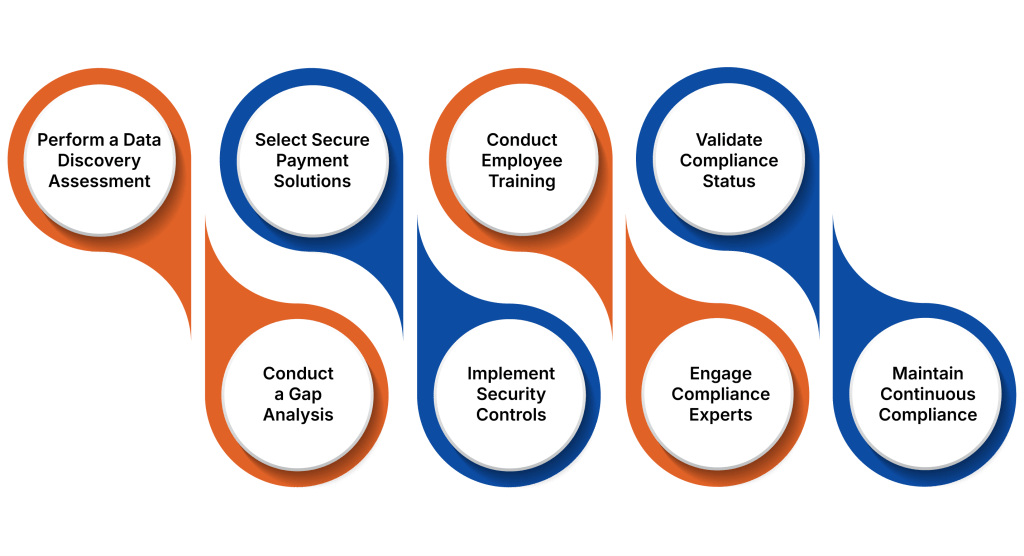
1. Perform a Data Discovery Assessment
Identify where cardholder data exists across your environment, including systems, applications, databases, and third-party connections. This helps define scope and uncover hidden risks.
2. Conduct a Gap Analysis
Assess your current security posture against PCI DSS requirements to identify control gaps, compliance weaknesses, and areas requiring remediation.
3. Select Secure Payment Solutions
Use PCI-compliant payment gateways, hosted payment solutions, or certified service providers to reduce direct handling of sensitive card data and minimize scope where possible.
4. Implement Security Controls
Deploy required security controls such as firewalls, encryption, access controls, logging, monitoring, vulnerability management, and secure system configurations to protect the payment environment.
5. Conduct Employee Training
Human error remains a major cause of security incidents. Regular security awareness and role-based training help employees understand their responsibilities in protecting payment data.
6. Engage Compliance Experts
Working with a qualified assessor, security consultant, or compliance expert can help organizations interpret requirements, address gaps, and achieve compliance more effectively. This may include engaging a Payment Card Industry Security Standards Council Qualified Security Assessor (QSA), where applicable.
7. Validate Compliance Status
Complete the applicable compliance validation process, such as a Self-Assessment Questionnaire (SAQ) or formal assessment, and perform ongoing reviews to maintain compliance over time.
8. Maintain Continuous Compliance
PCI DSS should be treated as an ongoing security program, not a one-time exercise. Regular monitoring, periodic testing, updates, and continuous improvement are essential for maintaining compliance.
By following these steps, organizations can strengthen security, protect customer payment data, and align with Vision 2030 digital business compliance objectives while supporting secure and scalable growth.
Common challenges faced by Saudi E-Commerce businesses
While PCI DSS offers significant security and business benefits, implementing and maintaining compliance can present challenges for Saudi e-commerce businesses, particularly as digital payment environments grow in complexity.
- Technical Complexity: Understanding and implementing detailed PCI DSS requirements can be challenging, especially for organizations without dedicated security or compliance expertise. Scoping, segmentation, secure configurations, and control implementation often require specialized knowledge.
- Cost Considerations: Investments in security technologies, employee training, assessments, and remediation activities can appear significant, particularly for small and mid-sized businesses. However, these costs are often lower than the potential impact of a data breach or compliance failure.
- Third-Party Dependencies: Many e-commerce businesses rely on payment gateways, hosting providers, cloud services, and other third-party service providers. Managing shared responsibilities and validating third-party compliance can be a complex but critical part of PCI DSS compliance.
- Continuous Compliance Maintenance: PCI DSS compliance is not a one-time exercise. Ongoing monitoring, security testing, patching, control reviews, and periodic updates are required to maintain compliance and address evolving threats.
- Scope Management Challenges: Incorrectly defining or managing PCI DSS scope can increase compliance effort, introduce gaps, or create unnecessary security risks. Proper scoping remains a common challenge for many organizations.
- Resource and Skills Constraints: Some organizations may face limitations in internal resources, security expertise, or dedicated compliance personnel, which can slow implementation efforts.
Despite these challenges, organizations that invest early in compliance often realize long-term benefits, including reduced security risks, improved customer trust, stronger operational resilience, and potentially lower costs associated with incidents, remediation, or regulatory issues. For many Saudi e-commerce businesses, early compliance investment supports both security maturity and long-term digital growth.
Benefits of PCI DSS Compliance for Saudi E-Commerce
Achieving PCI DSS compliance delivers benefits that go far beyond meeting regulatory or contractual requirements. For Saudi e-commerce businesses, PCI DSS can strengthen security, improve trust, and support long-term business growth.
- Customer Confidence: PCI DSS compliance helps reassure customers that their payment information is handled securely, building trust and encouraging confidence in your digital platforms.
- Reduced Risk of Cyber Attacks: By implementing preventive security controls, organizations can reduce vulnerabilities, lower the risk of data breaches, and improve overall resilience against cyber threats.
- Support for Regulatory and Digital Transformation Objectives: PCI DSS helps organizations align with broader security expectations and supports the digital transformation goals of Saudi Vision 2030.
- Stronger Brand Reputation: Demonstrating a commitment to payment security can enhance brand credibility, strengthen customer loyalty, and differentiate your business in a competitive marketplace.
- Business Growth Opportunities: PCI DSS compliance can support collaboration with acquiring banks, global payment service providers, and international business partners, helping enable expansion opportunities.
- Improved Operational Security: The controls implemented for PCI DSS often strengthen overall security governance, improve internal processes, and enhance the protection of critical systems beyond the payment environment.
- Reduced Financial and Reputational Risk: Strong security controls can help reduce the likelihood of fraud losses, incident response costs, penalties, and reputational damage associated with a card data compromise.
In the world of online commerce, security can be a key differentiator. For Saudi e-commerce businesses, PCI DSS compliance is not just about compliance it is an investment in trust, resilience, and sustainable growth.
Conclusion
PCI DSS provides a proven framework for securing payment information in Saudi Arabia’s rapidly growing e-commerce sector. By understanding compliance requirements, defining scope accurately, and implementing the right security controls, organizations can better protect cardholder data, reduce risk, and strengthen the security of their payment environments. More importantly, PCI DSS compliance is not only about meeting requirements-it is a key factor in building customer trust, supporting secure digital growth, and aligning with the broader objectives of Saudi Vision 2030.
In an increasingly digital economy, strong security can provide a competitive advantage. Organizations that prioritize security early are better positioned to support growth, enhance resilience, and meet evolving customer and market expectations. A practical first step is to assess your current environment, identify security and compliance gaps, and determine the improvements needed to achieve or strengthen PCI DSS compliance. Engaging experienced advisors such as ValueMentor can help organizations approach this process efficiently and effectively.
Get a free PCI DSS scoping assessment for your Saudi e-commerce business and take the first step toward stronger compliance and customer trust. Strengthen your security posture today and confidently grow your business in alignment with Vision 2030.
FAQS
1. What is PCI DSS and why is it important for Saudi e-commerce?
PCI DSS is a global security standard that protects cardholder data, helping Saudi e-commerce businesses prevent fraud and build customer trust.
2. Is PCI DSS mandatory for all online businesses in Saudi Arabia?
Yes, if your business processes, stores, or transmits card payments, PCI DSS compliance is essential.
3. How does PCI DSS support Vision 2030 goals?
It strengthens secure digital payments, supporting a cashless economy and overall vision 2030 compliance.
4. What are the main PCI DSS requirements?
They include securing networks, protecting data, controlling access, monitoring systems, and maintaining security policies.
5. How can small e-commerce businesses achieve PCI DSS compliance?
By using PCI-compliant payment gateways, reducing data storage, and following basic security practices.
6. What would be PCI DSS scope for E-commerce?
PCI DSS scope includes all the systems which deal with card holder information such as websites, server and payment gateway.
7. Can payments be outsourced to make an entity more compliant?
Yes, by outsourcing PCI DSS compliant companies, you will reduce the compliance requirements of your company.
8. How often must PCI DSS compliance be monitored?
Continuous monitoring of PCI DSS compliance is mandatory.
9. Why is it bad not to comply with PCI DSS?
Non-compliance can result in data breach, penalties, and loss of customer trust.
10. Where should companies begin their PCI DSS journey?
Start from conducting a gap analysis, defining your scope, and looking for professional consultation on pci dss for saudi e-commerce businesses.