
Many organisations start with bug bounty programs too early and end up dealing with low-quality or duplicate vulnerability reports. Others rely only on periodic penetration testing and miss security issues that appear between testing cycles. So, which comes first? The two primary methods of identifying and remediating security vulnerabilities in digital assets are by using penetration tests (often referred to as pentests) from third-party vendors or launching public bug bounty programs (often referred to as bug bounties). While both methods aim to identify weaknesses across different types of assets such as web applications, APIs, cloud environments, mobile apps, and even IoT devices, they serve different purposes and are effective at different points in an organisation’s evolution of security practices.
This blog post explains how a penetration testing company and a bug bounty program will work together rather than compete against each other. It also looks at how to effectively implement both services at the appropriate time, so a company can enhance its security posture without placing an undue burden on its engineering staff.
What is a penetration testing company?
A penetration testing company provides security assessment services that intentionally simulate real-world cyberattacks to identify exploitable vulnerabilities across an organization’s technology environment. These assessments follow a structured methodology and are carried out by experienced penetration testing professionals to uncover weaknesses that could be abused by malicious actors.
Penetration testing can cover a wide range of assets, including web applications, mobile applications, APIs, internal and external networks, cloud infrastructure, Active Directory environments, wireless networks, IoT devices, and other critical systems.
Some of the advantages of penetration testing services include:
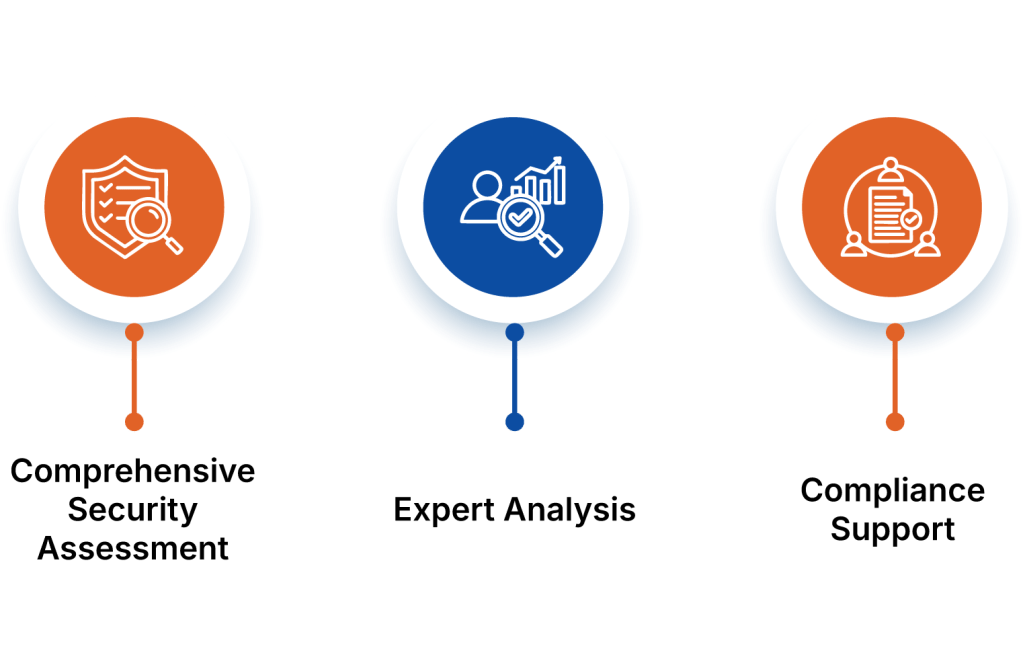
- Comprehensive security assessment: Testing across multiple layers of the environment, from application logic and APIs to infrastructure, cloud, and identity systems.
- Expert analysis: Clear differentiation between real, exploitable risks and low-impact or false-positive findings.
- Compliance support: Helps organizations meet security testing requirements for standards and regulations such as PCI DSS, HIPAA, ISO/IEC 27001, SOC 2, and others.
However, penetration tests are typically conducted at defined intervals (for example, quarterly or annually). This can create gaps in coverage between testing cycles, during which newly introduced vulnerabilities may remain undiscovered.
What are bug bounty programs?
A bug bounty program enables ethical hackers to continuously test an organization’s in-scope assets for security vulnerabilities in exchange for monetary rewards. Instead of relying on a small, dedicated team, bug bounty programs leverage a global community of researchers with diverse skills and perspectives.
Bug bounty programs can cover a broad range of assets, including web applications, mobile apps, APIs, cloud infrastructure, networks, IoT devices, hardware, blockchain platforms, and more, depending on the defined scope.
Some of the benefits of bug bounty programs include:
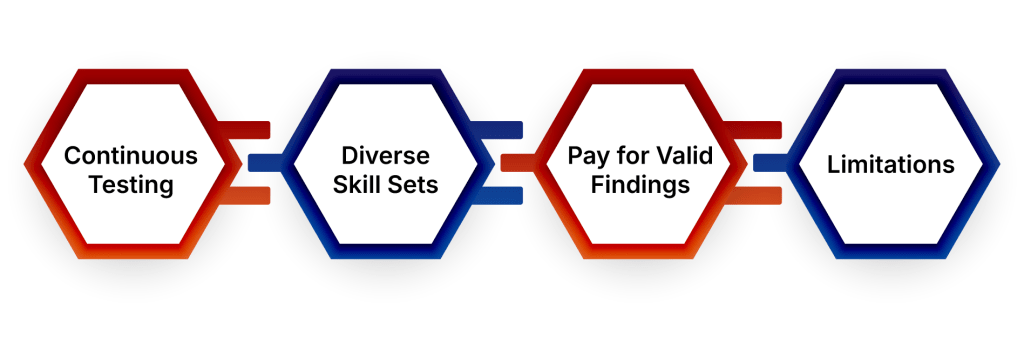
- Continuous testing: Programs run 24/7, increasing the likelihood of identifying newly introduced or hard-to-find vulnerabilities.
- Diverse skill sets: Researchers bring different backgrounds and techniques, often uncovering issues missed by traditional assessments.
- Pay for valid findings: Rewards are issued only for confirmed, in-scope vulnerabilities.
- Limitations: Bug bounty programs require mature vulnerability management processes. Without prior security hardening and clear triage workflows, organizations may struggle with duplicate submissions, low-severity findings, or report noise.
Why start with a penetration testing company?
A company or organisation that has never used application security testing services should usually initiate their work with a professional pen test. Performing an initial pen test will allow the organisation to fix the most significant vulnerabilities before opening the application to outside testers.
There are many benefits to beginning with a penetration test.
- Structured testing – The main areas of vulnerability will be evaluated in an orderly manner.
- Actionable reporting – Actionable recommendations will be given so that the organisation knows exactly how to fix the vulnerabilities in their application.
- Preparation of engineering teams – Engineering teams will have a good understanding of the process and will be ready for the external testers.
The foundation created from a penetration test will greatly benefit an organisation’s application security testing, decreasing risk and increasing success as they move into a bug bounty type of program.
Expanding security efforts with bug bounty programs
After initial vulnerabilities are fixed, a bug bounty program can be launched to maintain continuous security improvements. This approach applies across different asset types, including web applications, mobile applications, APIs, cloud services, networked systems, and other in-scope technologies.
Suggested phased approach:
- Baseline testing: Conduct a professional penetration test.
- Remediation: Fix all critical and high-priority issues.
- Soft launch: Start with a limited group of trusted researchers.
- Full launch: Open the program publicly with clear reporting and reward guidelines.
This sequencing ensures engineering teams are not overwhelmed and maximises the effectiveness of external testing.
Choosing the right services for your organisation
An organisation’s size, risk and complexity of their digital ecosystem as well as its environment will determine the type of security services to put in place. Using a balanced approach allows teams to concentrate on the actual threats they face while at the same time maximising their efficiency by minimising wasted time and resources.
- Penetration testing services: Penetration testing provides a structured and in-depth security assessment performed by skilled professionals to identify exploitable weaknesses. These services can be applied across web applications, mobile applications, APIs, networks, cloud infrastructure, identity systems, and other critical assets. Penetration testing is particularly valuable before major releases, architectural changes, or to meet regulatory and compliance requirements.
- Application security testing services: These services typically combine automated vulnerability scanning with static and dynamic testing techniques and ongoing monitoring. The objective is early identification of recurring or systemic vulnerabilities, enabling remediation during development or configuration stages, before systems are released to users or deployed into production environments.
- Bug bounty programs: Bug bounty programs can deliver strong results once baseline security hardening has been completed. They enable continuous vulnerability discovery by leveraging the diverse skills of independent security researchers. Depending on the defined scope, findings may extend beyond web applications to include mobile platforms, APIs, cloud services, IoT devices, and other exposed systems. Bug bounty programs are especially effective at uncovering edge-case and real-world attack scenarios that may not surface during.
- Strategies for app security testing: The strategy used to conduct a complete application security testing effort consists of the use of professional penetration testing services, combined with automated security tools, and continual refinements. A multi-layered approach allows an organisation to continually improve their security posture for future expansion of their application’s associated functionalities over time.
Smaller teams may start with one professional penetration test before gradually expanding into bug bounty initiatives, while larger organisations can run both in parallel for stronger coverage.
How to decide what security testing your team actually needs?
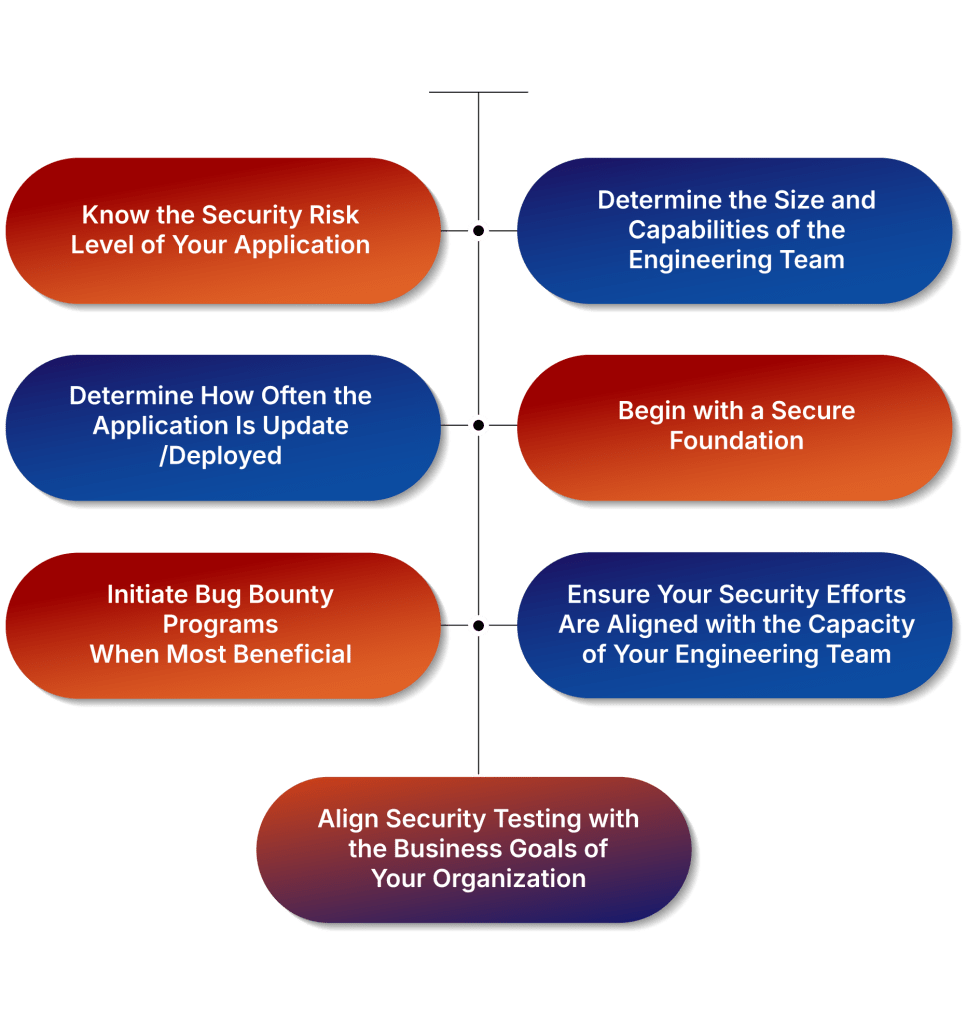
1. Know the security risk level of your application
Applications containing sensitive data, making transactions or collecting user credentials require more extensive and frequent security testing than systems that do not handle sensitive data, are internal to the company, or are classified as low risk.
2. Determine the size and capabilities of the engineering team
When performing well-scoped penetration tests with defined objectives for smaller engineering teams, they experience greater benefit from this approach, while larger engineering teams can handle continuous testing and utilize outside resources more effectively.
3. Determine how often the application is updated/deployed
Applications that are updated/deployed frequently will likely become vulnerable to new vulnerabilities due to newly introduced code, thus requiring ongoing application security testing services.
4. Begin with a secure foundation
A quality penetration test should identify and help you remediate all of the most critical vulnerabilities before implementing additional advanced or continuous testing methods.
5. Initiate bug bounty programs when most beneficial
Bug bounty programs should ideally not commence until after the majority of your significant security vulnerabilities have been identified and resolved and that internal procedures for triaging identified vulnerabilities and fixing them are in place.
6. Ensure your security efforts are aligned with the capacity of your engineering team
While increasing the ability to secure your application increases the likelihood of its security continued protection, overwhelming your engineering team with excessive or low-priority security findings may hinder the benefit of increased protections.
7. Align security testing with the business goals of your organization
The selected security testing methodology should contribute to the growth of the business and address regulatory and compliance requirements while ensuring the trust of customers while not negatively impacting the velocity of the development of the application.
Conclusion
Penetration tests and Bug Bounty Programs are not two competing choices for an organisation. They are complementary security tools that support an organisation as it progresses through its security maturity life cycle. The best way to create a secure foundation with structured testing is the clarity with which the team can prioritise their actions to mitigate critical risks. Continuous external testing provides an additional level of resiliency throughout the evolution of an organisation’s application portfolios.
The greatest challenge will be the appropriate timing, readiness and execution of the security measures, not the selection of penetration testing or bug bounty programs. In a phased security strategy, organisations can limit noise, target engineering resources for high-impact events, and create a consistent view of application risk. When the effort surrounding application security is aligned with the team’s capacity and organisational priorities, it becomes an enabler of the team’s performance rather than a restriction. With experienced assistance from Value Mentor, organisations can create and implement a balanced security strategy that adds application protection, increases the efficient development of applications, and fosters long-term relationships between users/stakeholders and the organisation.
FAQS
1. How does penetration testing differ from a bug bounty program?
Penetration tests are structured evaluations performed by a dedicated team of professionals, whilst bug bounty programs allow ethical hackers from outside the business to test for vulnerabilities continuously.
2. Should I do a penetration test before starting a bug bounty program?
Yes. Doing a penetration test will help uncover any critical vulnerabilities, and once corrected, you can then implement a bug bounty program for continued testing.
3. How often should I conduct penetration testing for web applications?
Ideally, you should conduct penetration testing for web applications at least annually or whenever there are significant changes to the web application.
4. Can I rely solely on bug bounty programs instead of hiring a professional penetration testing company?
You cannot rely solely on bug bounty programmes, as they are complementary and provide value in conjunction with a penetration test conducted by a professional team.
5. Does every type of application benefit from App Security Testing?
Any application that processes and/or stores sensitive information, money or user data should be prioritised for App Security Testing.
6. Is using a Bug Bounty Programme an affordable way to test my applications?
Yes, as you’ll only pay for the vulnerabilities that have been confirmed, rather than paying for recurring testing on an agreed schedule.
7. Do penetration test companies provide written reports?
Yes, penetration test companies provide detailed written reports that include an overview of the findings and recommendations for mitigation, with the risk level of each finding outlined.
8. When should the application security testing service be implemented?
This would be performed from the start and continue during the whole life cycle of an application to help stop vulnerabilities from being released into Production.
9. Is Penetration Testing a way to assist in meeting Regulatory/Compliance Requirements?
Yes, Penetration Testing can provide valid documentation to show compliance with Security Assessments & Remediation.
10. How do Bug Bounty Programs help maintain Application Security over time?
Bug Bounty Programs provide ongoing external Testing, which will help identify the latest and greatest vulnerabilities as they continue to evolve.