
Many organizations are now using applications and microservices because they want to be able to handle more work and do things faster. They also want to be able to put things out there quickly. When they start using things like Kubernetes to manage all of their containers they can run into some new problems with security. That is where penetration testing services come in. A good penetration testing company can help companies find the spots in their container images how their clusters are set up and the layers that control everything before someone with bad intentions can find them.
Kubernetes is really good at automating things and making sure everything runs smoothly. Sometimes the people setting it up can make mistakes like not setting up the right rules for who can do what or using container images that are not secure or not having good rules for how things talk to each other on the network. This can put the things they are working on at risk. In this blog we will talk about how penetration testing services can find the spots in Kubernetes, the common ways that people might try to attack containerized systems and the best ways to make sure clusters are secure, by doing thorough security tests on them.
Understanding security risks in Kubernetes environments
A Kubernetes environment is a complex system with various components such as the control plane, worker nodes, container images, network layers, and API layers. Each of these layers poses a potential attack surface.
The common risks associated with a Kubernetes environment include:
- Overly permissive Role-Based Access Control (RBAC) permissions
- Misconfigured Kubernetes API server access
- Insecure container images pulled from public repositories
- Unrestricted pod communication due to weak network policies
- Exposed secrets in configuration files or environment variables
These security problems can let bad people get power look at private information or take over the resources of a cluster. That is why companies are using services that test their security by pretending to be hackers to see if they can find any weaknesses before the bad people can use them. Companies do this because they want to make sure their cluster resources and private information are safe, from people who want to do harm.
Why Kubernetes security testing is essential?
The traditional approach of assessing security may not be effective in containerized environments. The infrastructure of a Kubernetes environment is dynamic in nature because new containers are created and destroyed in a short time. It becomes hard to monitor the environment continuously.
The concept of Kubernetes security testing emerges as a specialized form of penetration testing service aimed at assessing the security of a containerized environment. Some of the areas of concern include:
- Kubernetes control plane security
- Authentication and authorization mechanisms
- Container runtime vulnerabilities
- Network segmentation policies
- Supply-chain risks in container images
By doing checks companies that do penetration testing help organizations find weak spots in their Kubernetes setup and put in place better security measures.
Common attack paths in containerized workloads
Attackers usually try to get into Kubernetes clusters through different ways. When security experts do a pen test, on a container they try out these attack scenarios to see how an attacker could move around in the environment. They look at Kubernetes clusters. They check Kubernetes architecture.
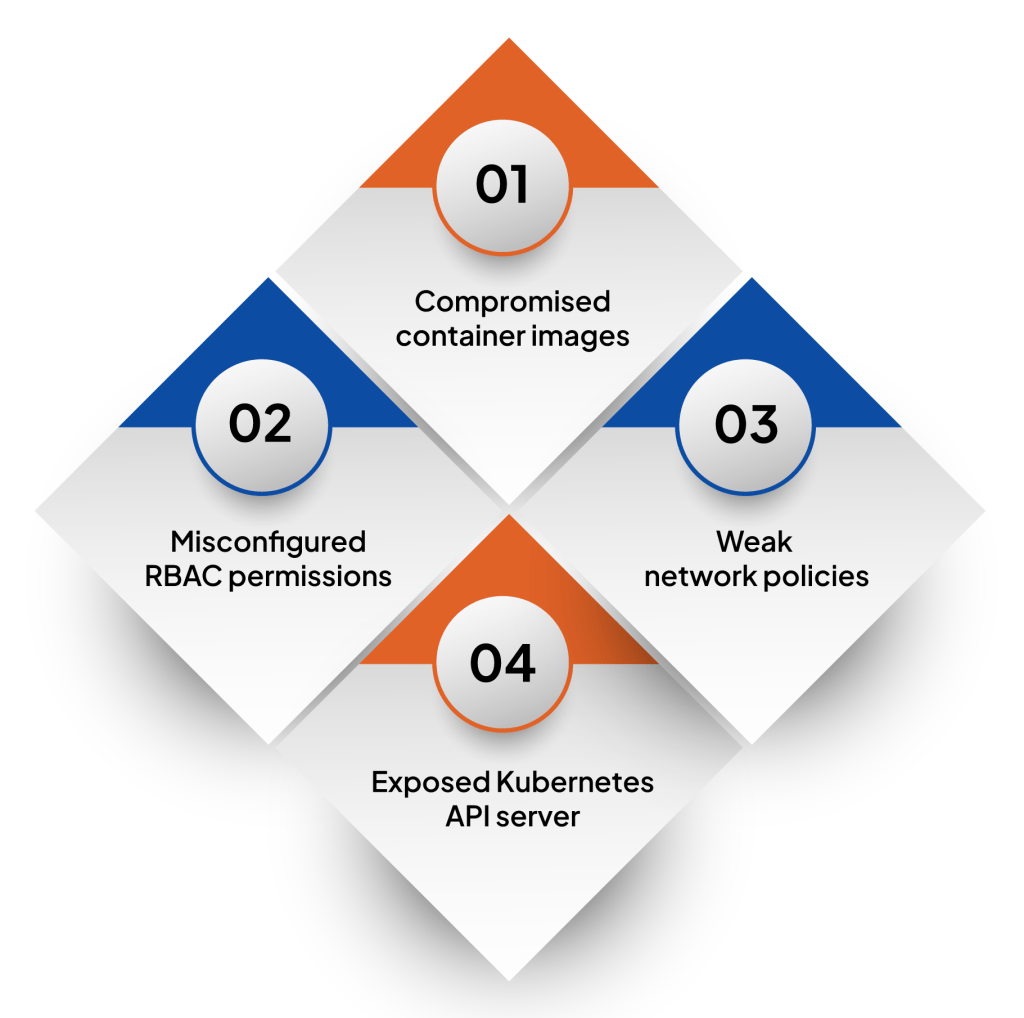
1. Compromised container images
Attackers frequently exploit vulnerabilities within container images that contain outdated libraries or malicious code. If these images are deployed into production clusters, attackers can gain a foothold within the infrastructure.
Penetration testers evaluate container image repositories and build pipelines to identify vulnerabilities that may have been introduced during the development process.
2. Misconfigured RBAC permissions
RBAC policies help control who can access Kubernetes resources. If the permissions are not set up right users or service accounts might get too much access. A penetration testing service looks at RBAC setups to find spots that hackers could use to get more control. They check for paths that could let attackers gain control.
3. Weak network policies
Without network segmentation, the pods may communicate freely within the cluster. This will enable attackers to move around the cluster after gaining access to the compromised container. Security testers check the Kubernetes network policy to ensure that the applications and sensitive services are well isolated.
4. Exposed Kubernetes API server
The Kubernetes API server is the part of the cluster that manages everything. If the Kubernetes API server is open to the internet or does not have security to protect it bad people may try to guess the Kubernetes API server passwords or find weaknesses in the Kubernetes API server to attack it.
A complete test of the container security checks how open the Kubernetes API server is, how people log in to the Kubernetes API server and how the data in the Kubernetes API server is encrypted.
Tools used in Kubernetes penetration testing
People who do penetration testing for a living use tools that are made for containers and Kubernetes environments like the Kubernetes API server. These tools help make attacks on the Kubernetes API server find weaknesses in the Kubernetes API server and check how secure the cluster, with the Kubernetes API server really is.
Some commonly used tools include:

- Kube-hunter: Kube-Hunter scans Kubernetes clusters to identify security weaknesses such as exposed dashboards, open ports, and insecure configurations.
- Kube-bench: Kube-Bench checks Kubernetes clusters against security best practices defined by the CIS Kubernetes Benchmark, helping identify configuration issues.
- Trivy: Trivy is widely used for scanning container images, file systems, and repositories for vulnerabilities.
- Kubescape: Kubescape is about making sure things are done correctly and finding potential problems in Kubernetes clusters.
When you use computers to test things and also have people do some testing, a company that is really good at testing, for security issues can find problems that the automatic tests might not catch.
Supply chain security risks in containers
Modern application development heavily depends on open-source libraries and container images. While this accelerates development, it also introduces supply chain risks.
During kubernetes security testing, penetration testers analyze:
- Container image repositories
- Continuous integration and deployment pipelines
- Third-party dependencies
- Image signing and verification mechanisms
Attackers often insert malicious code into vulnerable libraries or compromised container registries. A strong penetration testing service helps detect these threats and recommends secure image management practices.
Hardening Kubernetes clusters after a penetration test
After identifying vulnerabilities, organizations must implement hardening strategies to strengthen cluster security. Experienced penetration testing companies provide actionable remediation recommendations such as:
- Implementing least-privilege access: RBAC policies should grant only the permissions necessary for each role. This reduces the risk of privilege escalation attacks.
- Securing secrets and credentials: API tokens and password types of sensitive data should be stored securely using secret management tools rather than being placed in configuration files.
- Enforcing network segmentation: Kubernetes network policy should be employed to limit the communication between the pods and prevent the lateral movement of the workload.
- Scanning container images regularly: Organizations should use automated tools within their CI/CD pipelines to identify any potential vulnerabilities.
- Monitoring and logging: Security monitoring tools and centralized logging solutions help detect suspicious activity within Kubernetes clusters.
By following these recommendations, organizations can significantly reduce their attack surface.
Benefits of professional penetration testing for container environments
Working with experienced penetration testing service providers offers several advantages for organizations operating Kubernetes workloads.
- Improved visibility into security gaps: Penetration testing identifies vulnerabilities that traditional security assessments might overlook.
- Stronger compliance posture: Many regulatory frameworks require security testing of cloud infrastructure and container environments.
- Reduced risk of data breaches: Early detection of vulnerabilities prevents attackers from exploiting weaknesses in production environments.
- Enhanced devSecOps integration: Security testing integrated into development pipelines ensures vulnerabilities are addressed earlier in the application lifecycle.
These benefits make penetration testing services a critical component of modern cloud security strategies.
Conclusion
Organizations are using Kubernetes and containers more and more. This makes it harder to keep these environments safe. If you do not set up the permissions or use bad container images it is easy for someone to attack your system. They can also take advantage of network policies or APIs that are not secure. A company that is good at testing security can help you find problems, with your Kubernetes setup. They can look at every part of the process from when you’re building your containers to when they are running. They do this by pretending to be an attacker and trying to find weaknesses. Then they tell you how to fix these problems, so your containers are more secure.
If you pay for a company to test your container security you can make your Kubernetes environment stronger. This means it can handle kinds of cyber attacks. You will be better. Your Kubernetes environment will be more resilient.
Strengthen your Kubernetes security with expert penetration testing services from ValueMentor. Identify hidden vulnerabilities, secure your container workloads, and stay ahead of emerging threats. Contact us today to begin your Kubernetes security testing engagement.
FAQS
1. What are penetration testing services for Kubernetes?
They are security assessments that simulate real-world attacks to identify vulnerabilities in Kubernetes clusters and containerized applications.
2. Why is Kubernetes security testing important?
A container penetration test evaluates the security of container images, orchestration platforms, and runtime environments to detect vulnerabilities.
3. What is a container pen test?
A container penetration test evaluates the security of container images, orchestration platforms, and runtime environments to detect vulnerabilities.
4. What vulnerabilities are commonly found in Kubernetes clusters?
Common issues include misconfigured RBAC permissions, exposed API servers, weak network policies, and insecure secrets management.
5. Who should perform Kubernetes penetration testing?
Organizations running containerized workloads should work with experienced penetration testing companies for comprehensive security assessments.
6. What tools are used in Kubernetes security testing?
Security professionals often use tools like Kube-Hunter, Kube-Bench, Trivy, and Kubescape during testing.
7. How often should Kubernetes penetration testing be performed?
It is recommended to conduct testing annually or after major infrastructure or application changes.
8. Can penetration testing identify supply chain risks in containers?
Yes, penetration testing services can detect vulnerabilities in container images, dependencies, and CI/CD pipelines.
9. What is RBAC in Kubernetes security?
Role-Based Access Control (RBAC) manages user permissions and access to Kubernetes resources.
10. How do penetration testing service providers improve container security?
They identify vulnerabilities, simulate attack scenarios, and provide remediation recommendations to strengthen Kubernetes defenses.