For modern SaaS businesses, security is no longer a competitive advantage; it’s an expectation. When comparing SOC 2 vs ISO 27001, organizations often find themselves weighing customer demands against long-term security goals. Both frameworks are widely respected and can strengthen a company’s credibility in the marketplace.
However, understanding the differences between SOC 2 compliance and ISO 27001 certification is essential before investing time and resources. This blog breaks down each framework and provides practical guidance on choosing the most suitable path for your business.
SOC 2 Compliance explained
SOC 2 compliance is a reporting framework developed by the American Institute of Certified Public Accountants (AICPA). It evaluates how organizations manage customer data based on the Trust Services Criteria: Security, Availability, Processing Integrity, Confidentiality, and Privacy.
A SOC 2 audit assesses whether a company’s controls are properly designed and operating effectively. There are two types of SOC 2 reports:
- SOC 2 Type 1: Evaluates controls at a specific point in time.
- SOC 2 Type 2: Measures the operating effectiveness of controls over a specific timeframe, usually lasting between 3 and 12 months.
It is usually preferred by software companies offering their services to big companies because SOC 2 Type 2 measures continuous operational effectiveness.
Advantages of SOC 2 Compliance
- Fosters customer confidence and trust
- Indicates robust security mechanisms
- Often required by enterprise buyers
- Provides competitive differentiation in the SaaS market
- Supports vendor risk assessment processes
ISO 27001 Certification explained
ISO 27001 is one of the most recognized standards for ISMS. This international standard is issued by the International Organization for Standardization and serves as a means of systematically addressing information security risk.
ISO 27001 differs from SOC 2 in that it addresses the need for implementing a robust security management system as opposed to certain control mechanisms.
Certification under the ISO 27001 standard entails an audit of the ISMS system conducted by an independent certification agency.
Benefits of ISO 27001 Certification
- Globally recognized security standard
- Establishes a systematic approach to risk management
- Improves organizational security governance
- Demonstrates commitment to information security compliance
- Supports international business expansion
SOC 2 Type 2 vs ISO 27001: Key Differences
Though similar in their efforts to ensure data security, there are several key differences between SOC 2 and ISO 27001. This compliance framework comparison helps organizations understand how each standard approaches security, risk management, and compliance requirements.
1. Purpose and scope
SOC 2 is concerned with assessment of operational controls for customer data security. It aims to provide assurance that the controls work well.
ISO 27001 aims to establish and maintain ISMS and manage security risks continuously.
2. Certification vs Attestation
One of the major distinctions between the two in the discussion about ISO 27001 vs SOC 2 is their end results.
- SOC 2 produces a report from a CPA firm.
- ISO 27001 produces a certification from an accredited certification body.
The benefit of ISO certification is that it is internationally recognized, thus more easily understood by international customers.
3. Geographic Recognition
The SOC 2 framework is more popular in North America, specifically with organizations that are based in the United States and technology firms.
ISO 27001 is recognized internationally and is favored by firms that operate across Europe, Asia Pacific, and the globe.
4. Audit Framework
SOC 2 Type 2 audit tests if the security controls functioned efficiently during the audit period.
ISO 27001 audits assess whether the organization has implemented and maintained an effective ISMS according to the standard’s requirements.
5. Risk Management
ISO 27001 places greater emphasis on formal risk assessment and risk treatment methodologies.
SOC 2 addresses risk indirectly through control implementation and monitoring.
Which framework is better for SaaS Companies?
The answer depends on your business objectives, customer base, and growth strategy.
Choose SOC 2 If:
- Your primary market is the United States.
- Enterprise customers frequently request SOC reports.
- You need to demonstrate operational effectiveness of security controls.
- You want to accelerate enterprise sales cycles.
For many B2B SaaS providers, SOC 2 compliance has become a standard requirement during vendor security reviews.
Choose ISO 27001 If:
- You serve global customers.
- International recognition is important.
- You want a structured security management program.
- Your organization prioritizes long-term security governance.
Organizations pursuing ISO 27001 for the first time should be prepared for a longer implementation timeline. Depending on the organization’s size, complexity, and security maturity, achieving ISO 27001 certification can typically take 12–18 months, as it requires establishing and implementing a comprehensive Information Security Management System (ISMS), conducting risk assessments, and demonstrating ongoing compliance.
Can SaaS companies pursue both?
Certainly. There are several SaaS companies that follow both of these frameworks since they complement each other.
In point of fact, there is a lot of common ground between SOC 2 requirements and those of ISO 27001. Adoption of one framework makes it easier to comply with the other. The benefits include:
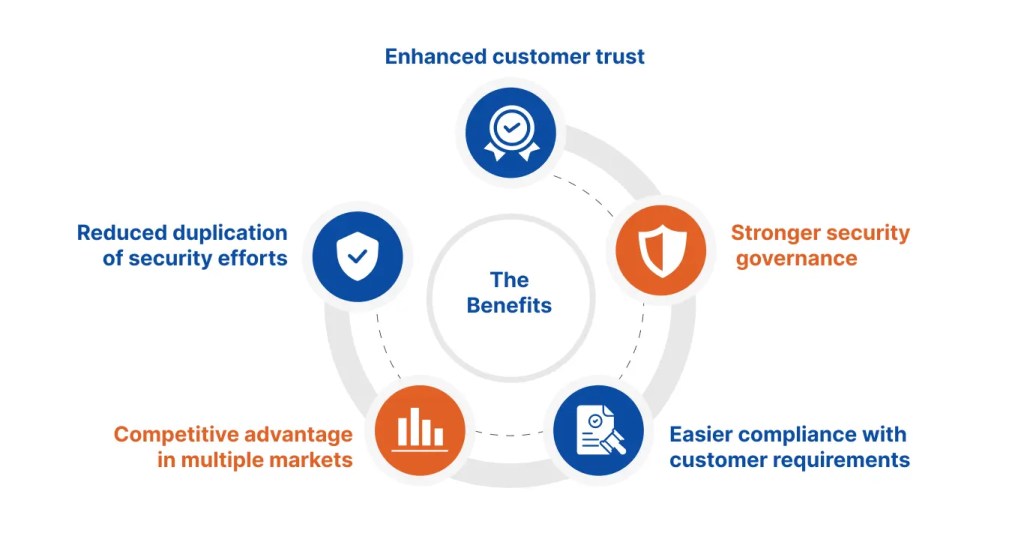
- Enhanced customer trust
- Stronger security governance
- Easier compliance with customer requirements
- Competitive advantage in multiple markets
- Reduced duplication of security efforts
For rapidly growing SaaS businesses, adopting both frameworks can create a comprehensive foundation for information security compliance.
SOC 2 vs ISO 27001: Cost and Resource Considerations
Budgetary considerations are relevant when choosing SaaS compliance frameworks.
SOC 2 certification can be a time-consuming process because significant evidence must be gathered throughout several months to prove the efficiency of controls.
For the same reason, implementing ISO 27001 can require some extra work to create an ISMS and conduct risk assessment.
Such issues are influenced by the following variables:
- Company size
- Existing security maturity
- Scope of systems and processes
- Internal compliance expertise
- Use of automation tools
The audit cycles also differ significantly between the two frameworks. SOC 2 requires a new audit each year to generate an updated report, resulting in annual auditor engagement and evidence collection activities. In contrast, ISO 27001 follows a three-year certification cycle, with annual surveillance audits during the first two years and a full recertification audit in the third year. As a result, SOC 2 typically involves more predictable recurring annual costs, while ISO 27001 often requires greater upfront investment during the initial certification phase.
Closing thoughts
In the end, the choice between SOC 2 vs ISO 27001 depends on your business objectives, customer expectations, and growth strategy. SOC 2 is often the preferred option for SaaS companies targeting the U.S. market, as many enterprise customers specifically request a SOC 2 report during vendor evaluations.
However, ISO 27001 certification is equally valuable for organizations seeking global recognition, a structured approach to information security management, and stronger long-term security governance. In fact, many growing SaaS companies choose to pursue both frameworks to meet diverse customer requirements and demonstrate a mature security posture. Whether you choose SOC 2, ISO 27001, or both, the ultimate goal is to strengthen trust, improve security, and support sustainable business growth.
Looking to make your compliance journey easy? Be it SOC 2 compliance, ISO 27001 certification, or both, we at ValueMentor are here to guide you through. We have our own team of compliance specialists that help software-as-a-service firms audit effectively and get their certifications faster. Feel free to contact us now to find out how to be more compliant with your customers around the world.