Data is not only considered an organizational asset; it is now seen as a regulatory responsibility. With organizations heavily relying on the use of personal data from customers, employees, and even their operations, various governments around the world have been enacting strict laws to protect individuals’ private information. This regulatory responsibility is mandated under Bahrain’s Personal Data Protection Law (PDPL), which provides guidelines on how businesses should use such personal data.
Compliance with the PDPL is not an option for any organization working within Bahrain; it is actually a regulatory requirement. If your company works with any personal data belonging to a Bahrain national or operates in the country, non-compliance will expose your business to legal fines, potential reputation risks, and even missed opportunities.
The objective of this guide is to help business entities navigate through the intricate maze that surrounds the Personal Data Protection Law in Bahrain. This pillar page is a one-stop guide for all those who seek to know more about the PDPL in Bahrain and comply with its requirements.
By the time you finish reading this guide, you would have gained insights into the PDPL Bahrain compliance process.
What is Bahrain PDPL (Personal Data Protection Law)?
The PDPL (Personal Data Protection Law) of Bahrain is the main data protection law that provides for the lawful processing of personal data. It ensures that all individuals’ rights to privacy are upheld while at the same time ensuring that businesses can harness their data effectively. To start with, the law covers any business that processes the personal data of individuals residing in the territory of Bahrain regardless of whether the enterprise is operating within the territorial boundaries of Bahrain or outside them.
The PDPL governs the full lifecycle of personal data, covering aspects such as:
The Personal Data Protection Authority in Bahrain is the authority through which the law is enforced to regulate the compliance process and conduct investigation on any violation.
Purpose of the Law
The main purpose of the Personal Data Protection Law in Bahrain is to:
- Provide protection for individuals’ personal information against abuse and access
- Ensure transparency in data usage among businesses
- Ensure accountability within the business for personal information
Through these guidelines, the PDPL is able to provide a safe environment for individuals and businesses.
Scope of Bahrain PDPL
The scope of Bahrain PDPL is broad and applies to:
• Companies operating within Bahrain
• International organizations processing Bahrain residents’ data
• Service providers handling data on behalf of other businesses
This means even if your company is based outside Bahrain, you may still need to meet PDPL compliance requirements Bahrain if you process personal data linked to the country.
Key Objectives of Bahrain PDPL
Data Privacy Protection
One of the key aims of the Bahrain PDPL is the provision of individual control over personal data. That involves awareness about what happens to personal data, its processing, and whether there is access to it from third parties, as well as the possibility to demand any corrections or even deletion. The businesses should comply with these provisions and introduce corresponding practices.
Responsible Data Usage
Another important aspect of the PDPL is related to the responsible and legal data processing. It means that the organizations should make sure that the personal data is collected and processed only for lawful reasons, in compliance with all the rules of fair use, and kept no longer than necessary.
Ready to simplify your PDPL compliance process?
Get expert consulting, faster implementation, and complete regulatory alignment.
Why Bahrain PDPL Compliance matters for businesses
With the increasing regulatory nature of the digital world, the process of data protection legislation is not just about avoiding legal ramifications; rather, it is about creating a sustainable business model. It is important for organizations to be compliant with the provisions of Bahrain PDPL to operate legally and maintain good relations with stakeholders.
Legal Risks and Regulatory Penalties
The non-compliance of Bahrain PDPL can pose major risks for businesses. These regulatory bodies have the right to monitor the company’s data processing processes and implement any laws if there is non-compliance with the regulations. The non-compliances may happen by mistake; however, this does not reduce the legal implications that arise.
Impact on the Business and Loss of Trust
Apart from legal consequences, a failure to adhere to the Personal Data Protection Law Bahrain will adversely affect your brand reputation. Today, there is an increasing consumer awareness regarding their data and how the organizations utilize it. Moreover, the majority of the multinational companies have certain policies regarding data privacy of their vendors, and in case of non-compliance, the business is lost.
Relevance in Real-World Industry
There are certain sectors whose compliance becomes more difficult on account of the nature of data they work with:
- Banking, Financial Services, and Insurance (BFSI): Data security is essential due to the sensitive nature of financial transactions and customer data
- Software as a Service & Technology Firms: Handle large volumes of data that move across borders
- Healthcare Organizations: Handle highly sensitive patient data requiring confidentiality and protection
For these sectors, PDPL penalties Bahrain are not the only concern operational disruption and reputational damage can be far more costly.
Who needs to comply with Bahrain PDPL?
Understanding whether your organization falls under the scope of the law is the first step toward Bahrain PDPL compliance. The reality is that most businesses handling personal data directly or indirectly are required to comply with the regulation.
The Personal Data Protection Law Bahrain applies broadly, making it relevant for organizations of all sizes, industries, and geographical locations.
Businesses of All Sizes: SMEs vs Enterprises
A common misconception is that only big corporations require compliance.
Fact: Compliance with the PDPL is applicable to SMEs as well.
- SMEs: Regardless of whether you collect personal data in the form of customer names, email addresses, or phone numbers, your business will be required to comply with data protection laws in Bahrain.
- Corporations: These types of companies usually have large amounts of data flowing through many different systems.
For both, the key factor is not size but whether personal data is being processed.
Data Controllers vs Data Processors
The law clearly distinguishes between two critical roles:
Data Controllers
These are organizations that decide:
Cross-Border and International Companies
One of the most important aspects of Bahrain data privacy regulations is its extraterritorial scope.
This means:
• If your business is located outside Bahrain but processes data of Bahrain residents, PDPL still applies
• Global SaaS companies, e-commerce platforms, and outsourcing firms must comply
For international organizations, this makes Bahrain data protection compliance services essential to align operations with local legal requirements.
Bahrain PDPL Law requirements explained
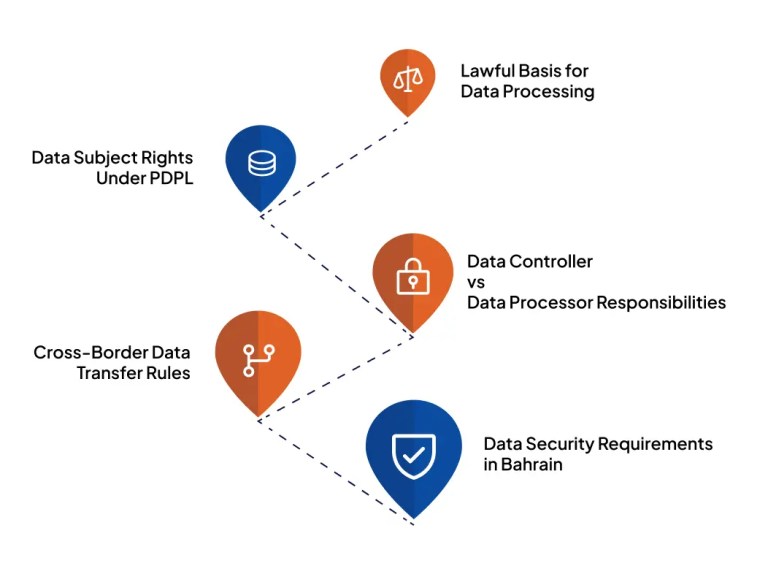
For complete Bahrain PDPL compliance, there are a number of critical legal obligations that need to be known and implemented by businesses. Although this law might seem complicated at first, its key aspects can help simplify its application process considerably.
Here is a simplified description of key PDPL compliance obligations for Bahrain companies.
Lawful Basis for Data Processing
One of the foundational principles of the Personal data protection service in bahrain is that personal data must be processed lawfully and fairly.
This means businesses must have a valid reason (legal basis) to collect and use personal data.
Common Lawful Bases Include:
Consent:
The individual has clearly agreed to data processing
Contractual necessity:
Data is required to fulfill a contract
Legal obligation:
Required to comply with laws or regulations
Organizations must also ensure that consent is:
- Freely given
- Specific and informed
- Easy to withdraw
Without a valid lawful basis, data processing is considered non-compliant.
Data Subject Rights Under PDPL
The PDPL gives individuals (data subjects) strong rights over their personal data. Businesses must have processes in place to support these rights.
Key Rights Include:
Right to Access
Individuals can request details about their data
Right to Correction
Incorrect or outdated data must be updated
Right to Deletion
Individuals can request their data to be erased
Right to Object
Individuals can object to certain types of processing
Failure to respond to such requests within a reasonable timeframe can lead to compliance violations.
Data Controller vs Data Processor Responsibilities
Clear accountability is a core requirement of Bahrain PDPL.
Data Controller Responsibilities:
- Ensure lawful processing
- Define purpose and scope of data usage
- Maintain compliance documentation
- Ensure third-party compliance
Data Processor Responsibilities:
- Process data only as instructed
- Implement appropriate security measures
- Assist controllers in meeting compliance obligations
Organizations must also formalize relationships through contracts that clearly define responsibilities.
Cross-Border Data Transfer Rules
Transferring personal data outside Bahrain is subject to strict controls under Bahrain PDPL law requirements.
Key Considerations:
- Data can only be transferred to countries with adequate data protection standards
- Additional safeguards may be required for international transfers
- Organizations must assess risks before transferring data
For global businesses, this is one of the most critical compliance areas.
Data Security Requirements in Bahrain
Data security is at the heart of Bahrain data privacy regulations. Organizations must take proactive steps to protect personal data from unauthorized access, loss, or breaches.
Key Security Measures Include:
- Encryption of sensitive data
- Access control and user authentication
- Regular security testing and monitoring
- Incident response and breach management plans
Implementing strong data security in Bahrain is not just a compliance requirement it is essential for business continuity and trust.
PDPL Compliance Checklist Bahrain (Step-by-Step) =info=
It is necessary for a company that intends to meet the requirements of the Bahrain PDPL to have an organized approach. The requirement for compliance should not be seen as a single process but rather an organized process followed in sequence.
The PDPL Compliance Checklist Bahrain is here to help your organization achieve that.
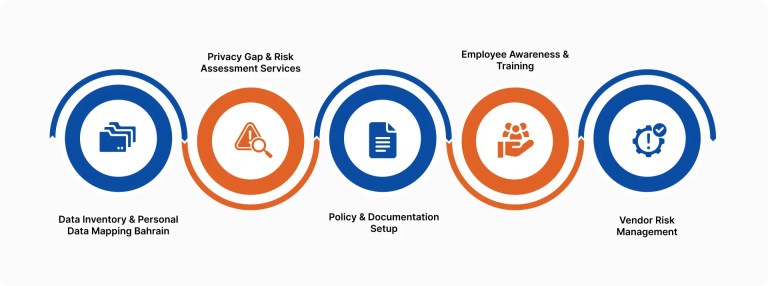
Data Inventory & Personal Data Mapping Bahrain
The first step in any compliance journey is understanding what data your organization holds.
What to Do:
Why It Matters:
Without a clear data inventory, it is impossible to meet PDPL compliance requirements Bahrain or respond to data subject requests accurately.
Privacy Gap & Risk Assessment Services
Once data is mapped, the next step is identifying compliance gaps.
What to Do:
Why It Matters:
A structured Bahrain PDPL readiness assessment helps prioritize actions based on risk, rather than attempting to fix everything at once.
Policy & Documentation Setup
Documentation is a critical part of Personal Data Protection Law Bahrain compliance.
What to Do:
Why It Matters:
Regulators often assess documentation first when evaluating compliance.
Employee Awareness & Training
Even the best policies can fail without proper implementation.
What to Do:
Why It Matters:
Human error is one of the leading causes of data breaches training significantly reduces this risk.
Vendor Risk Management
Third-party vendors can introduce significant compliance risks.
What to Do:
Why It Matters:
Under Bahrain PDPL, organizations remain accountable for how their vendors handle personal data.
Not sure where you stand with Bahrain PDPL compliance?
Identify gaps, reduce risks, and get a clear roadmap with our expert-led assessment.
Bahrain PDPL Readiness Assessment & Gap Analysis
Before implementing full scale compliance measures, businesses need to understand where they currently stand. This is where a PDPL readiness assessment Bahrain becomes essential.
A structured assessment helps organizations evaluate their current data protection practices against Bahrain PDPL law requirements and identify gaps that need to be addressed.
What is a PDPL Readiness Assessment?
A Bahrain PDPL readiness assessment is a systematic evaluation of an organization’s data protection framework.
What is a PDPL Readiness Assessment?
A Bahrain PDPL readiness assessment is a systematic evaluation of an organization’s data protection framework.
It Typically Covers:
Outcome:
Understanding of the level of compliance attained as well as where improvements are necessary.
Risk-Based Compliance Model
All risks cannot be equated. Using a risk-based model allows businesses to make informed priorities.
Key focus Areas:
- High risk data (financial, health, personal)
- Critical systems and databases
- Cross-jurisdictional data transmission
What This Means:
Using such a model will ensure that important tasks are done using available resources in an efficient manner.
Key Deliverables from Gap Analysis
A professional Bahrain PDPL gap analysis provides actionable insights rather than just observations.
Typical Deliverables Include:
- Detailed gap assessment report
- Risk classification (high, medium, low)
- Step-by-step remediation plan
- Compliance roadmap aligned with business goals
Business Value:
Instead of guessing what to fix, organizations get a structured plan to achieve PDPL compliance Bahrain efficiently.
Bahrain PDPL readiness assessments include a detailed gap analysis
Our experts evaluate your current compliance posture and highlight risks before implementation begins. Most businesses accelerate compliance faster with the right roadmap.
Bahrain PDPL Compliance Services (What Businesses Need)

Adherence and compliance with PDPL regulations in Bahrain could prove difficult for companies that handle huge amounts of personal data or have operations in several jurisdictions. In such cases, the help of professional Bahrain PDPL compliance services would come in handy.
A good PDPL compliance service provider Bahrain will assist your organization in complying with PDPL regulations and minimizing risks in an organized manner.
Organizations such as ValueMentor bring in specialized knowledge and skills in areas of data protection, governance, and cyber security among others.
PDPL Consulting Services
Bahrain PDPL consulting services provide strategic guidance to help organizations understand and interpret Bahrain PDPL law requirements.
What It Includes:
- Regulatory interpretation and advisory
- Data protection strategy development
- Compliance roadmap creation
- Risk identification and mitigation planning
Business Value:
Helps leadership teams make informed decisions and align compliance with business objectives.
Bahrain PDPL audit services
Audits are essential for evaluating how well your organization meets PDPL compliance requirements Bahrain.
What It Includes:
- Internal compliance audits
- Policy and documentation review
- Technical security assessments
- Continuous monitoring mechanisms
Business Value:
Identifies hidden risks and ensures ongoing compliance with Bahrain data privacy regulations.
PDPL Implementation Services
Bahrain PDPL implementation services focus on putting compliance strategies into action.
What It Includes:
- Policy and SOP development
- Data protection controls implementation
- System and process alignment
- Integration with existing IT infrastructure
Business Value:
Transforms compliance plans into real, measurable outcomes.
PDPL Readiness Assessment
This service evaluates your organization’s current state and readiness for compliance.
What It Includes:
- Gap analysis
- Risk assessment
- Compliance scoring
- Actionable recommendations
Business Value:
Audits help maintain accountability and demonstrate compliance to regulators.
Ongoing Compliance Support
Compliance is not a one-time effort; it requires continuous monitoring and improvement.
What It Includes:
- Regular compliance reviews
- Policy updates
- Incident response support
- Regulatory updates and advisory
Business Value:
Ensures your organization stays compliant as regulations evolve.
Governance, Risk & Compliance (GRC) Role in PDPL
Governance, risk management, and compliance strategies are significant foundations for PDPL compliance in Bahrain. Rather than viewing compliance as a separate activity, GRC assists in incorporating data protection efforts within a larger organizational strategy framework.
GRC for PDPL Compliance:
Large enterprises often deal with vast volumes of personal data across multiple systems, departments, and geographies. This complexity requires a tailored approach to Saudi PDPL compliance consulting.
Key Focus Areas:
Governance
Establishing structured frameworks to manage data across all business units.
Helps identify, analyze, and control risks related to data management
Compliance Monitoring:
Guarantees consistent compliance with the laws of Bahrain concerning data privacy
Data Security & Risk in PDPL Compliance
Data security forms an important part of PDPL compliance. The absence of proper cybersecurity practices renders all policies null, as the data remains at risk.
Importance of Cybersecurity in PDPL Compliance:
- Keeps personal data safe from any kind of breach
- Protects personal data from cyber attacks
- Ensures that data is safely stored and transmitted
Risk Identification
- Identification of weaknesses within the system and process
- Evaluation of any possible threat to personal data
Risk Mitigation
- Use of security measures such as encryption, firewalls, and access control
- Vulnerability assessment and penetration testing
Continuous Monitoring
- Real-time threat detection
- Response planning to an incident
- Security audits and compliance
Business Value:
Data security services Bahrain will help you comply as well as safeguard your business from any potential financial and operational disruptions.
PDPL Penalties in Bahrain (What You Risk)
Non-compliance with the compliance requirements of the Bahrain PDPL will lead to serious consequences which include legal sanctions, financial impact, and reputational impact as well. Non-compliant companies with regard to the personal data protection laws of Bahrain will be not only sanctioned but also impacted negatively on their business operations.
Financial Penalties
Companies that breach the regulations stipulated by the Personal Data Protection Law in Bahrain will incur penalties in terms of financial sanctions.
Examples of Violations:
- Processing data without lawful consent
- Failing to implement adequate security measures
- Unauthorized data transfers
Impact:
Financial sanctions can influence profit directly, particularly for small and medium-sized enterprises which lack the capacity to bear any sudden regulatory fines.
Legal Consequences
Besides financial sanctions, regulatory authorities can also impose legal sanctions.
Legal Sanctions Can Be:
- Investigations and audits
- Suspension of data processing activities
- Legal action taken against the organization
This may lead to disruption of business operations and cause problems.
Business Risks and Reputational Impact
Reputation risk from non-compliance can be worse than fines and legal actions.
Risks Include:
- Loss of customer trust
- Negative brand perception
- Loss of partnerships and contracts
In competitive markets, trust is a key differentiator once lost, it is difficult to rebuild.
Benefits of Bahrain PDPL Compliance =info=
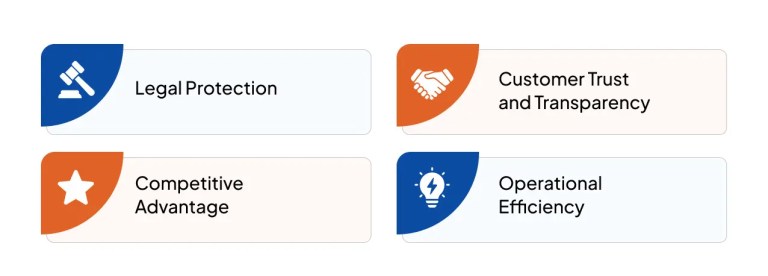
While compliance may seem like a regulatory burden, it offers significant business advantages. Implementing Bahrain data protection compliance services can transform compliance into a strategic asset.
Legal Protection
It ensures that your business runs according to the laws of bahrain, thus avoiding any form of punishment or legal problems.
Customer Trust and Transparency
It shows your business’s dedication to securing client information, making their interactions better.
Competitive Advantage
Most international businesses would rather partner with businesses that comply with the regulations. Having sound data protection measures may unlock more market avenues for you.
Operational Efficiency
Organized data management systems facilitate smooth operations and minimize inefficiencies.
Management Responsibility
Compliance is not just an operational task it requires strong leadership and accountability from management.
How to choose the right PDPL Compliance partner
Choosing the appropriate data protection consultancy firm to partner with is very important in ensuring success during the implementation process. Not all firms provide the same expertise.
Local Expertise and Global Standards
Find a company that has local knowledge of the Bahrain PDPL laws but adheres to international standards.
Why It Matters:
- Ensures compliance with local regulations
- Supports international business operations
End-to-End Compliance Support
A reliable partner should offer complete services from assessment to implementation and ongoing support.
Look For:
- Consulting + audit + implementation
- Continuous monitoring
- Training and awareness programs
Integration with ISO & GDPR
PDPL compliance should not exist in isolation.
Key Considerations:
- Conformity with ISO standards (for example, ISO 27001)
- GDPR compatibility for international companies
- Such conformity will result in sustainable scalability.
Industry-Specific PDPL Compliance Use Cases
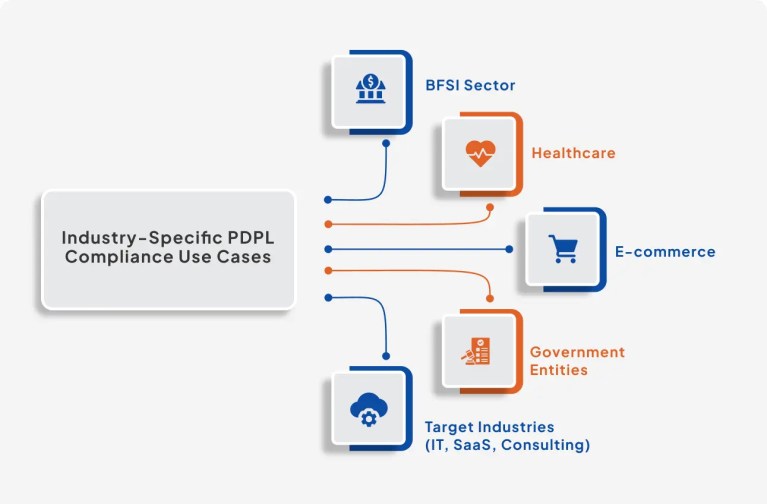
Each industry has its own set of difficulties related to PDPL compliance within Bahrain. Understanding these use cases helps businesses apply compliance in practical scenarios.
BFSI Sector
- Protect sensitive financial data
- Ensure secure digital transactions
- Prevent fraud and unauthorized access
Healthcare
- Safeguard patient records
- Maintain confidentiality
- Comply with strict data handling regulations
E-commerce
- Secure customer payment and personal data
- Ensure transparent data usage policies
- Manage third-party integrations
Government Entities
- Protect citizen data
- Ensure secure public service delivery
Target Industries (IT, SaaS, Consulting)
- Manage cross-border data flows
- Ensure client data confidentiality
Global PDPL Compliance and Alignment with GDPR
Bahrain PDPL is characterized by commonalities with other international data protection regimes such as GDPR, hence making it relatively easy for multinational companies to develop compliance policies.
Key Similarities:
- Focus on data subject rights
- Requirement for lawful data processing
- Emphasis on accountability and transparency
Key Differences:
- Regional regulatory nuances
- Specific enforcement mechanisms
Global Impact:
In terms of multinational organizations, PDPL compatibility with GDPR will ensure smooth business operation in many countries without any problems.
Future of data protection in Bahrain
There is no doubt that data protection laws in Bahrain will become more sophisticated as digital transformation advances.
Key Trends:
- Enhanced regulatory compliance
- Better cybersecurity
- Expansion of compliance requirements
What Businesses Should Do:
- Be proactive about compliance
- Focus on data security and risk management
Businesses that see compliance as an ongoing activity rather than a one off event will find themselves better prepared for future success.
FAQs
1. What is PDPL compliance in Bahrain?
It refers to adhering to the Personal Data Protection Law, ensuring lawful collection, processing, and protection of personal data.
2. Who needs to comply with Bahrain PDPL?
Any organization that processes personal data of individuals in Bahrain, including local and international businesses.
3. What are the penalties for PDPL violation in Bahrain?
Penalties include fines, legal action, reputational damage, and possible operational restrictions depending on the violation.
4. How to prepare for PDPL compliance??
Start with a data audit, conduct a gap analysis, implement policies, and train employees.
5. What is a PDPL readiness assessment?
It is an evaluation process that measures your organization’s current compliance level and identifies gaps.
6. What is personal data under Bahrain law?
Any information that can identify an individual, such as name, contact details, or financial data.
7.How long does PDPL compliance take?
It depends on the organization’s size and complexity, but typically ranges from a few weeks to several months.
8. Is Bahrain PDPL similar to GDPR?
Yes, it shares key principles like data subject rights and lawful processing but has regional differences.