The General Data Protection Regulation (GDPR) transformed the way organizations gather, handle and protect personal data within the European Union. For companies, compliance is not merely a matter of fulfilling regulatory requirements; it is establishing trust, preventing fines, and securing long-term operational viability. While the regulation is clear in its intent, the practical side of compliance can be complex. Many organizations struggle with interpreting the law, embedding privacy into daily operations, and keeping policies updated as business practices evolve. This is where GDPR privacy consulting plays a vital role. Consulting firms bring expertise, tested frameworks, and practical guidance that help businesses move from uncertainty to compliance readiness.
Understanding the GDPR Privacy Compliance Framework
The GDPR privacy compliance framework is built on principles that place individuals at the center of data protection. Businesses must follow these principles to demonstrate accountability and compliance.
- Lawfulness, fairness, and transparency – Data must be collected for clear purposes and communicated openly to individuals.
- Purpose limitation – Information gathered must only be used for specific, declared purposes.
- Data minimization – Organizations should collect only the data necessary for their operations.
- Accuracy – Personal data must remain up to date and accurate.
- Storage limitation – Data should not be retained longer than required.
- Integrity and confidentiality – Companies must ensure security through both technical and organizational safeguards.
- Accountability – Businesses must be able to show compliance at any time.
Alongside these principles, GDPR outlines rights for individuals, such as access to their personal data, the right to rectification, and the right to erasure. For businesses, this means having systems ready to respond to such requests quickly and accurately.
GDPR Readiness: How to Assess Your Current State
It cannot comply until it understands where it is. A GDPR gap assessment is where the journey starts. An assessment looks at how policies, data handling, and security are in place against what is required in the regulation.
Through the exercise, consultants usually look at:
- Data flows and mapping – Where personal data is gathered, stored, and passed.
- Current privacy policies – Verifying completeness, accuracy, and adherence to GDPR terminology.
- Third-party contracts – Having data processing terms between suppliers.
- Risk areas – Determining areas of weakness like obsolete storage methods or absence of breach response strategies.
By comparing themselves to compliance standards, organizations have a clear picture of where improvement is needed. This step enables companies to devise a roadmap that addresses the most high-risk areas first.
Core Services Offered by GDPR Privacy Consulting Firms
Consulting firms provide a wide range of services designed to meet the diverse needs of businesses. These services include both one-time readiness support and ongoing compliance assistance.
- Data Protection Officer (DPO) as a Service – Many organizations cannot afford a full-time DPO, so consultants offer this role on demand. A DPO ensures that the business continuously meets GDPR requirements.
- Consent management solutions – Consultants assist in crafting consent mechanisms that are simple, intuitive, and specifically GDPR-compliant. This may involve website cookie banners, opt-in forms, and tracking frameworks for evidence of consent.
- Data mapping and risk assessments – A systematic process for monitoring the movement of personal data throughout the organization, determining risks, and suggesting safeguard measures.
- Incident response and breach management – Advisory teams get organizations ready to detect, respond, and report breaches during the 72-hour GDPR window.
All these services enhance the capability of businesses to safeguard personal data and demonstrate seriousness to regulators in regard to compliance.
GDPR Privacy Policy and Documentation Checklist
Documentation is at the heart of GDPR compliance. Regulators expect businesses to maintain clear, accessible, and accurate records that prove adherence to the law. A strong policy framework usually includes:
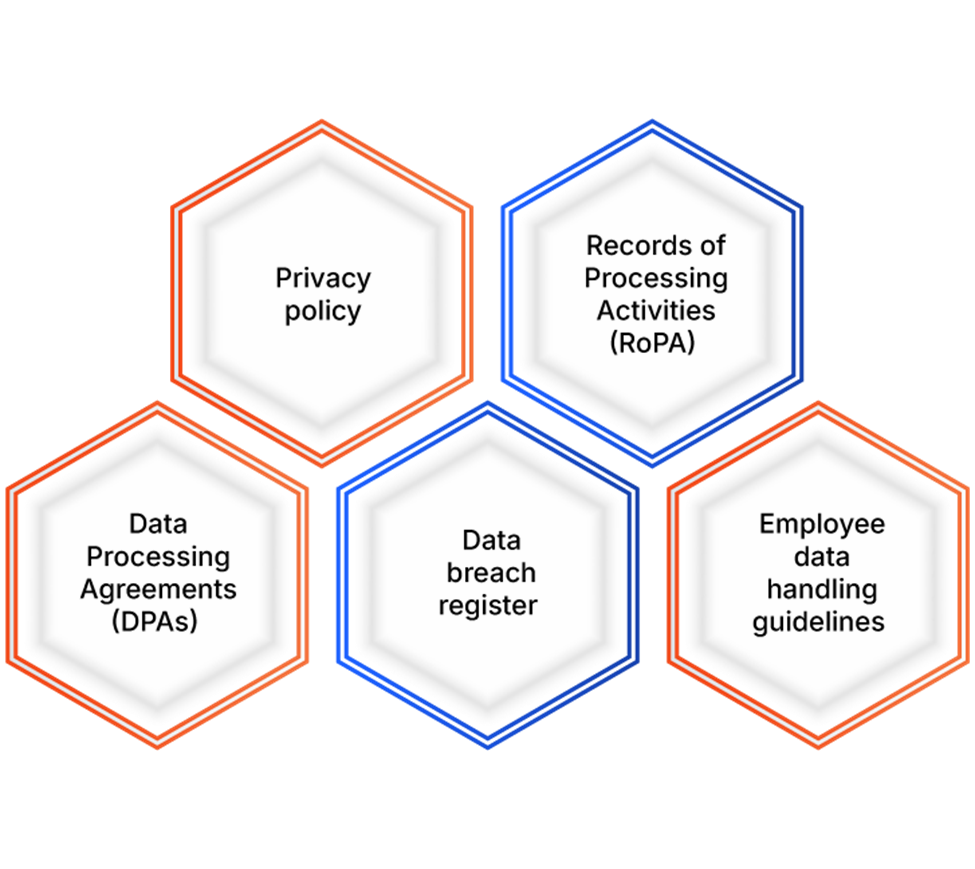
- Privacy policy – Publicly available and written in simple language that explains how personal data is used.
- Records of Processing Activities (RoPA) – Detailed logs of all data processing operations.
- Data Processing Agreements (DPAs) – Contracts with third-party vendors that define how they will protect shared data.
- Data breach register – Documentation of all breaches, including those that did not require regulatory reporting.
- Employee data handling guidelines – Clear internal policies outlining how staff should treat personal data.
A well-structured GDPR checklist not only helps organizations remain compliant but also builds confidence among customers, partners, and regulators.
Implementing GDPR Data Privacy Frameworks
Compliance is not achieved by policies alone. Businesses need a structured framework that embeds GDPR principles into everyday practices. Consultants often align GDPR with international standards such as ISO 27701, which extends ISO 27001 to include privacy.
Key steps in implementing frameworks include:
- Integrating privacy into corporate governance – Making data protection a board-level priority.
- Privacy-by-design in technology – Embedding controls into IT systems and applications from the outset, not as an afterthought.
- Vendor management – Ensuring that suppliers follow the same standards of care as the business itself.
- Monitoring and auditing – Regular reviews of processes and systems to confirm ongoing compliance.
By adopting a structured framework, organizations can streamline compliance while creating a repeatable model that adapts as laws or business operations change.
Maintaining Ongoing GDPR Compliance
Achieving compliance is one milestone; maintaining it is a continuous effort. Businesses that treat compliance as a one-time project often fall behind when systems or regulations evolve. Ongoing activities should include:
- Continuous monitoring – Automated tools to track data flows and detect irregularities.
- Internal audits – Scheduled reviews to confirm that policies and practices match GDPR requirements.
- Employee training – Staff must understand their responsibilities in handling personal data. Training programs should be refreshed regularly.
- Data Subject Access Requests (DSARs) – Building efficient processes to respond within the required timeframes.
This proactive approach not only keeps the business compliant but also improves overall data security and organizational resilience.
Business Impact of GDPR Privacy Consulting
Investing in consulting services goes beyond compliance. Businesses experience tangible benefits that strengthen their market position.
- Reduced risk of fines – Consultants help eliminate gaps that could result in costly penalties.
- Improved customer trust – Clear and transparent policies reassure clients that their data is treated with care.
- Operational efficiency – Structured frameworks reduce duplication of effort and create streamlined processes.
- Global competitiveness – Organizations that demonstrate GDPR compliance gain an advantage when working with international partners.
In many cases, consulting services pay for themselves by preventing legal issues and enhancing reputation.
Choosing the Right GDPR Compliance Firm
The effectiveness of GDPR compliance consulting depends on selecting the right partner. Businesses should evaluate consulting firms carefully by looking at:
- Experience and credentials – A proven track record in handling GDPR projects.
- Industry expertise – Knowledge of specific data challenges in the client’s sector.
- Service flexibility – Ability to provide both advisory and hands-on implementation support.
- Client references – Feedback from existing clients to confirm reliability and effectiveness.
It is also important to consider whether to keep compliance efforts in-house or outsource them. Smaller firms may benefit from outsourced DPO services, while larger organizations often combine in-house expertise with external advisors. Asking the right questions during the selection process ensures a strong partnership.
Future of GDPR and Data Privacy Regulations
Data protection does not stand still. As digital technologies advance, so do the expectations for privacy. Enforcement actions across the EU have increased, signaling that regulators are serious about holding companies accountable.
Upcoming trends include:
- Stronger enforcement of consent mechanisms – Particularly around online tracking and profiling.
- Greater focus on artificial intelligence and data ethics – Ensuring fairness and transparency in automated decision-making.
- Integration with global privacy laws – Businesses operating across borders must align GDPR with other frameworks like CCPA in California or India’s Digital Personal Data Protection Act.
Consulting firms play a key role in preparing organizations for these changes by offering foresight and strategies that keep compliance programs ahead of the curve.
Conclusion
GDPR privacy consulting helps businesses transform compliance from a legal burden into a strategic advantage. By conducting gap assessments, building policies, aligning with frameworks, and maintaining continuous oversight, organizations can stay compliant while strengthening trust with customers and partners.
For businesses starting their compliance journey, the first step is assessing current practices and identifying areas that require immediate attention. Partnering with the right consulting firm ensures expert guidance at every stage.
If you are seeking support in GDPR compliance, explore our GDPR Services & Compliance Frameworks to begin building a stronger, more resilient privacy program.
FAQs
1. What is GDPR privacy consulting?
GDPR privacy consulting services allow companies to understand and apply the General Data Protection Regulation’s requirements. Organizations are led through preparation efforts, policy development, data mapping, and recurrent compliance management by consultants.
2. Why should a firm engage a GDPR consultant?
Hiring a consultant can save time, reduce compliance risks, and ensure professional guidance. Consultants bring dedicated expertise about legal requirements, constructs, and best practices that might be lacking in most internal groups.
3. What is a GDPR assessment gap?
Gap analysis evaluates current policies, data processing practices, third party arrangements, and technological controls. It identifies gaps and provides recommendations needed to fulfill GDPR requirements.
4. Does a small business need GDPR compliance?
They suit any firm that processes personal information of citizens in the EU regardless of firm size. Smaller firms usually benefit from advisory services because they may not have in-house professionals who have a depth of knowledge about compliance.
5. How does one categorize a Data Protection Officer (DPO) as a Service?
DPO as a Service allows Data Protection Officer function to be outsourced. This ensures qualified management of data protection functions without making an investment in a full-time employee.
6. What can consultants bring to consent management?
They build intuitive consent processes that meet GDPR requirements. They implement solutions such as cookie banners and opt-in forms and tracking systems that maintain records of how and when consent was obtained.
7. What policies does GDPR require?
Companies need to keep a privacy policy, a Records of Processing Activities (RoPA), Data Processing Agreements (DPAs), and a data breach register. These records testify to regulatory accountability.
8. How often should companies review GDPR compliance?
Compliance is subject to periodic review. Regular audits, policy updates, and staff training become mandatory for organizations to remain compliant with GDPR while working practices or regulatory processes change.
9. What is the sanction if GDPR is not followed?
Penalties can be up to €20 million or 4 percent of overall annual global turnover, whichever is higher. Other than financial losses, non-compliance could be damaging to reputation and customer trust.
10. How can I find a relevant GDPR compliance firm?
Look for consultants who can demonstrate proven expertise, broad-based industry knowledge, flexible services, and strong client references. A qualified partner will need to bring both long-term strategy and hands-on implementation.