
Businesses operating in Saudi Arabia are entering a new era where data privacy is tightly regulated and closely monitored. The KSA Personal Data Protection Law (PDPL) sets the foundation for how organizations must handle personal data covering everything from collection and processing to storage and sharing. With the rapid growth of digital services across the Kingdom, aligning with KSA PDPL compliance services has become essential for organizations aiming to operate legally and competitively. Any business that processes personal data of individuals in Saudi Arabia whether local or international must ensure it meets these regulatory expectations.
PDPL compliance service providers in Saudi Arabia will help companies understand the relevant requirements, establish robust data protection systems, and enhance their client’s confidence. Services ranging from a gap analysis to complete compliance implementations can prove to be extremely beneficial for organizations to mitigate various risks.
Through this detailed guide on PDPL Saudi Arabia, learn everything you need to know about PDPL Saudi Arabia, such as its requirements, compliance structure, and its impact on businesses and how PDPL compliance services in Saudi Arabia can be useful to you.
Ready to simplify your PDPL compliance process?
Get expert consulting, faster implementation, and complete regulatory alignment.
What is PDPL in Saudi Arabia?
Knowing about the KSA Personal Data Protection Law (PDPL) comes first in the path to compliance. The KSA is taking steps towards developing a solid regulatory framework, and in that process, the PDPL serves as one of the critical tools to ensure that personal data is managed effectively and appropriately.
The PDPL law KSA makes sure that the management and storage of personal information are in line with both global and local regulatory standards. Regardless of whether your business is a local or foreign one, knowing about the PDPL law KSA is critical for avoiding any future problems.
Overview of Saudi Personal Data Protection Law (PDPL)
PDPL is an exhaustive regulatory framework enacted for the regulation of personal data processing activities in Saudi Arabia. The Saudi Data and Artificial Intelligence Authority (SDAIA) is the regulating agency that promulgated the PDPL in the Kingdom of Saudi Arabia.
The PDPL essentially governs all organizations processing personal data related to individuals domiciled within Saudi Arabia irrespective of the location of such organizations.
What PDPL Covers:
Personal Data
Any information that can identify an individual (name, ID, contact details, etc.)
Data Processing
Collection, recording, storage, analysis, and sharing of data
Data Storage
Secure storage and retention of personal information
The law ensures that organizations adopt responsible data handling practices while maintaining transparency and accountability.
Key Objectives of PDPL
The ksa personal data protection law is designed with several important goals in mind:
01
Protect Personal Data
Ensure that individuals’ personal information is safeguarded against misuse, unauthorized access, or breaches.
02
Regulate Data Processing
Establish clear rules for how organizations collect, use, and share personal data.
03
Build Trust in Digital Systems
Encourage confidence among consumers and businesses by promoting ethical data practices and transparency.
By achieving these objectives, PDPL supports Saudi Arabia’s broader vision of becoming a trusted digital economy.
Who Needs to Comply with PDPL in KSA
One of the most critical aspects of PDPL Saudi Arabia is its wide applicability. The law applies to:
Saudi-Based Companies
All organizations operating within Saudi Arabia that handle personal data must comply with PDPL requirements.
Foreign Companies Handling Saudi Data
Even businesses located outside Saudi Arabia must comply if they process personal data of Saudi residents.
Controllers vs Processors
- Data Controllers: Entities that decide how and why data is processed.
- Data Processors: Entities that process data on behalf of data controllers.
Both controllers and processors have specific responsibilities under the law, making it essential for organizations to clearly define their roles in data handling.
Why PDPL Compliance Matters for Businesses in Saudi Arabia
As data becomes a critical business asset, complying with PDPL Saudi Arabia requirements is no longer just a regulatory obligation it’s a strategic necessity. Organizations that fail to align with the PDPL compliance for companies operating in Saudi Arabia risk facing serious legal, financial, and reputational consequences.
On the other hand, organizations that implement the PDPL standards can gain a lot of strengths in return for their compliance measures. They include enhanced consumer trust and improved market position among others.
Financial and Legal Dangers of Non-Compliance
By failing to comply with the PDPL standards, organizations are likely to suffer heavy penalties and serious disruptions. In Saudi Arabia, there is a stringent mechanism of enforcing compliance measures by the authorities.
Major Dangers Are:
Severe Financial Penalties
Violations will lead to heavy fines on companies for instances like illegal processing of personal data.
Legal Penalties
Non-compliance will subject organizations to legal actions which could lead to restriction of business operations.
Reputational Risks
Breaches in data will negatively impact customers’ trust and organizational reputation.
Operational Disruptions
Authorities may impose restrictions or suspend operations until compliance issues are resolved.
For businesses operating in Saudi Arabia, ignoring PDPL Saudi Arabia requirements can have long-term negative impacts that go beyond financial loss.
Business Benefits of PDPL Compliance (Info)
While compliance may seem complex, it offers several strategic advantages that can drive business growth and sustainability.
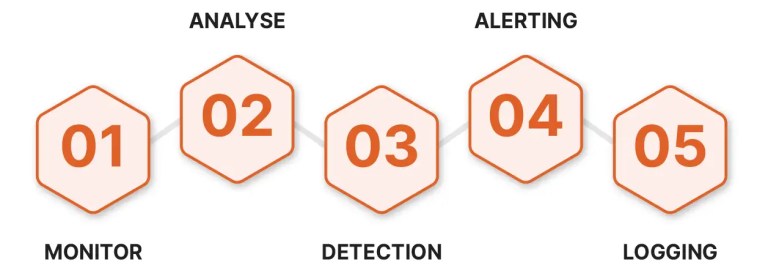
Key Benefits Include:
These examples show that non-compliance is costly but avoidable with the right approach.
Requirements of PDPL Saudi Arabia
The requirements of PDPL law to be compliant Saudi Arabia can be attained through the systematic implementation of standards regulating the collection, processing, storage, and protection of personal data. It is vital for companies to know the requirements to be able to successfully apply the requirements of PDPL Saudi Arabia.
The requirements of PDPL law to be compliant Saudi Arabia.
Business Benefits of PDPL Compliance (Info)
PDPL sets strict guidelines on how organizations collect and process personal data.
Key Requirements:
Lawful Basis for Processing
Data must only be collected for a legitimate and clearly defined purpose.
Consent Management
Explicit consent must be obtained from individuals before collecting or processing their data.
Purpose Limitation
Data should only be used for the purpose it was originally collected for.
Data Minimization
Only necessary data should be collected to avoid excessive or irrelevant information.
Transparency
Organizations are required to clearly inform individuals about how their data will be used.
Data Subject Rights
One of the core pillars of PDPL Saudi Arabia requirements is empowering individuals with control over their personal data.
Key Rights Include:
Right to Access
Individuals can request access to their personal data.
Right to Correction
They can ask for inaccurate or incomplete data to be corrected.
Right to Deletion
Individuals can request deletion of their data under specific conditions.
Right to Withdraw Consent
Individuals can revoke their consent at any time.
Right to Information
Individuals must be informed about how their data is processed.
Data Localization & Cross-Border Transfers
PDPL introduces specific rules regarding where data is stored and how it can be transferred outside Saudi Arabia.
Key Requirements:
Data Localization Considerations
Cross-Border Transfer Restrictions
Risk Assessment for Transfers
Data Breach Notification Requirements
Organizations must act quickly and responsibly in case of a data breach.
Key Requirements:
- Immediate Notification
Authorities must be informed promptly after a breach is identified. - Impact Assessment
Evaluate the severity and potential harm caused by the breach. - Notify Affected Individuals
If the breach poses a risk, affected individuals must be informed. - Maintain Breach Records
Document all incidents and actions taken.
Data Controller and Processor Obligations
PDPL clearly defines responsibilities for both data controllers and processors.
Data Controller Responsibilities:
- Determine the purpose and means of data processing
- Ensure compliance with PDPL requirements
- Implement data protection policies
Data Processor Responsibilities:
- Process data only based on controller instructions
- Maintain data security and confidentiality
- Support the controller in compliance efforts
KSA PDPL Compliance Framework (Step-by-Step) (Info)
Achieving compliance with the KSA PDPL compliance framework requires a structured and methodical approach. Organizations must move beyond theory and implement practical steps to align with regulatory requirements.
Below is a step-by-step guide on how to comply with KSA PDPL, helping businesses build a robust and sustainable data protection program.
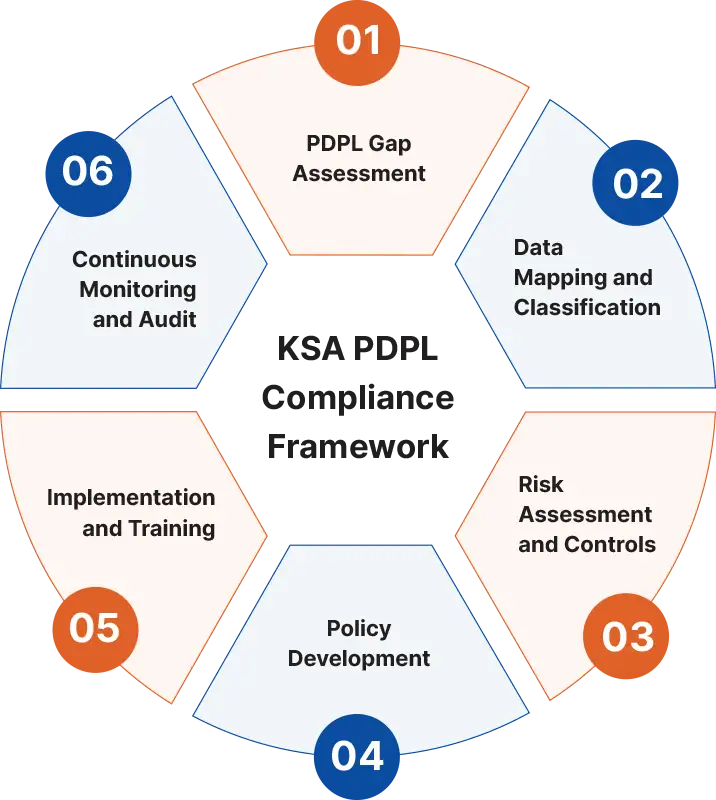
Step 1: PDPL Gap Assessment
The first step in the KSA PDPL compliance framework is to identify where your organization currently stands in relation to PDPL requirements.
At this stage, businesses perform a high-level review of existing data protection practices, policies, and systems to detect gaps.
Key Activities:
Goal:
Create a clear starting point and prioritize areas that need immediate attention.
Step 2: Data Mapping and Classification
Once gaps are identified, organizations must understand how data flows across their systems.
Key Activities:
This step is essential for implementing effective PDPL data mapping services and ensuring visibility over all data assets.
Step 3: Risk Assessment and Controls
After mapping data, organizations must assess risks associated with data processing activities.
Key Activities:
This ensures that data is protected against unauthorized access and breaches.
Step 4: Policy Development
Policies form the backbone of PDPL compliance.
Key Activities:
Clear policies ensure consistency and accountability across the organization.
Step 5: Implementation and Training
Even the best policies fail without proper execution and awareness.
Key Activities:
Employees play a critical role in maintaining compliance on a daily basis.
Step 6: Continuous Monitoring and Audit
PDPL compliance is not a one-time activity; it requires ongoing monitoring and improvement.
Key Activities:
Continuous monitoring ensures long-term compliance and reduces risks over time.
PDPL compliance begins with the right strategy
Our experts evaluate your data processes and highlight key compliance gaps early on. This ensures a smoother path to full compliance.
PDPL Gap Assessment and Readiness
The gap analysis of pdpl is a systematic process whereby the current security controls in place within an organization are compared to the standards set forth by the Saudi Personal Data Protection Law.
The difference between the gap analysis and a general review is that the former is thorough and involves evidence collection.
What the Assessment Typically Covers:
How is readiness measured?
After identifying gaps, organizations need to determine their overall readiness for PDPL compliance. This is typically done using a structured scoring or maturity model.
Key Readiness Indicators:
- Compliance Maturity Level
Organizations are rated based on how advanced their data protection practices are (e.g., initial, developing, defined, optimized).
- Risk Exposure Level
Measures how vulnerable the organization is to data breaches or regulatory violations.
- Control Effectiveness
Evaluates whether existing controls are properly implemented and functioning.
- Policy Completeness
Assesses whether required policies are documented, updated, and enforced.
- Operational Readiness
Determines if teams, processes, and systems are aligned for compliance.
Example Readiness Levels:
- Low Readiness
Minimal policies, high risk, major compliance gaps
- Moderate Readiness
Some controls in place but inconsistently applied
- High Readiness
Strong governance, well-defined processes, and effective controls
A clear roadmap that prioritizes actions, helping organizations move from their current state to full PDPL compliance efficiently.
KSA PDPL Compliance services: What do they include?
To navigate the complexities of the Saudi data protection landscape, organizations often rely on professional KSA PDPL compliance services. These services are designed to help businesses understand regulatory requirements, implement necessary controls, and maintain ongoing compliance with the law.
Comprehensive PDPL compliance Saudi Arabia typically cover the entire compliance lifecycle from initial assessment to implementation, auditing, and incident response. By leveraging expert-driven PDPL compliance services, organizations can reduce risk, accelerate compliance, and focus on core business operations.
PDPL Compliance Assessment
A PDPL compliance assessment is the foundation of any compliance journey. It provides a detailed evaluation of your organization’s current data protection posture.
What It Includes:
- Review of existing policies and procedures
- Identification of compliance gaps
- Risk evaluation across data processes
- Detailed assessment report with recommendations
This service helps organizations clearly understand where they stand and what needs to be improved.
PDPL Advisory Services
KSA PDPL advisory services provide expert guidance to help organizations interpret and apply regulatory requirements effectively.
What It Includes:
- Regulatory interpretation and guidance
- Compliance roadmap development
- Data governance strategy design
- Ongoing consultation with compliance experts
Advisory services ensure that businesses make informed decisions aligned with PDPL requirements.
PDPL Implementation Services
Once gaps are identified, organizations need structured execution. Saudi PDPL implementation services focus on putting compliance measures into action.
What It Includes:
- Policy and procedure development
- Implementation of data protection controls
- Consent management systems
- Data classification and access controls
This phase transforms compliance plans into real, operational systems.
PDPL Audit Services
Regular audits are essential to validate compliance and ensure continuous improvement. KSA PDPL audit services help organizations stay aligned with evolving regulations.
What It Includes:
- Internal and external compliance audits
- Control effectiveness testing
- Identification of new risks
- Audit reports with corrective actions
Audits help maintain accountability and demonstrate compliance to regulators.
PDPL Breach Response Services
Despite strong controls, data breaches can still occur. PDPL breach response services ensure that organizations are prepared to respond quickly and effectively.
What It Includes:
- Incident response planning
- Breach detection and investigation
- Regulatory notification support
- Post-incident analysis and remediation
A well-defined response strategy minimizes damage and ensures compliance with breach notification requirements.
PDPL Compliance Consulting for Enterprises and UAE Companies
As corporations continue to extend their reach into other countries, compliance with the regional data protection laws becomes more challenging. Professional PDPL compliance consulting by companies in the UAE can play an important part in bridging this regulatory gap in order to ensure compliance with the Saudi PDPL.
Be it a corporation working within the Kingdom of Saudi Arabia or a company in the UAE handling data of Saudi citizens, professional consultation is essential for compliance.
Consulting for Enterprises
Large enterprises often deal with vast volumes of personal data across multiple systems, departments, and geographies. This complexity requires a tailored approach to Saudi PDPL compliance consulting.
Key Focus Areas:
Enterprise-Wide Data Governance
Establishing structured frameworks to manage data across all business units.
Integration with Existing Compliance Programs
Aligning PDPL with standards like ISO 27001 or other global frameworks.
Scalable Compliance Solutions
Designing systems that grow with the organization and adapt to regulatory changes.
Advanced Risk Management
Identifying and mitigating risks across complex data ecosystems.
Enterprise consulting ensures that compliance is embedded into the organization’s overall strategy, not treated as a one-time project.
Cross-Border Compliance (UAE to KSA
For UAE-based companies, compliance with PDPL is essential if they process personal data of individuals in Saudi Arabia. This makes cross-border compliance a key priority.
Key Considerations:
Applicability of PDPL to Foreign Entitie
Even without a physical presence in KSA, companies must comply if they handle Saudi data
Data Transfer Regulations
Ensuring lawful transfer of data between UAE and Saudi Arabia.
Regulatory Alignment
Bridging differences between UAE data protection laws and PDPL requirements.
Local Representation & Compliance Support
Engaging local experts or consultants to manage compliance obligations effectively.
With the right Saudi PDPL compliance consultant, UAE companies can confidently operate in the Saudi market while minimizing legal and operational risks.
PDPL vs GDPR: Key Differences Businesses Must Know
With the advancement of global privacy laws, there is an increasing trend among most firms to study the comparison between PDPL and GDPR to establish their similarities and differences. Even though the Saudi Arabian PDPL has some similarities with the GDPR of the EU, there are notable differences that must be considered.
The differences become even more important for companies that operate internationally.
Key Similarities
Both PDPL and GDPR are designed to protect personal data and promote responsible data handling practices. Despite being implemented in different regions, they share several foundational principles.
Common Features:
These similarities make it easier for GDPR-compliant organizations to adapt to PDPL Saudi Arabia requirements.
Key Differences
Despite similarities, PDPL has unique regulatory aspects that businesses must carefully address.
Major Differences:
| Aspect | PDPL (Saudi Arabia) | GDPR (EU) |
| Regulatory Authority | Overseen by SDAIA | Enforced by EU Data Protection Authorities |
| Data Localization | May require data to be stored within KSA | No strict localization requirement |
| Cross-Border Transfers | Subject to stricter controls and approvals | Allowed with safeguards (e.g., SCCs) |
| Penalties | Defined penalties based on violations | Fines up to 4% of global turnover |
| Legal Framework Scope | Focused on Saudi data subjects | Covers all EU residents globally |
| Consent Rules | Strong emphasis on explicit consent | Allows multiple lawful bases beyond consent |
While GDPR provides a strong foundation, it is not enough on its own to ensure compliance with PDPL. Organizations must adapt their data protection strategies to meet Saudi-specific regulatory requirements, particularly around data localization and cross-border data transfers.
PDPL Compliance Checklist (Saudi Arabia) (Info)
Achieving compliance with the PDPL compliance checklist Saudi Arabia requires a structured approach that ensures all regulatory requirements are addressed. This checklist provides a practical overview of the key actions organizations must take to align with PDPL Saudi Arabia requirements.
Businesses can use this PDPL compliance checklist as a quick reference to evaluate their readiness and identify missing elements in their data protection framework.

PDPL Compliance Checklist
Data Governance & Policies
Data Mapping & Classification
Security & Risk Management
Data Breach Management
Monitoring & Auditing
If your organization can confidently check off most of the above items, you are on the right path toward PDPL compliance in Saudi Arabia. Any gaps identified should be addressed through structured implementation or expert PDPL compliance services.
Industry-Specific PDPL Compliance Use Cases
Different industries handle personal data in unique ways, which means PDPL Saudi Arabia requirements must be applied based on specific operational and regulatory contexts. Understanding how compliance works in real-world scenarios helps organizations identify risks and implement the right controls.
Below are key industry-specific PDPL compliance use cases that highlight how businesses can align with data protection requirements.
Banking and Financial Services
The banking and financial sector deals with highly sensitive personal and financial data, making PDPL compliance services critical for maintaining security and trust.
Key Compliance Focus Areas:
Financial institutions must adopt strict data governance and advanced security controls to meet PDPL Saudi Arabia requirements.
Healthcare
Healthcare organizations process highly sensitive personal and medical data, making compliance with PDPL both a legal and ethical responsibility.
Key Compliance Focus Areas:
Strong PDPL compliance services help healthcare providers maintain patient trust and avoid legal risks.
SaaS and Technology
Technology companies, especially SaaS providers, handle large volumes of user data across multiple regions, making compliance more complex.
Key Compliance Focus Areas:
SaaS companies must integrate PDPL compliance into their product architecture to ensure continuous compliance.
Training and Awareness for PDPL
While policies and technology are essential, true compliance with PDPL Saudi Arabia requirements depends heavily on people. Employees at all levels must understand how to handle personal data responsibly, making personal data protection training KSA a critical component of any compliance program.
Without proper awareness, even well-designed systems can fail due to human error. That’s why organizations must invest in continuous training and build a strong data protection culture.
Employee Training
Employees are often the first line of defense when it comes to protecting personal data. Regular training ensures they understand their responsibilities and follow best practices in daily operations.
Key Training Areas:
Understanding PDPL Basics
Educating employees about the importance of data protection and legal obligations.
Data Handling Best Practices
How to securely collect, process, store, and share personal data.
Recognizing Security Threats
Identifying phishing attempts, suspicious activities, and potential data breaches.
Incident Reporting Procedures
Knowing how and when to report data breaches or security incidents.
Role-Based Training
Tailored training for departments handling sensitive data (e.g., HR, IT, customer support).
Regular personal data protection training KSA reduces the risk of human errors and strengthens overall compliance.
Management Responsibility
Compliance is not just an operational task it requires strong leadership and accountability from management.
Key Responsibilities:
Setting the Tone from the Top
Leadership must prioritize data protection and promote a culture of compliance.
Allocating Resources
Ensuring sufficient budget, tools, and personnel for PDPL compliance initiatives.
Policy Enforcement
Making sure all employees follow established data protection policies and procedures.
Monitoring and Accountability
Tracking compliance performance and addressing gaps proactively.
Continuous Improvement
Updating training programs and policies based on regulatory changes and emerging risks.
When management actively supports compliance, organizations are more likely to achieve and sustain PDPL compliance in Saudi Arabia.
Key Factors to Consider When Choosing a KSA PDPL Compliance Partner
Choosing the ideal KSA PDPL consulting firm to work with can make a great difference for your compliance efforts. In light of the ever-increasing regulatory requirements, companies require reliable Saudi PDPL consultants who will not only advise but will also assist in implementing solutions.
As service providers vary in terms of qualifications, it becomes necessary to evaluate some important aspects in order to ensure compatibility.
Expertise in Saudi PDPL Regulations
Your compliance partner must have in-depth knowledge of PDPL Saudi Arabia requirements and regulatory expectations.
- Proven understanding of local data protection laws
- Experience working with Saudi regulatory frameworks
- Ability to interpret and apply PDPL requirements effectively
Local expertise ensures accurate and reliable compliance implementation.
End-to-End Service Offering
A strong ksa pdpl consulting firm should provide comprehensive services across the entire compliance lifecycle.
- Gap assessment and pdpl readiness assessment
- Advisory and consulting services
- Implementation and policy development
- Ongoing audit and monitoring support
End-to-end services eliminate the need for multiple vendors and ensure consistency.
Industry Experience
Different industries have unique data protection challenges. Choose a partner with experience in your specific sector.
- Banking and financial services
- Healthcare
- Technology and SaaS
Industry expertise enables tailored compliance solutions that address real-world risks.
Technical and Security Capabilities
PDPL compliance requires both legal and technical expertise.
- Strong understanding of cybersecurity controls
- Experience with data protection technologies
- Ability to implement secure systems and processes
A technically capable partner ensures practical and effective compliance.
Proven Track Record
Look for a Saudi PDPL compliance consultant with a history of successful projects.
- Client case studies and testimonials
- Proven delivery of compliance programs
- Exposure to organizations of comparable size and complexity
Establishing a track record establishes your confidence in their ability to make things happen.
Customization and scalability
Each organization is unique; therefore, your approach to compliance cannot be the same for everyone.
- Customized solutions based on your business requirements
- Scalable methodologies that can scale with your company’s growth
- Adaptability to any changes in regulations
Customization will allow you to comply efficiently and effectively over time.
Continuity of Service and Maintenance
PDPL compliance is a continuous process and not a single project.
- Continuous monitoring and updating
- Periodic auditing and evaluation
- Service for regulatory changes and incidents
Continuity of service helps in maintaining PDPL compliance over time.
Selecting the right PDPL Compliance Partner KSA is key in establishing effective PDPL compliance. A good partner does more than help you comply with regulations.
Why Choose ValueMentor for PDPL Compliance Services (Info)
When it comes to achieving and maintaining compliance, partnering with the right experts is essential. ValueMentor offers comprehensive KSA PDPL compliance services designed to help organizations navigate the complexities of Saudi Arabia’s data protection landscape with confidence.
Here’s what sets ValueMentor apart:
Deep Regulatory Expertise:
End-to-End Service Offering:
Tailored Solutions:
Proven Methodologies:
Focus on Business Outcomes:
With ValueMentor as your compliance partner, you can move beyond uncertainty and build a robust, future-ready data protection framework.
Simplify your PDPL compliance journey with trusted experts.
From assessment to implementation, we help you achieve full compliance with confidence.
FAQs
1. What is PDPL in Saudi Arabia?
PDPL is Saudi Arabia’s data protection law that regulates how organizations collect, process, store, and share personal data to protect individual privacy.
2. Who needs to comply with PDPL in KSA?
All Saudi-based organizations and any foreign companies handling personal data of individuals in Saudi Arabia must comply.
3. What are PDPL penalties?
Penalties include fines, legal action, reputational damage, and possible operational restrictions depending on the violation.
4. How to comply with KSA PDPL?
Conduct a gap assessment, map data, implement policies and security controls, train employees, and perform regular audits.
5. What is a PDPL gap assessment?
A PDPL gap assessment evaluates your current data practices against PDPL requirements to identify compliance gaps.
6. Does PDPL apply to foreign companies?
Yes, if they process personal data of Saudi residents, even without a physical presence in KSA.
7. What is data localization under PDPL?
It refers to requirements that certain personal data must be stored or processed within Saudi Arabia.
8. How long does PDPL compliance take?
It can take a few weeks for small businesses and several months for larger, complex organizations.
9. What is included in PDPL compliance services?
Gap assessment, advisory, implementation, audits, and breach response support.