
Trust can make or break a small business. You may have the best product in your niche, but if clients worry about data security, they hesitate to sign deals. This is where SOC 2 compliance plays a decisive role. It proves that your systems, policies and teams follow recognized security standards. For startups and small businesses, compliance often feels like a luxury. Many founders think that SOC 2 is too costly or too complicated. The reality is different. With the right planning, SOC 2 audit cost can fit within a limited budget, while delivering huge returns in client trust, growth and risk reduction.
This blog breaks down the essentials of SOC 2 compliance for small businesses, cost factors, smart preparation strategies and affordable services available in India.
Understanding SOC 2 Audits in Simple Terms
SOC 2 is a framework that evaluates how well a company protects customer data. It focuses on five areas called trust service criteria – security, availability, processing integrity, confidentiality and privacy. For small businesses, the audit is essentially an independent check to confirm that internal practices align with these standards.
There are two types of SOC 2 reports. Type 1 reviews whether the right controls exist at a single point in time. Type 2 tests those controls over period of time to confirm they work consistently. Clients usually value a Type 2 report more, though it comes with higher audit costs.
For startups and SMBs, knowing this difference is key to planning. SOC 2 is less about adding heavy processes and more about showing that your business can handle sensitive data with care.
SOC 2 Audit Cost for Small Businesses
For small businesses, a SOC 2 audit costs more than the auditor’s fee. It includes preparation, remediation, testing, compliance tools and staff time. Knowing these costs upfront helps avoid surprises.
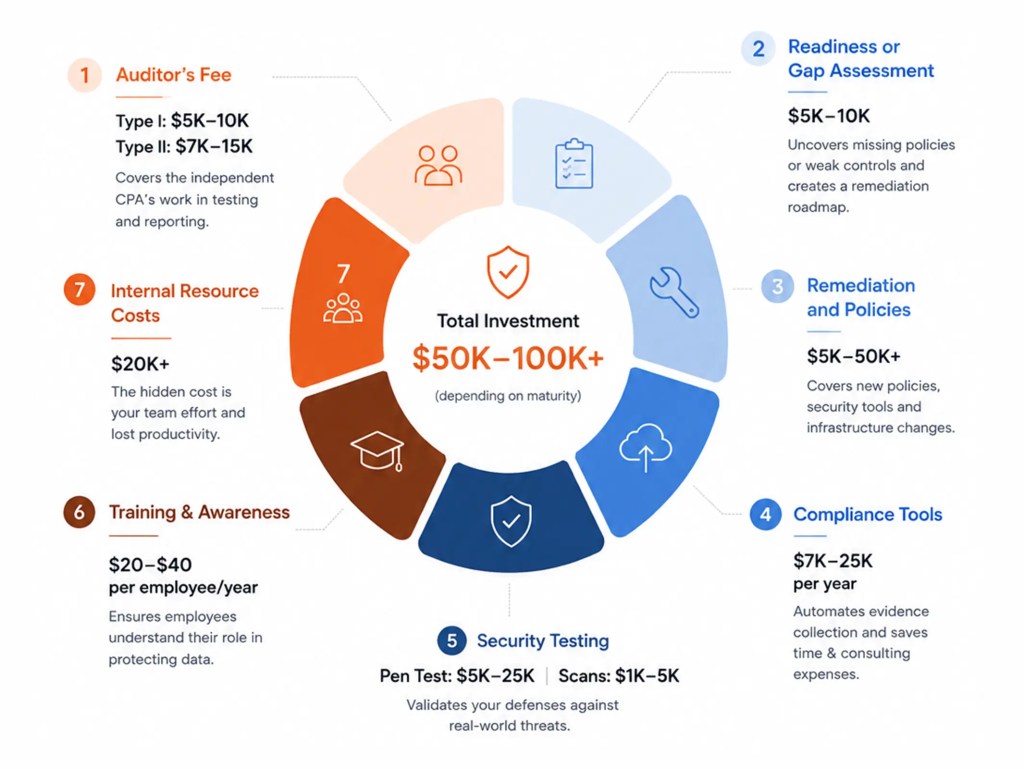
1. Auditor’s Fee
Type I audits cost around $5,000 – $10,000, while Type II audits range from $7,000 – $15,000 since they require an assessment to be done over a longer period. This covers the independent CPA’s work in testing and reporting on your controls.
2. Readiness or Gap Assessment
Most firms need a readiness check to uncover missing policies or weak controls. This step runs $5,000–$10,000, depending on complexity. It gives you a roadmap of what needs fixing before the audit.
3. Remediation and Policies
Fixing gaps can cost $5,000 to $50,000+, covering new policies, security tools and infrastructure changes. Costs depend on how mature your current processes are. This ensures your environment aligns with SOC 2 trust principles.
4. Compliance Tools
Various platforms automate evidence collection. They cost $7,000–$25,000 per year, but they save time and reduce consulting expenses. These tools streamline documentation and reduce manual work.
5. Security Testing
Auditors expect penetration testing and scans. Pen tests cost $5,000–$25,000, while scans add $1,000–$5,000. This validates your defences against real-world threats.
6. Training and Awareness
Staff must be trained in security practices. Security awareness and phishing simulation programs typically cost $20–$40 per employee annually (well under $100 per user), which scales to only a few thousand dollars a year for most small and mid-sized businesses. This ensures employees understand their role in protecting data.
7. Internal Resource Costs
The hidden cost is your team effort. Preparing evidence and working with auditors can equal $20,000+ in lost productivity. This reflects the time your internal staff spends supporting the audit process.
Budget-Conscious SOC 2 Compliance Tips
For startups and small businesses, the idea of spending large sums on SOC 2 compliance can be intimidating. The reality, though, is that you don’t have to burn through your budget to get certified. With smart planning, careful use of tools and a step-by-step approach, it is possible to keep costs manageable while still meeting strict audit requirements.
1. Begin with a Readiness Assessment
Going straight into the audit without preparation is a common mistake. When gaps show up late, fixing them becomes expensive. A short readiness check helps you see what needs attention first. Addressing those issues before the audit not only saves money but also prevents delays.
2. Rely on Compliance Automation Tools
Modern platforms take the pain out of evidence collection. They connect directly with your systems and handle routine checks automatically. While there is a subscription fee, the time saved on manual work and the reduction in consultant hours often outweigh the cost.
3. Make Use of Built-In Security Controls
If your business already runs on AWS, Azure or Google Cloud, you are ahead of the game. These providers include many compliance-ready features. By documenting and configuring them correctly, you reduce the need for extra third-party tools or new infrastructure.
4. Take a Phased Approach
Jumping straight to a SOC 2 Type II audit can be heavy on both time and money. Starting with Type I is a smarter move. It is quicker, less expensive and still gives clients confidence. Once your processes mature, you can scale up to Type II with fewer hurdles.
5. Build Internal Training and Reuse Material
Security training does not always have to mean costly external programs. Start small with internal workshops or affordable awareness platforms. Once built, the same material can be used for onboarding new hires and annual refreshers, cutting repeat costs.
6. Pick the Right Audit Partner
Audit fees can vary more than most expect. Always request multiple quotes and compare not just the price but also the scope. Firms experienced with small businesses usually offer flexible pricing and move faster, which helps keep the overall project cost down.
SOC 2 Compliance for Small Businesses: Key Controls Simplified
SOC 2 can feel overwhelming at first glance, especially with its five trust service criteria. For small businesses, the best approach is to focus on the core controls that auditors look for and implement them in a way that fits your size and budget.
1. Access Control
Limit who can view or edit sensitive information. Use role-based access, enforce strong passwords and apply multi-factor authentication. These simple steps go a long way in reducing risk.
2. Change Management
Keep track of updates to systems and applications. Document changes, review them before deployment and make sure they do not introduce security issues. Even lightweight processes are enough if they are consistent.
3. System Monitoring
Monitor systems for unusual activity, failed login attempts or unauthorized access. Affordable monitoring tools or built-in cloud logs can cover this requirement without heavy investment.
4. Data Security and Privacy
Encrypt sensitive data both in storage and during transfer. Also, ensure only authorized users can handle client data. Clear privacy policies should be part of employee training.
5. Incident Response
Have a simple playbook that outlines what to do if a breach or security event occurs. Define roles, responsibilities and communication channels. A short but tested plan reassures auditors and clients alike.
6. Vendor Management
If you rely on third-party services, review their compliance reports and agreements. Keeping records of vendor risk checks demonstrates control over your extended ecosystem.
7. Risk Management
Establish a structured approach to identify, assess and mitigate risks. Regularly conduct risk assessments to anticipate potential threats and implement preventive controls. A proactive risk management strategy helps strengthen resilience and ensures business continuity.
8. Awareness Training
Provide ongoing cybersecurity awareness training for employees to reduce human error risks. Cover phishing detection, password hygiene and incident reporting. Well-informed staff form the first line of defense against evolving threats.
By focusing on these controls, small businesses can meet SOC 2 requirements without building enterprise-level security departments. The key is showing auditors that processes are documented, consistent and aligned with the trust service criteria
SOC 2 Audit Readiness: How to Prepare Smartly
SOC 2 audit preparation need not be daunting if you tackle it step by step. Your aim is to demonstrate that your company has reproducible, secure controls. A prudent preparation can minimize both audit time and overall cost.
1. Perform a Gap Assessment
Begin with a readiness check to determine what you lack in your existing setup. This check will help you realize whether your policies, access controls and security tools all conform to SOC 2 requirements.
2. Document Policies and Procedures
Startups are expected by auditors to have written proof, not descriptions. Define good, but not too long, policies for data management, access control, incident response and vendor control. Even brief startup-friendly documents satisfy the requirement if followed.
3. Improve Internal Security Hygiene
Prior to an audit, lock down basics such as multi-factor authentication, password policy and employee access review. These controls can be implemented rapidly by small firms without costly tools.
4. Train Your People
Staff need to be trained in how to deal with sensitive information and respond to security incidents. Inexpensive awareness programs or workshops internally train staff and demonstrate to auditors that compliance is a way of life.
5. Organize Evidence Early
Collect logs, system screenshots, training records and vendor agreements ahead of time. Using automation tools makes this easier, but even a well-structured shared folder reduces audit stress.
6. Run a Mock Audit
A short internal or consultant-led dry run helps uncover gaps before the real audit. This saves money by reducing rework and positions your team for a smoother process.
Realistic Timelines and Resources Needed
One of the biggest challenges for small businesses is underestimating how long a SOC 2 audit takes. While the exact timeline depends on whether you pursue a Type 1 or Type 2 audit, planning helps avoid unnecessary delays.
Timeline Overview
- Readiness Phase (4–8 weeks) – This stage covers gap analysis, drafting policies and implementing missing controls. Startups that already follow basic security practices may complete this faster, while others may need more time.
- Remediation Phase (2–3 months) – Based on the gaps identified, this stage involves fixing issues, training employees and gathering evidence, which typically requires a few months. If vendor contracts or technical upgrades are involved, this step can stretch longer.
- Audit Phase (Type 1: 2–4 weeks | Type 2: 3–12 months) – A Type 1 audit checks controls at a single point in time and is faster. A Type 2 audit tests effectiveness over several months, which explains the extended period.
- Report Delivery (2–4 weeks) – After fieldwork, auditors finalize the report. Delays often occur if the evidence is incomplete.
Resources You will Need
- Internal Staff – Assign one compliance lead, usually from IT or operations, to coordinate evidence collection and communication with auditors.
- External Help – Many small businesses rely on affordable compliance consultants or automated SOC 2 readiness platforms to speed up preparation.
- Time Commitment – Expect 10-15 hours a week of internal effort during readiness and steady involvement during the audit itself.
- Budget Buffer – Beyond audit fees, set aside funds for training, policy drafting or tool upgrades such as access control systems or log monitoring.
SOC 2 Type 2 Audit Cost vs. Long-Term ROI
For startups and SMBs, a SOC 2 Type 2 audit may seem costly at first glance. But when compared against the growth opportunities and client confidence it brings, the long-term returns often surpass the initial spend. The table below highlights this balance.
| SOC 2 Type 2 Audit Cost | Long-Term ROI |
|---|---|
| $10,000 – $20,000 in audit fees | Enterprise credibility that helps win high-value clients |
| 200–400 staff hours for preparation | Stronger internal processes and reduced risk exposure |
| $5,000 – $15,000 annually on security tools | Lower future compliance costs and improved efficiency |
| $10,000 – $25,000 for consultants (if engaged) | Faster compliance journey and smoother audits |
| $Around 10,000 – $20,000 annually for renewal audits | Sustained client trust and ongoing contract eligibility |
| Total: $50,000 – $100,000+ upfront | Access to larger markets, investor confidence and long-term growth |
Affordable SOC 2 Compliance Services in India
India has become a hub for affordable SOC 2 compliance services, making it easier for startups and SMBs to achieve certification without overstretching budgets. Many Indian firms specialize in guiding businesses through the SOC 2 journey, offering everything from readiness assessments to full audit support at a fraction of the global cost.
Typical services include:
- Gap Assessments – Identifying where existing security practices fall short of SOC 2 standards.
- Policy and Documentation Support – Drafting security policies, access controls and risk management frameworks.
- Technology Enablement – Setting up monitoring tools, ticketing systems and audit trails.
- Audit Preparation – Mock audits and readiness checks to reduce surprises during the official audit.
- Continuous Compliance – Ongoing monitoring and renewal support to maintain SOC 2 alignment year after year.
Cost efficiency is the biggest advantage. While U.S.-based SOC 2 engagements can run well above $70,000, Indian providers often deliver end-to-end compliance support starting from ₹8–15 lakhs ($10,000–$20,000) depending on the scope. This makes India a strong choice for SaaS startups, IT service companies and fintech firms aiming to build trust with global clients while staying mindful of expenses.
Conclusion
SOC 2 audit cost is often the first concern for startups and small businesses, but it should be seen as an investment in growth and trust. Compliance helps open doors to enterprise clients, strengthens security practices and builds long-term credibility in competitive markets. By planning smartly, simplifying key controls and working with the right partner, even budget-conscious businesses can achieve SOC 2 compliance without unnecessary strain. If you are a startup or SMB preparing for SOC 2, now is the time to take the next step. ValueMentor provides affordable SOC 2 compliance services in India, designed to help small businesses succeed. Contact us today and start your compliance journey with confidence.
FAQs
1. What is the average SOC 2 audit cost for small businesses?
For small businesses, a SOC 2 audit typically costs between USD 10,000 to USD 25,000, depending on whether you go for Type 1 or Type 2, the complexity of your systems and the auditor’s fees.
2. How does SOC 2 Type 2 audit cost differ from Type 1?
A SOC 2 Type I audit is usually less expensive at around USD 5,000 to USD 10,000 since it assesses controls at a single point in time. A SOC 2 Type II audit costs more, around USD 7,000 to USD 15,000, as it requires testing over a 3 to12 month period.
3. Can startups reduce SOC 2 audit costs without compromising quality?
Yes. Startups can reduce costs by automating evidence collection, using compliance software and preparing with a readiness assessment before hiring an auditor.
4. What is SOC 2 compliance for small businesses in simple terms?
It means proving that your company securely handles customer data in line with five trust principles: security, availability, processing integrity, confidentiality and privacy.
5. Are there affordable SOC 2 compliance services in India?
Yes. India has several firms, including ValueMentor, offering affordable SOC 2 compliance services tailored for startups and SMBs. These services often cost less compared to U.S. or European providers.
6. How long does it take to complete a SOC 2 audit for small businesses?
A Type 1 audit can be completed in 2–3 months, while a Type 2 audit usually takes 6–12 months depending on readiness and control maturity.
7. What are the most common mistakes small businesses make during SOC 2 audits?
Frequent mistakes include lack of documentation, poor access control, not performing internal risk assessments and waiting too long to prepare.
8. Is SOC 2 compliance mandatory for startups?
It is not a legal requirement, but many enterprise clients demand SOC 2 compliance before signing contracts. For B2B SaaS and cloud service providers, it often becomes essential.
9. How can businesses prepare for SOC 2 audit readiness?
Start with a readiness assessment, gap analysis and remediation plan. Automating security controls and training employees early also saves both time and cost.
10. What is the long-term ROI of SOC 2 compliance despite its cost?
While the SOC 2 audit cost may feel high upfront, the return includes winning enterprise clients, faster sales cycles, reduced breach risks and stronger investor confidence.