What is UAE PDPL?
UAE PDPL is the federal data protection law that regulates how organizations collect, use, store, and transfer personal data of individuals in the United Arab Emirates. Issued under Federal Decree-Law No. 45 of 2021, it establishes legal obligations for data controllers and processors to ensure lawful processing, data security, and protection of individual privacy.
The UAE Personal Data Protection Law applies to organizations operating within the UAE as well as entities outside the country that process personal data of individuals residing in the UAE, giving it extraterritorial scope. It governs both data controllers, who determine the purpose and means of processing, and data processors, who process personal data on behalf of controllers.
By introducing requirements around lawful processing, consent management, data subject rights, breach notification, and cross-border data transfers, the PDPL law UAE creates a structured framework for responsible data handling. Oversight and enforcement of the Personal Data Protection Law UAE is carried out by the UAE Data Office, the federal authority responsible for issuing guidance, monitoring compliance, and ensuring organizations meet national data protection standards. As the UAE advances its digital economy, the UAE PDPL serves as the foundational privacy regulation supporting trust, accountability, and risk management in data-driven operations.
Purpose of the UAE Personal Data Protection Law
The primary purpose of the UAE Personal Data Protection Law is to:
- Protect the privacy rights of individuals
- Regulate the lawful processing of personal data
- Promote transparency and accountability
- Enhance trust in the digital economy
- Align the UAE with global data protection standards
As businesses increasingly rely on digital platforms, cloud services, and cross-border data transfers, personal data protection UAE frameworks became essential. The PDPL law UAE addresses risks such as unauthorized access, misuse of personal data, data breaches, and lack of transparency in processing activities.
By establishing clear UAE PDPL requirements, the law ensures that organizations implement governance mechanisms rather than reactive compliance measures.
When UAE PDPL came into Effect?
UAE PDPL came into force in January 2022 following its issuance in September 2021 under Federal Decree-Law No. 45 of 2021. Organizations processing personal data in the UAE are required to comply with the law and its executive regulations, which define enforcement obligations, compliance standards, and regulatory oversight.
Scope of UAE PDPL – Who Must Comply?
Understanding the scope of the UAE PDPL is critical for determining whether your organization must implement UAE PDPL compliance measures. The law has a broad territorial and extraterritorial reach, meaning it applies beyond just UAE mainland companies. The UAE PDPL requirements apply to any entity that processes personal data of individuals within the UAE, subject to certain exclusions (such as DIFC and ADGM free zones, which have their own data protection laws).
Below is a structured breakdown.
Controllers vs Processors
Under the UAE Personal Data Protection Law, organizations fall into two main categories:
1. Data Controllers
A controller is an entity that determines:
- The purpose of processing personal data
- The means of processing personal data
Controllers bear primary responsibility for ensuring UAE PDPL compliance, including lawful basis, consent management, and responding to data subject rights requests.
2. Data Processors
A processor processes personal data on behalf of a controller.
Processors must:
- Follow documented instructions
- Implement adequate security measures
- Assist controllers in fulfilling UAE PDPL requirements
Both controllers and processors have compliance obligations, although accountability is heavier on controllers.
Applicability to Free Zones
The UAE PDPL applies to most UAE free zones except:
- DIFC (Dubai International Financial Centre)
- ADGM (Abu Dhabi Global Market)
These financial free zones operate under their own independent data protection frameworks.
However, companies operating in other free zones (outside DIFC and ADGM) must comply with the federal PDPL law UAE.
Applicability to Offshore Companies
The law has extraterritorial scope.
An offshore company located outside the UAE must comply if it:
- Processes personal data of individuals residing in the UAE
- Offers goods or services to UAE residents
- Monitors behavior of individuals within the UAE
This means foreign SaaS providers, e-commerce platforms, and cloud service providers may fall under personal data protection UAE obligations.
Cross-Border Businesses Operating in UAE
If a multinational company:
- Has a branch in the UAE
- Processes employee or customer data within the UAE
- Transfers UAE personal data across borders
It must ensure alignment with UAE PDPL compliance standards, including cross-border data transfer rules.
Quick Applicability Overview
| Entity Type | Must Comply with UAE PDPL? | Notes |
|---|---|---|
| UAE Mainland Companies | Yes | Applies across industries |
| Most Free Zone Companies | Yes | Except DIFC & ADGM |
| DIFC & ADGM Entities | No (Separate laws apply) | Governed by their own data protection laws |
| Offshore Companies Processing UAE Data | Yes | Extraterritorial applicability |
| Foreign SaaS / Cloud Providers | Yes (if targeting UAE individuals) | Depends on processing activities |
UAE PDPL Applicability Simplified
If your organization collects, processes, stores, or transfers personal data related to individuals in the UAE, you likely fall under UAE PDPL requirements. Conducting an early applicability assessment is a foundational step toward structured PDPL compliance UAE.
- Conduct risk assessments where necessary
- Document lawful basis carefully
Failing to differentiate between general and sensitive data may expose businesses to compliance gaps and PDPL penalties UAE.
Personal Data Covered Under UAE PDPL
To achieve proper UAE PDPL compliance, organizations must first understand what qualifies as “personal data” under the law. The UAE Personal Data Protection Law adopts a broad definition, covering any information that can directly or indirectly identify an individual.
Personal data protection UAE obligations apply whenever such data is collected, processed, stored, or transferred.
Personal Data vs Sensitive Personal Data
Under the UAE PDPL, personal data includes any information that can identify an individual directly or indirectly, such as names, contact details, identification numbers, or online identifiers.
Sensitive personal data includes information requiring higher protection, such as health data, biometric data, financial information, religious beliefs, or criminal records. Organizations processing sensitive data must apply stricter safeguards, conduct risk assessments where require, and document lawful processing grounds carefully.
What is not covered under UAE PDPL?
To avoid confusion, not all data falls under the scope of the law.
The UAE PDPL generally does not apply to:
- Personal data processed by individuals for purely personal or household activities
- Government data (subject to separate regulations)
- Data governed by sector-specific laws in certain regulated zones
- Data processed within DIFC and ADGM (covered by their own frameworks)
However, organizations should not assume exclusion without conducting a structured applicability review as part of PDPL compliance UAE efforts.
If your organization handles any information that can identify an individual in the UAE – whether employee, customer, vendor, or user – you are likely subject to personal data protection UAE obligations under the PDPL law UAE.
Key UAE PDPL Requirements Explained
To achieve structured UAE PDPL compliance, organizations must implement governance, legal, and technical controls aligned with the UAE PDPL requirements. The law establishes clear obligations covering lawful processing, consent, individual rights, risk assessments, and data security.
Below is a breakdown of the most important compliance pillars.
1. Lawful Basis for Processing
Under the PDPL law UAE, organizations cannot process personal data without a valid legal basis.
Common lawful grounds include:
- Explicit consent from the data subject
- Contractual necessity
- Compliance with legal obligations
- Protection of public interest
- Protection of vital interests
Documenting the lawful basis is a foundational requirement for UAE PDPL compliance. Organizations must maintain records demonstrating why and how personal data is processed.
2. Consent Requirements
Consent plays a central role in personal data protection UAE obligations.
Valid consent must be:
- Clear and unambiguous
- Freely given
- Specific to defined purposes
- Documented and demonstrable
Pre-ticked boxes or vague privacy notices may not meet UAE PDPL requirements. Individuals must also have the ability to withdraw consent easily.
For sensitive personal data, explicit consent may be required unless another lawful ground applies.
3. Data Subject Rights
The UAE Personal Data Protection Law grants individuals several rights, including:
- Right to access personal data
- Right to rectification
- Right to erasure (where applicable)
- Right to restrict processing
- Right to object to processing
- Right to data portability
Organizations must establish documented procedures to respond to these requests within regulatory timelines. Failure to manage data subject rights properly can increase exposure to PDPL penalties UAE.
4. Data Protection Impact Assessment (DPIA)
A Data Protection Impact Assessment (DPIA) is required when processing activities pose a high risk to individuals’ rights and freedoms.
Situations requiring DPIA may include:
- Large-scale processing of sensitive data
- Systematic monitoring
- Use of new technologies
- High-risk profiling activities
Conducting DPIAs supports proactive UAE PDPL compliance by identifying risks before implementation.
5. Breach Notification Obligations
Under PDPL breach notification UAE requirements, organizations must report certain data breaches to the competent authority.
A breach includes:
- Unauthorized access
- Accidental disclosure
- Data loss
- Alteration of personal data
Organizations must also notify affected individuals if the breach poses a risk to their privacy or rights.
Having an incident response plan is essential for compliance.
6. Cross-Border Data Transfer Rules
The cross-border data transfer PDPL framework restricts transferring personal data outside the UAE unless adequate safeguards are in place.
Transfers may be permitted when:
- The receiving country ensures adequate protection
- Contractual safeguards are implemented
- Explicit consent is obtained
- Specific regulatory exceptions apply
Organizations engaging in international data flows must assess cross-border exposure carefully.
7. Data Storage and Security Requirements
UAE PDPL requirements mandate that organizations implement appropriate technical and organizational security measures.
These include:
- Encryption
- Access controls
- Network security monitoring
- Secure cloud configurations
- Vendor security assessments
Security measures must be proportionate to the risk level of processing activities.
8. Data Retention and Minimization
The PDPL law UAE incorporates core privacy principles:
- Data minimization – collect only what is necessary
- Purpose limitation – use data only for defined purposes
- Storage limitation – retain data only as long as required
Organizations should maintain documented retention schedules and deletion policies to demonstrate accountability. UAE PDPL compliance is not a single policy update – it requires a structured governance framework covering lawful basis documentation, consent management, risk assessment, breach response, and cross-border safeguards.
UAE PDPL vs GDPR – Key Differences
The UAE PDPL is often compared with the General Data Protection Regulation (GDPR) of the European Union due to structural similarities. While both frameworks focus on protecting personal data and enhancing accountability, there are important differences in scope, enforcement structure, and regulatory maturity.
Understanding these distinctions helps organizations operating internationally align both compliance frameworks effectively.
Scope Differences
Both laws have extraterritorial reach, meaning they may apply beyond their physical jurisdiction.
- GDPR applies to organizations processing personal data of individuals in the EU, regardless of company location.
- PDPL law UAE applies to entities processing personal data within the UAE and, in certain cases, to foreign entities targeting UAE residents.
However, the GDPR is more prescriptive in certain operational requirements, while the UAE PDPL compliance framework provides high-level principles supported by executive regulations.
Penalties Comparison
Penalty structures differ significantly.
- GDPR penalties can reach up to 4% of global annual turnover or €20 million, whichever is higher.
- PDPL penalties UAE are administrative in nature, with fines determined by implementing regulations and competent authority decisions.
While GDPR fine structures are widely publicized and strictly enforced, UAE enforcement mechanisms are evolving as the regulatory framework matures.
Cross-Border Data Rules
Both frameworks regulate international data transfers, but mechanisms differ.
- GDPR relies heavily on adequacy decisions, Standard Contractual Clauses (SCCs), and Binding Corporate Rules (BCRs).
- The cross-border data transfer PDPL framework permits transfers to countries with adequate protection or where contractual or consent-based safeguards are implemented.
Organizations operating between the EU and UAE must carefully align cross-border data transfer documentation under both regimes.
Quick Comparison Table
| Criteria | UAE PDPL | GDPR |
|---|---|---|
| Legal Basis | Federal Decree-Law No. 45 of 2021 | EU Regulation 2016/679 |
| Territorial Scope | UAE + extraterritorial (limited cases) | EU + strong extraterritorial scope |
| Maximum Fine | Administrative fines (as defined by authority) | Up to 4% global turnover or €20M |
| DPO Requirement | Required in specific cases | Mandatory in many high-risk cases |
| Cross-Border Transfers | Adequacy + safeguards | Adequacy + SCCs + BCRs |
| Regulatory Authority | UAE Data Office | National EU supervisory authorities |
UAE PDPL vs GDPR Compliance Matrix
While UAE PDPL vs GDPR comparisons show structural similarities, organizations should not assume automatic compliance overlap. UAE PDPL compliance requires localized documentation, risk assessment, and governance measures tailored to UAE regulatory expectations.
PDPL Penalties and Risks in the UAE
Non-compliance with the UAE PDPL can expose organizations to regulatory enforcement, operational disruption, and reputational damage. While the fine structure is administrative in nature, the broader business impact of failing to meet UAE PDPL compliance obligations can be significant.
As regulatory oversight strengthens, organizations are expected to proactively align with UAE PDPL requirements rather than waiting for enforcement action.
Financial Penalties
Under the PDPL law UAE, administrative fines may be imposed for violations such as:
- Processing personal data without lawful basis
- Failure to implement adequate security controls
- Non-compliance with breach notification requirements
- Ignoring data subject rights requests
- Unlawful cross-border data transfers
While exact penalty thresholds are determined through implementing regulations and authority decisions, repeated or serious violations may lead to escalating fines.
In addition to fines, regulators may order corrective actions such as:
- Suspension of processing activities
- Mandatory remediation
- Audits and compliance reviews
This makes structured UAE PDPL compliance a risk management priority.
Business and Reputation Risk
Beyond financial exposure, non-compliance can trigger serious operational consequences:
- Operational Disruption: Regulatory investigations may require system audits, documentation reviews, and immediate remediation. This can divert resources and slow business operations.
- Contractual Risk: Clients, especially multinational corporations, increasingly require evidence of PDPL compliance UAE alignment before engaging vendors.
- Reputational Damage: Data breaches or regulatory penalties can reduce customer trust, impact investor confidence, and damage brand credibility.
- Cross-Border Limitations: Improper cross border data transfer PDPL compliance may restrict international data flows, affecting global operations.
Cross-Border Data Transfer Under UAE PDPL
Cross-border data flows are common in modern business operations, especially for organizations using cloud services, regional headquarters, or international service providers. Under the UAE PDPL, transferring personal data outside the UAE is regulated and subject to specific safeguards.
The cross-border data transfer PDPL framework aims to ensure that personal data of individuals in the UAE remains protected even when processed abroad.
When Transfers Are Allowed?
Under the PDPL law UAE, cross-border transfers may be permitted in the following situations:
- Adequate Level of Protection: If the receiving country provides an adequate level of data protection as recognized by the competent authority, transfers may proceed without additional approvals.
- Contractual Safeguards: Organizations may rely on legally binding agreements that ensure appropriate protection measures are implemented by the recipient.
- Explicit Consent: In certain cases, explicit consent from the data subject may permit cross-border transfer, provided individuals are informed of potential risks.
Regulatory Exceptions
Transfers may also be allowed where necessary for:
- Contract performance
- Legal claims
- Public interest considerations
- Protection of vital interests
Organizations must document the legal basis and risk assessment behind each transfer decision.
Safeguards Required
To maintain UAE PDPL compliance for international transfers, organizations should implement:
- Written data transfer agreements
- Security control assessments of foreign recipients
- Encryption and secure transmission protocols
- Vendor due diligence processes
- Transfer impact assessments (where applicable)
Documentation is critical. Regulators may request evidence demonstrating how cross-border transfers align with UAE PDPL requirements.
Practical Risk Areas
Common high-risk areas include:
- Cloud storage hosted outside the UAE
- HR systems managed by overseas parent companies
- Global CRM platforms
- Outsourced payroll or IT services
Without proper safeguards, these activities could expose organizations to PDPL penalties UAE.
Data Breach Rules Under UAE PDPL
When Breaches Must Be Reported
A breach generally includes:
- Unauthorized access to personal data
- Accidental disclosure
- Loss or destruction of data
- Alteration or corruption of data
- Cyberattacks affecting personal information
Under UAE PDPL requirements, organizations must notify the competent authority if the breach is likely to result in harm to individuals’ privacy, confidentiality, or rights.
Timely reporting is essential. Delayed notification may increase regulatory scrutiny and potential penalties.
Organizations should conduct an internal assessment immediately after detecting an incident to determine:
- Type of data affected
- Volume of records impacted
- Whether sensitive personal data is involved
- Likelihood of harm to affected individuals
Who Must Be Notified?
Depending on the severity of the breach, notifications may be required to:
The Competent Authority: If the breach poses a significant risk, regulatory notification is mandatory.
Affected Individuals: If the breach may result in harm – such as identity theft, financial fraud, or reputational damage – impacted individuals must be informed.
The notification should clearly state:
- Nature of the breach
- Categories of data affected
- Potential risks
- Steps taken to mitigate harm
- Recommended actions for affected individuals
Role of a Data Protection Officer (DPO) Under UAE PDPL?
The UAE PDPL introduces the concept of a Data Protection Officer (DPO) as part of structured accountability and governance. While not mandatory for every organization, appointing a DPO may be required in specific circumstances under UAE PDPL requirements.
A DPO plays a central role in overseeing compliance, monitoring risk, and serving as a liaison between the organization and regulatory authorities.
When a DPO Is Required?
Under the PDPL law UAE, appointing a Data Protection Officer may be required if:
- The organization processes large volumes of personal data
- Sensitive personal data is processed at scale
- Processing activities involve systematic monitoring
- High-risk processing is conducted regularly
- The competent authority specifically requires it
Even where not strictly mandatory, many organizations appoint a DPO voluntarily to strengthen UAE PDPL compliance governance. Multinational companies, healthcare providers, financial institutions, and technology firms are more likely to require a formal DPO structure.
DPO Responsibilities
The Data Protection Officer PDPL UAE role typically includes:
- Monitoring Compliance: Ensuring adherence to UAE PDPL requirements, policies, and procedures.
- Advising on Risk Assessments: Providing guidance on Data Protection Impact Assessments (DPIAs) and high-risk processing.
- Managing Data Subject Requests: Overseeing processes for handling access, rectification, and deletion requests.
- Incident Oversight: Coordinating breach response and regulatory notifications under PDPL breach notification UAE obligations.
- Regulatory Liaison: Acting as the primary contact point for the UAE Data Office or other competent authorities.
UAE PDPL Compliance Checklist
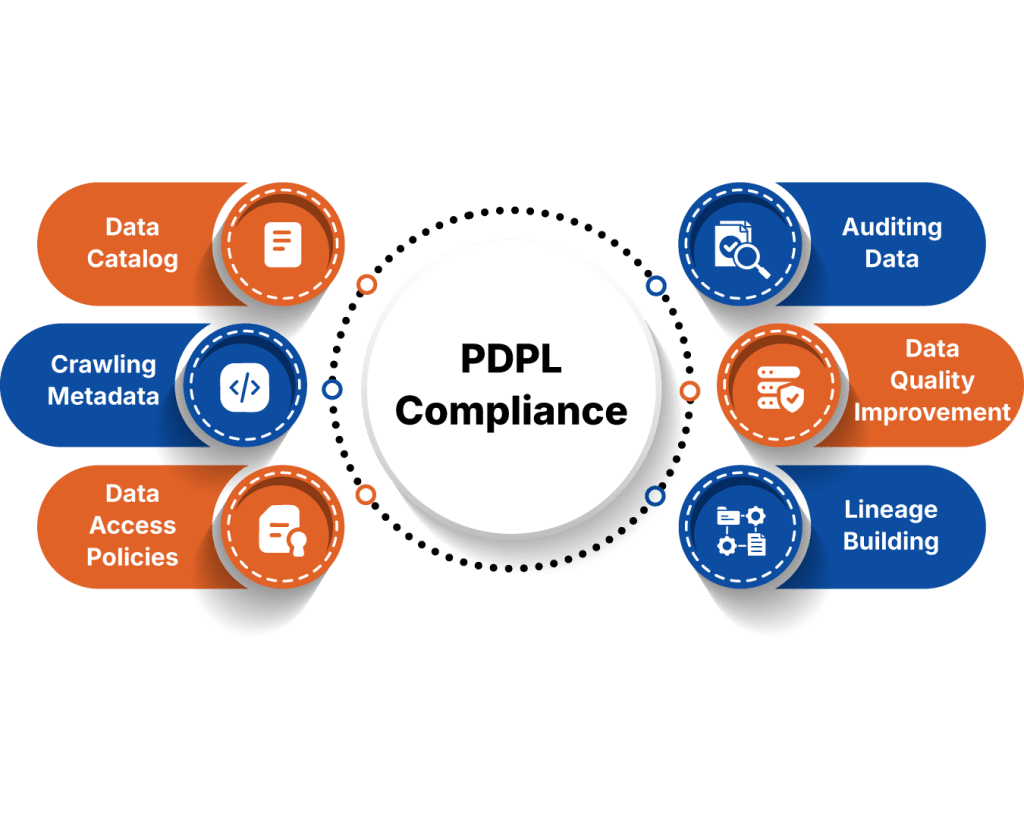
Achieving structured UAE PDPL compliance requires more than drafting a privacy policy. Organizations must implement documented governance, legal controls, and technical safeguards aligned with UAE PDPL requirements.
Below is a practical PDPL compliance checklist UAE organizations can use to assess readiness.
Core Governance & Documentation
- Data Mapping Completed
Identify what personal data is collected, where it is stored, how it flows, and who has access. - Legal Basis Documented
Ensure each processing activity has a clearly defined lawful basis under the PDPL law UAE. - Privacy Notice Updated
Update external and internal privacy notices to reflect transparent processing practices. - Consent Mechanisms Reviewed
Confirm that consent collection methods are clear, specific, and withdrawable.
Risk & Security Controls
- Data Protection Impact Assessment (DPIA) Conducted
Assess high-risk processing activities, especially involving sensitive personal data. - Security Controls Implemented
Apply encryption, access controls, monitoring systems, and vendor security assessments. - Incident Response Plan Ready
Establish a documented breach response process aligned with PDPL breach notification UAE obligations.
Organizational Accountability
- Vendor Contracts Updated
Ensure processors and third parties include PDPL compliance clauses. - Cross-Border Transfer Safeguards Implemented
Review international data transfers under cross border data transfer PDPL requirements. - DPO Appointed (If Required)
Assess whether a Data Protection Officer PDPL UAE role is mandatory or strategically advisable. - Data Retention Policy Defined
Implement storage limitation and data minimization principles.
Ongoing Monitoring
- Employee Awareness Training Conducted
Train staff on personal data protection UAE responsibilities. - Regular Compliance Reviews Scheduled
Establish periodic audits to ensure sustained PDPL compliance UAE alignment.
This PDPL compliance checklist UAE serves as a baseline readiness indicator. However, many organizations require a structured PDPL readiness assessment UAE or formal gap analysis to identify deeper compliance weaknesses.
PDPL Readiness Assessment & Gap Analysis UAE
Before implementing full-scale UAE PDPL compliance, organizations should conduct a structured readiness assessment. A PDPL readiness assessment UAE evaluates current data protection practices against the requirements of the UAE Personal Data Protection Law and identifies compliance gaps.
Many businesses assume they are compliant because they have basic privacy policies in place. However, formal PDPL gap analysis UAE often reveals missing documentation, weak vendor controls, incomplete data inventories, and unstructured breach response mechanisms.
What Is a PDPL Gap Assessment?
A PDPL gap analysis UAE is a structured evaluation process that:
- Reviews existing policies and procedures
- Assesses data processing activities
- Identifies regulatory misalignment
- Evaluates technical and organizational safeguards
- Measures compliance maturity
It provides a clear roadmap from current state to required UAE PDPL compliance standards.
Structured Process Flow
An effective PDPL readiness engagement follows a clear, phased methodology:
1. Assessment
Comprehensive review of:
- Data inventory and processing activities
- Policies and privacy notices
- Vendor contracts
- Security controls
- Consent mechanisms
- Data subject rights handling
This stage establishes the current compliance baseline.
2. Risk Scoring
Identified gaps are categorized and scored based on:
- Regulatory exposure
- Likelihood of enforcement impact
- Sensitivity of data involved
- Business disruption risk
- Cross-border exposure
Risk scoring ensures remediation efforts are prioritized intelligently rather than addressed randomly.
3. Remediation Plan
A structured action plan is developed outlining:
- Required policy updates
- Control enhancements
- Process redesign
- Contract amendments
- Technology adjustments
- DPO appointment (if required)
Each action item is assigned ownership, timelines, and priority level.
4. Implementation
The final phase translates strategy into operational alignment:
- Updating documentation
- Embedding consent and rights workflows
- Strengthening vendor governance
- Implementing security controls
- Conducting employee training
- Establishing ongoing monitoring mechanisms
Implementation ensures compliance becomes operational, not theoretical.
5. Typical Findings in Gap Assessments
Organizations commonly discover:
- Incomplete data mapping
- Over-reliance on generic consent
- Missing DPIA documentation
- Weak third-party contract clauses
- Undefined retention schedules
- No formal DPO oversight
These gaps increase exposure to PDPL penalties UAE and operational risk.
How Long Does a PDPL Gap Analysis Take?
The timeline depends on:
- Organization size
- Volume of personal data
- Industry complexity
- Geographic footprint
For small-to-medium enterprises, assessments may take 2-4 weeks. Larger or multinational organizations may require 6-10 weeks for a comprehensive evaluation.
PDPL Implementation Support UAE – Step-by-Step Roadmap
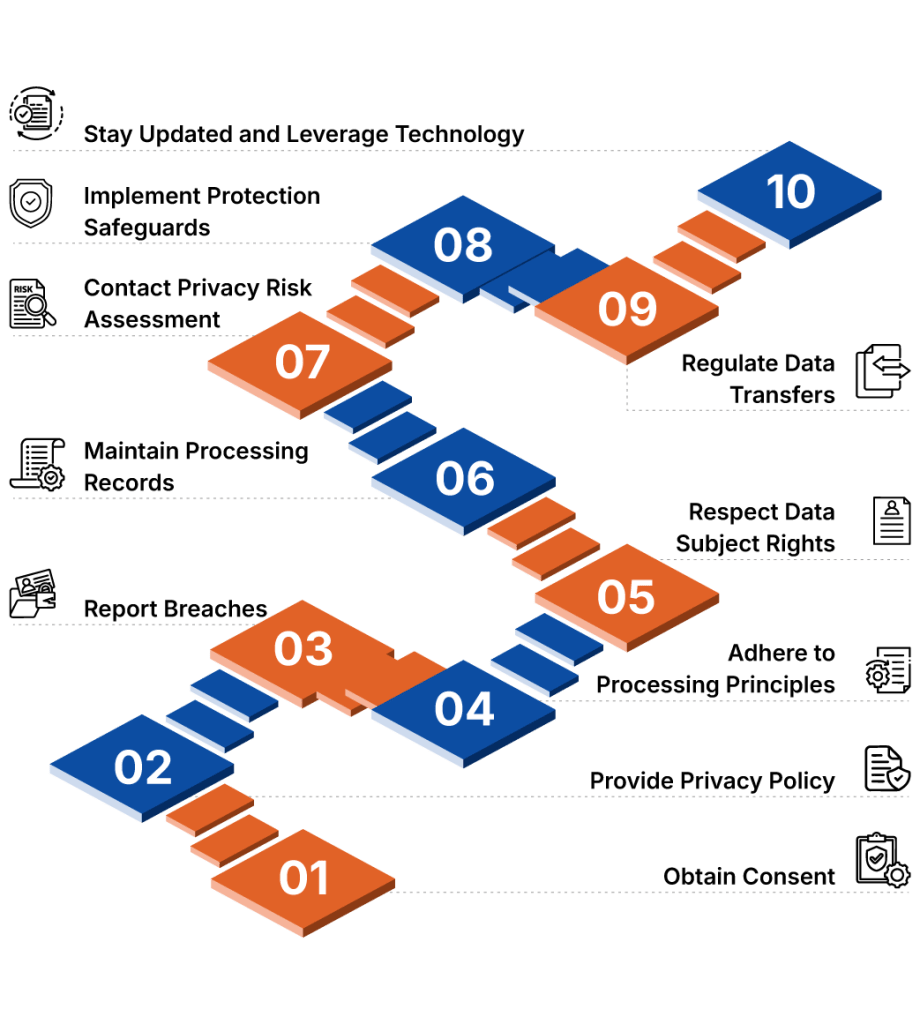
Achieving full UAE PDPL compliance requires more than a gap assessment. Organizations must translate findings into structured policies, operational controls, and sustainable governance mechanisms.
Effective PDPL implementation support UAE follows a phased roadmap to ensure regulatory alignment while minimizing business disruption.
Below is a practical six-phase implementation model.
1. Data Discovery
The first step is identifying and documenting all personal data processing activities.
This includes:
- Mapping data flows across systems
- Identifying controllers and processors
- Categorizing personal vs sensitive data
- Documenting storage locations (on-premise and cloud)
- Reviewing third-party access
Accurate data discovery ensures that all UAE PDPL requirements are applied correctly and prevents hidden compliance gaps.
2. Risk Assessment
After mapping data, organizations must assess risk exposure.
This phase involves:
- Conducting Data Protection Impact Assessments (DPIAs)
- Evaluating cross border data transfer PDPL risks
- Reviewing security posture
- Identifying high-risk processing activities
- Assessing likelihood and impact of breaches
Risk scoring helps prioritize remediation efforts and align with PDPL compliance UAE standards.
3. Policy Drafting
Once risks are identified, organizations develop or update documentation, including:
- Privacy policies
- Internal data protection policies
- Data retention schedules
- Vendor data processing agreements
- Incident response procedures
Strong UAE PDPL policy development ensures regulatory alignment and documentation readiness in case of audit or investigation.
4. Process Alignment
Policies must translate into operational workflows.
This phase focuses on:
- Integrating consent management into systems
- Establishing data subject rights response mechanisms
- Implementing breach notification procedures
- Updating HR and customer onboarding processes
- Embedding cross-border transfer safeguards
Without process alignment, compliance remains theoretical.
5. Employee Training
Human error remains one of the biggest privacy risks.
Organizations should conduct structured training covering:
- Personal data handling practices
- Security awareness
- PDPL breach notification UAE obligations
- Role-specific responsibilities
Training supports sustainable UAE PDPL compliance and reduces incident likelihood.
6. Ongoing Monitoring
Compliance is not a one-time project.
Continuous monitoring includes:
- Periodic audits
- Policy reviews
- Vendor reassessments
- Regulatory update tracking
- Incident simulations
Ongoing oversight ensures long-term alignment with evolving PDPL law UAE expectations.
UAE PDPL Compliance Services
As regulatory expectations around the UAE PDPL mature, many organizations seek structured support to achieve sustainable compliance. Professional UAE PDPL compliance services help businesses move from fragmented controls to a comprehensive, risk-based governance framework.
Whether organizations are at an early awareness stage or require advanced remediation, structured PDPL compliance UAE support typically includes advisory, implementation, and monitoring services.
1. PDPL Advisory & Regulatory Guidance
Strategic advisory services help organizations understand:
- Applicability of the UAE Personal Data Protection Law
- Scope of UAE PDPL requirements
- Sector-specific compliance implications
- Cross-border exposure risks
- DPO appointment obligations
Advisory engagements often begin with executive briefings and compliance strategy workshops to align leadership teams.
2. PDPL Gap Analysis & Readiness Assessment
A structured PDPL gap analysis UAE identifies compliance weaknesses across policies, systems, and processes.
Services typically include:
- Data inventory and mapping review
- Lawful basis documentation assessment
- Vendor and contract evaluation
- Security posture review
- Breach response capability testing
This phase provides a prioritized remediation roadmap aligned with UAE PDPL compliance standards.
3. Policy Development & Documentation Support
Many organizations require assistance with:
- UAE PDPL policy development
- Privacy notices and consent frameworks
- Data retention schedules
- Data processing agreements
- Internal governance documentation
Clear, well-documented controls reduce exposure to PDPL penalties UAE and demonstrate accountability during audits.
4. DPO as a Service (Outsourced DPO)
For organizations lacking internal privacy expertise, DPO as a Service offers:
- Independent oversight
- Regulatory liaison support
- Data subject request management
- DPIA advisory
- Breach response supervision
Outsourced DPO support helps meet Data Protection Officer PDPL UAE obligations without creating internal conflicts of interest.
5. Training & Awareness Programs
Compliance sustainability requires organization-wide awareness.
Professional training programs may include:
- Executive-level compliance briefings
- IT and security-focused workshops
- HR and operations training
- Incident response simulations
Training strengthens personal data protection UAE culture across departments.
6. Audit & Ongoing Compliance Monitoring
After implementation, organizations may require:
- Periodic PDPL compliance UAE audits
- Third-party assessments
- Vendor compliance validation
- Regulatory update tracking
- Maturity benchmarking
Ongoing oversight reduces long-term risk and supports operational resilience.
PDPL Compliance Services Cost UAE
The cost of UAE PDPL compliance servicesvaries depending on the organization’s size, data complexity, and regulatory exposure. While there is no fixed pricing model, understanding the key cost drivers helps businesses plan realistic compliance budgets.
Rather than viewing compliance as a one-time expense, organizations should treat PDPL compliance UAE as a structured governance investment.
Key Factors That Influence Cost
1. Company Size and Structure
Larger organizations with multiple departments, branches, or regional operations require more extensive assessments and documentation.
A small local company may have limited processing activities, while multinational organizations face broader compliance requirements under the PDPL law UAE.
2. Volume and Type of Data
The more personal data an organization processes – especially sensitive personal data – the higher the complexity.
Businesses handling:
- Health data
- Financial records
- Biometric information
- Large customer databases
Will typically require more rigorous risk assessments and stronger safeguards.
3. Cross-Border Data Exposure
Organizations transferring data internationally must implement safeguards under cross border data transfer PDPL rules.
Global SaaS providers, cloud-hosted systems, and multinational HR platforms often increase compliance effort and cost.
4. Current Compliance Maturity
Companies with existing privacy frameworks (for example, partial GDPR alignment) may require only moderate adjustments.
Organizations starting from scratch may need:
- Full data mapping
- Policy drafting
- Contract updates
- Security assessments
- Training programs
The deeper the compliance gap, the higher the remediation effort.
Typical Cost Ranges (Estimated)
While pricing varies by provider and scope, organizations in the UAE may expect:
- Small to mid-sized businesses: Moderate five-figure implementation projects
- Large enterprises: Higher five-figure to six-figure structured compliance programs
- DPO as a Service: Recurring annual engagement fees depending on scope
These ranges depend heavily on risk exposure and organizational complexity.
Why work with UAE PDPL Consultants?
Achieving sustainable UAE PDPL compliance requires more than template policies. The UAE Personal Data Protection Law introduces structured governance, accountability, and operational alignment obligations that often require specialized expertise.
Working with experienced UAE PDPL consultants enables organizations to interpret regulatory expectations correctly, implement risk-based controls, and avoid costly missteps.
Regulatory Expertise
Professional PDPL consultants UAE bring:
- In-depth understanding of the PDPL law UAE
- Knowledge of executive regulations and authority guidance
- Experience interpreting cross-border data transfer PDPL rules
- Awareness of evolving enforcement trends
Regulatory misinterpretation can lead to compliance gaps. Expert advisory ensures alignment with current expectations.
Practical Implementation Experience
The difference between theoretical compliance and operational compliance is execution.
Experienced UAE PDPL consultants help organizations:
- Translate legal requirements into technical controls
- Align privacy policies with real-world workflows
- Integrate consent management into systems
- Embed breach notification procedures into incident response frameworks
This reduces the risk of documentation-only compliance.
Sector-Specific Knowledge
Different industries face different risks.
For example:
- Financial services must align privacy controls with risk governance frameworks
- Healthcare organizations manage high volumes of sensitive personal data
- Technology firms face cross-border data complexity
- E-commerce platforms manage large-scale customer data processing
Sector-aware consultants tailor UAE PDPL compliance services to industry realities rather than applying generic templates.
Certifications & Professional Credentials
Strong PDPL consultants UAE teams often include professionals with certifications such as:
- Certified Information Privacy Professional (CIPP)
- ISO 27001 Lead Implementer / Auditor
- Certified Information Systems Security Professional (CISSP)
- Data protection and governance specialists
Certifications enhance credibility and technical depth.
How ValueMentor supports UAE PDPL Compliance?
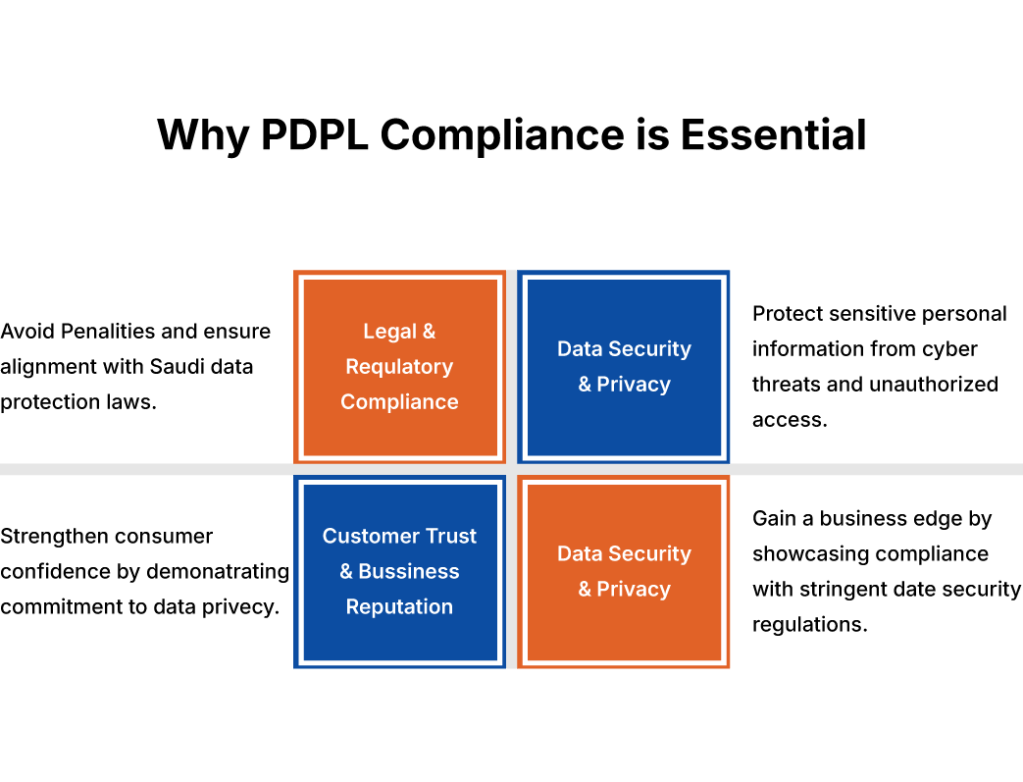
Achieving structured UAE PDPL compliance requires a combination of regulatory interpretation, risk governance, cybersecurity expertise, and operational alignment. ValueMentor supports organizations across the UAE with a practical, risk-based approach to PDPL compliance implementation.
Rather than relying on generic documentation templates, ValueMentor focuses on building sustainable privacy governance frameworks aligned with the UAE Personal Data Protection Law.
1. Strategic PDPL Advisory
ValueMentor assists organizations in:
- Interpreting UAE PDPL requirements
- Assessing applicability across mainland and free zone entities
- Evaluating cross-border exposure
- Aligning PDPL compliance UAE with broader governance frameworks
Executive briefings and regulatory workshops help leadership teams understand risk exposure and compliance priorities.
2. PDPL Gap Analysis & Readiness Assessment
Through structured PDPL readiness assessment UAE engagements, ValueMentor:
- Maps personal and sensitive data flows
- Identifies compliance gaps
- Reviews policies and vendor contracts
- Evaluates security posture
- Assesses breach notification preparedness
Each assessment concludes with a prioritized remediation roadmap tailored to organizational risk.
3. Policy Development & Documentation
ValueMentor supports UAE PDPL policy development by creating:
- Privacy policies and notices
- Data retention schedules
- Data processing agreements
- Cross-border data transfer safeguards
- Incident response frameworks
Documentation is aligned with operational realities to ensure practical implementation.
4. Implementation & Process Alignment
Beyond advisory, ValueMentor assists in embedding controls into business processes by:
- Aligning consent mechanisms with digital systems
- Integrating data subject rights workflows
- Strengthening vendor risk management
- Enhancing breach response mechanisms
- Supporting DPO role implementation
This ensures compliance extends beyond documentation into operational practice.
5. DPO Advisory & Ongoing Monitoring
ValueMentor also supports organizations through:
- DPO advisory and oversight services
- Periodic compliance reviews
- Internal audit preparation
- Regulatory readiness assessments
- Continuous improvement programs
Ongoing monitoring helps organizations maintain long-term alignment with evolving PDPL law UAE expectations.
FAQS
1. What is UAE PDPL?
UAE PDPL is the federal data protection law of the United Arab Emirates enacted under Federal Decree-Law No. 45 of 2021. It regulates how organizations collect, process, store, and transfer personal data. The law establishes privacy rights for individuals and defines compliance obligations for businesses operating in or targeting the UAE. UAE PDPL compliance requires lawful processing, security safeguards, and accountability measures.
2. Who needs to comply with PDPL in UAE?
Any organization processing personal data of individuals in the UAE must comply with the UAE PDPL. This includes mainland companies, most free zone entities (except DIFC and ADGM), and even offshore businesses targeting UAE residents. Both data controllers and processors are subject to UAE PDPL requirements depending on their role in data processing activities.
3. What are PDPL penalties in UAE?
PDPL penalties UAE may include administrative fines, corrective regulatory actions, suspension of data processing activities, and potential reputational damage. While exact fine amounts are determined by regulatory authorities, non-compliance can also result in operational disruption and contractual consequences. Implementing structured UAE PDPL compliance reduces financial and business risk exposure.
4. Is UAE PDPL similar to GDPR?
UAE PDPL shares structural similarities with the GDPR, including lawful basis requirements, data subject rights, breach notification obligations, and cross-border transfer controls. However, enforcement structures, fine mechanisms, and certain procedural requirements differ. Organizations operating internationally should not assume automatic compliance overlap between UAE PDPL and GDPR frameworks.
5. Is DPO mandatory under UAE PDPL?
A Data Protection Officer (DPO) is required under certain conditions, such as large-scale processing, high-risk activities, or extensive handling of sensitive personal data. Not all organizations are mandated to appoint a DPO, but many choose to do so voluntarily to strengthen governance and demonstrate accountability under UAE PDPL compliance expectations.
6. What is the deadline for UAE PDPL compliance?
The UAE PDPL came into force in January 2022 following Federal Decree-Law No. 45 of 2021. Organizations are expected to align their data processing practices with the law and its executive regulations. While no universal grace period applies now, businesses should ensure ongoing compliance to avoid regulatory scrutiny or penalties.
7. How long does PDPL compliance take?
The timeline for PDPL compliance UAE depends on organization size, data complexity, and current maturity. Small businesses may complete implementation within 2-4 months, while larger enterprises with cross-border exposure may require 6-12 months. A PDPL readiness assessment UAE helps determine realistic timelines based on identified gaps.
8. What is PDPL gap analysis?
A PDPL gap analysis UAE is a structured assessment comparing an organization’s current data protection practices against UAE PDPL requirements. It identifies compliance weaknesses, risk areas, and documentation gaps. The outcome is a remediation roadmap outlining corrective actions needed to achieve full UAE PDPL compliance alignment.
9. How much does PDPL compliance cost in UAE?
The cost of UAE PDPL compliance services varies depending on company size, data volume, industry risk, and implementation scope. Small-to-medium businesses may require moderate five-figure investments, while large enterprises may require higher budgets due to complexity. A formal assessment provides accurate cost estimates tailored to organizational risk exposure.
10. Does PDPL apply to free zones?
Yes, UAE PDPL applies to most free zone companies except DIFC and ADGM, which operate under their own independent data protection laws. Businesses in other free zones must comply with federal PDPL law UAE requirements if they process personal data of individuals within the UAE.